Agricultural Machinery Hydraulic Cylinders
Agricultural machinery hydraulic cylinders are specialized components used to provide controlled force and motion in farming equipment like corn harvesters, rice harvesters, planters, and seeders. These cylinders convert hydraulic pressure into mechanical energy, enabling precise operations such as lifting, lowering, tilting, and steering. They ensure efficient handling of heavy loads, accurate adjustments for planting or harvesting, and enhanced durability under tough farming conditions, optimizing productivity and reducing manual labor.
Hydraulic Cylinder for Agricultural Machinery
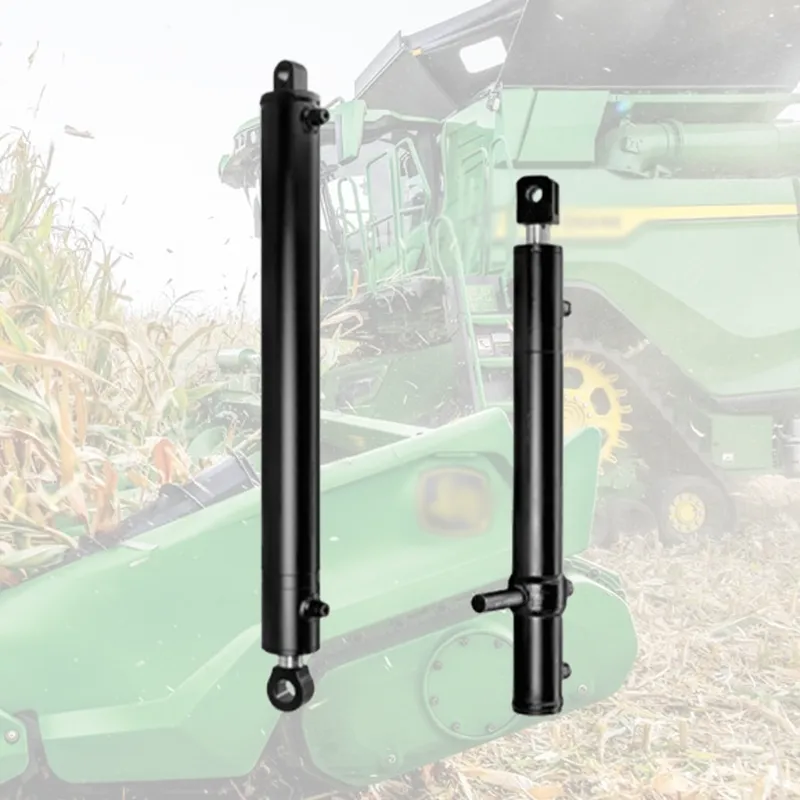
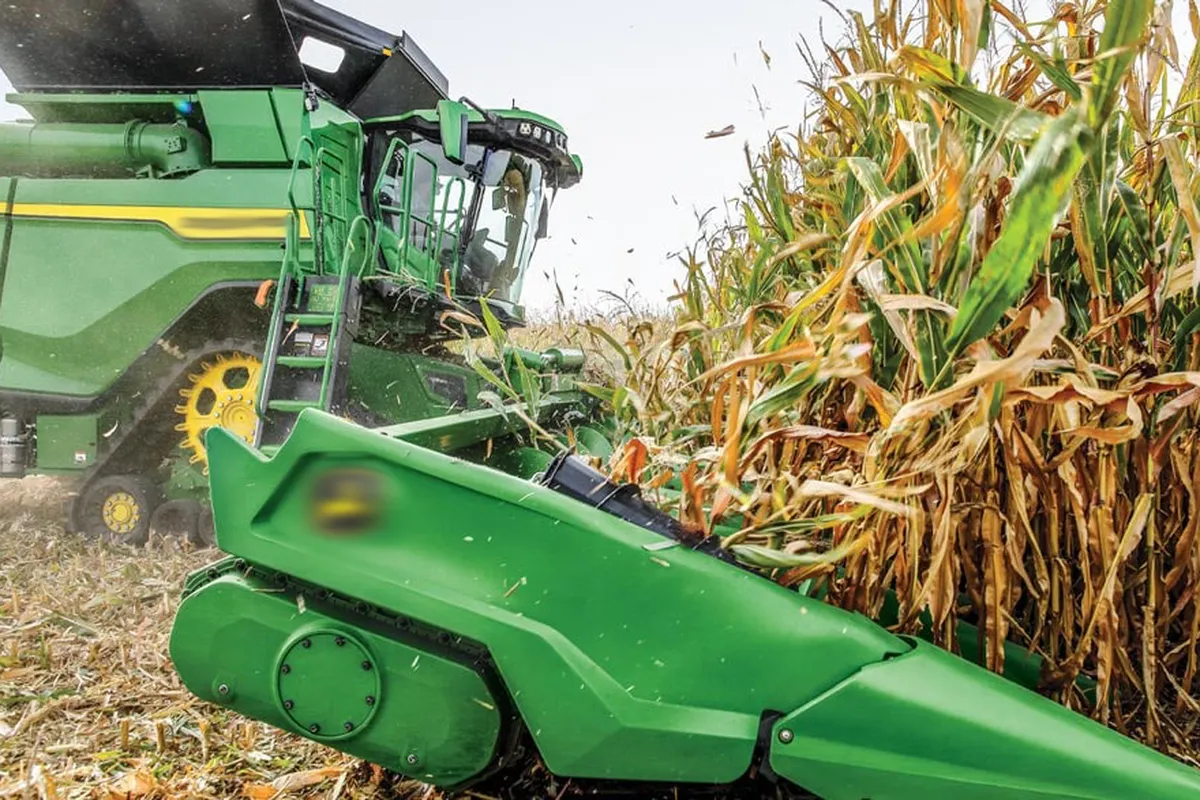
Hydraulic Cylinder for Corn Harvester
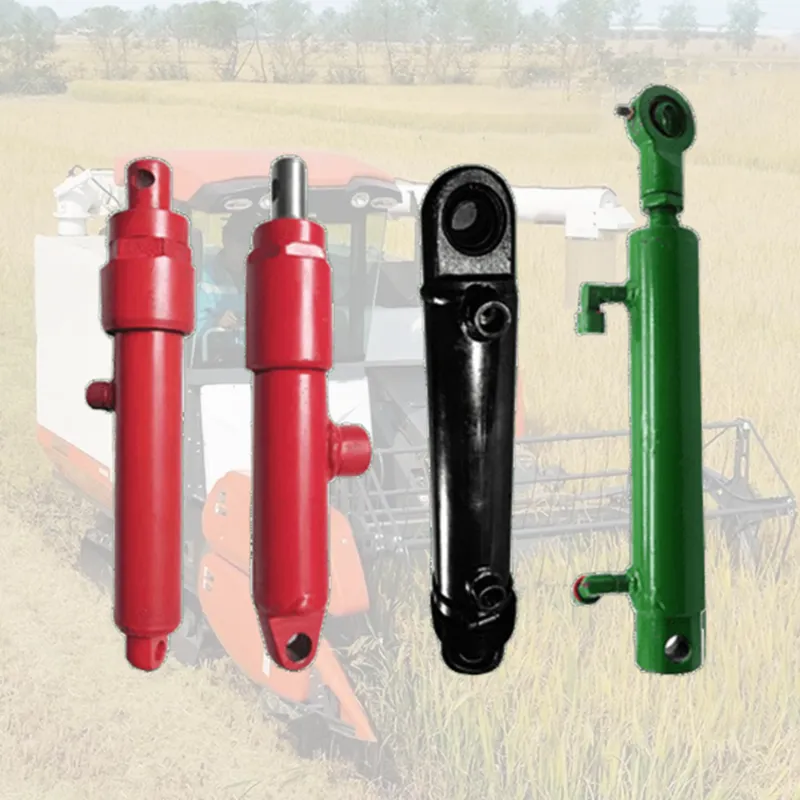
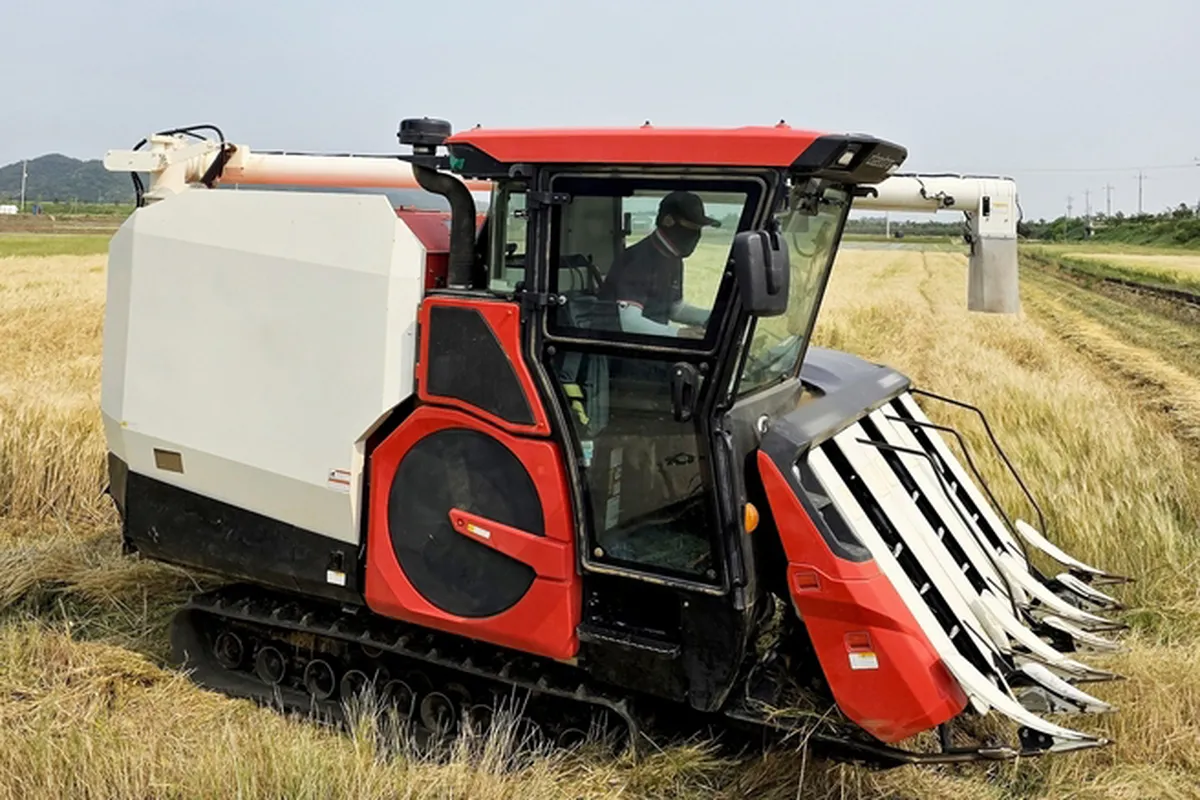
Hydraulic Cylinder for Rice Harvester
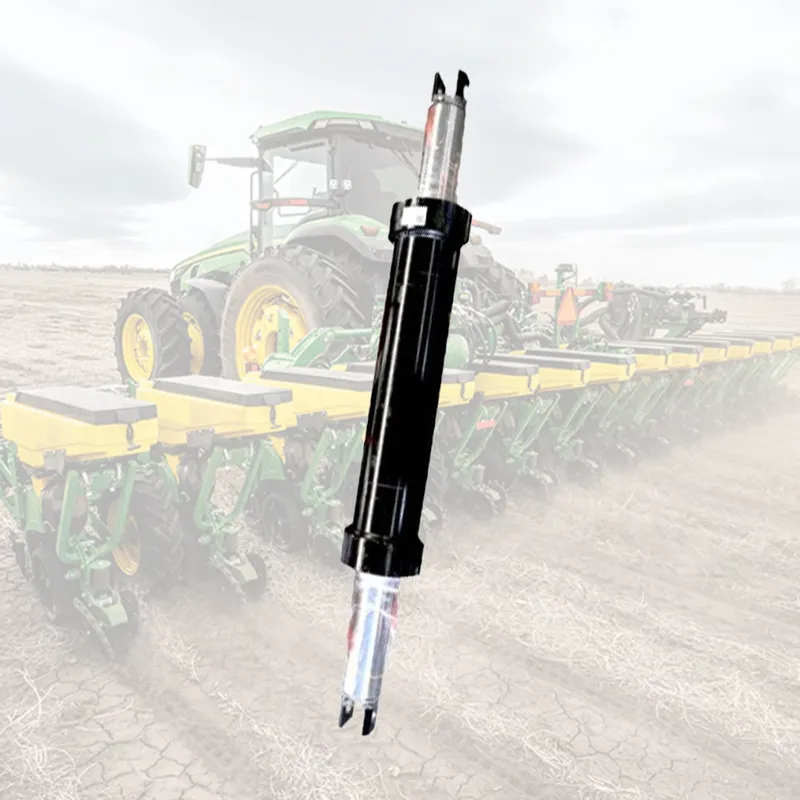
Hydraulic Cylinder for Planter & Seeder
What Are Agricultural Hydraulic Cylinders?
Agricultural machinery hydraulic cylinders are critical components used in various farming equipment to perform essential mechanical tasks with precision and efficiency. These hydraulic cylinders utilize pressurized hydraulic fluid to generate linear force and motion, enabling agricultural machinery to carry out lifting, pushing, pulling, or rotating operations. They are specifically designed to handle heavy loads, repetitive tasks, and harsh working conditions commonly found in agricultural environments.
For corn harvesters, hydraulic cylinders play a pivotal role. For example, the hydraulic grain bin flipping cylinder facilitates the unloading of harvested corn by flipping or tilting the grain bin. Similarly, the hydraulic support plate lifting cylinder aids in stabilizing and adjusting the harvester’s components during operation. These cylinders ensure smooth and controlled movements, reducing manual labor while increasing productivity.
In rice harvesters, hydraulic cylinders such as the hydraulic header cylinder are used to adjust the cutting height of the header, ensuring optimal harvesting of rice crops. The hydraulic steering cylinder provides precise control of the harvester’s maneuverability, while the hydraulic pulling wheel cylinder drives the machine across fields. The hydraulic grain unloading cylinder enables efficient unloading of harvested rice into storage or transport vehicles. For planters and seeders, hydraulic cylinders like the hydraulic steering cylinder enhance the equipment’s directional control, ensuring accurate planting rows. Their efficiency and reliability are critical in achieving uniform seed placement and reducing crop waste.
Hydraulic Cylinder Production Process
1. Material Selection and Preparation
The production of hydraulic cylinders begins with the careful selection of high-quality raw materials, such as steel or alloyed metals, to ensure durability and performance. Steel bars and tubes are commonly used for the cylinder body, piston rod, and other components. The materials are inspected for defects such as cracks, impurities, or inconsistencies to ensure uniform strength. Once selected, the raw materials are cut to the required dimensions and undergo surface treatments like sandblasting or polishing to remove impurities and prepare them for further machining.
2. Tube Honing and Cylinder Body Machining
The cylinder body, which houses the piston and hydraulic fluid, is machined and honed to achieve precise inner surface smoothness and dimensional accuracy. Honing ensures the bore surface is free of irregularities, ensuring proper sealing and reducing friction during operation. This step is crucial as a smooth inner surface prevents fluid leaks and ensures the longevity of the hydraulic cylinder. The tube is also threaded or welded to accommodate end caps or mounting components.
3. Piston Rod Processing and Hardening
The piston rod, which transmits the hydraulic force, is machined to precise dimensions and subjected to heat treatment or induction hardening. These processes improve the rod's strength, wear resistance, and ability to withstand high pressure. The rod is then polished and sometimes chrome-plated to enhance its surface finish, reducing friction and preventing corrosion. Any irregularities in the rod can compromise the cylinder’s efficiency, so this step is performed with high precision.
4. Component Manufacturing
Other critical components, such as pistons, seals, end caps, and mounting hardware, are manufactured during this stage. Pistons are machined to fit snugly inside the cylinder body, while seals are produced from durable materials like rubber or polyurethane to ensure a leak-proof operation. End caps are machined to provide structural integrity, and mounting options like clevises or flanges are prepared to match the intended application of the cylinder.
5. Welding and Assembly of Cylinder Body
The cylinder body is assembled by welding or threading the end caps onto the main tube. The welding process is conducted using automated or manual techniques, depending on the design, to ensure strong and leak-proof joints. The assembly must be precise to prevent misalignment or deformation, as these can affect the cylinder's performance. After assembly, the cylinder body is tested for structural integrity and smooth operation.
6. Seal Installation and Final Assembly
Seals and O-rings are installed to ensure the hydraulic cylinder is leak-proof and operates efficiently under high pressure. The piston, piston rod, and cylinder body are assembled carefully to prevent damage to the seals. During this stage, lubricants may be applied for smoother assembly and operation. Every component must align perfectly, as improper assembly can lead to performance issues such as fluid leakage or reduced force output.
7. Quality Control and Testing
Each hydraulic cylinder undergoes rigorous quality control checks to ensure it meets industry standards and customer specifications. Testing involves applying hydraulic pressure to verify the cylinder’s ability to withstand operational loads without leakage or deformation. Parameters such as stroke length, pressure rating, and smoothness of operation are evaluated. Non-destructive testing methods like ultrasonic or X-ray inspections may also be used to detect hidden defects within the cylinder structure.
8. Surface Treatment and Finishing
To protect the hydraulic cylinder from environmental factors such as moisture, dirt, and corrosion, surface treatments are applied. Common methods include painting, powder coating, or electroplating, depending on the application. The piston rod is often chrome-plated for added durability. After surface treatment, the finished hydraulic cylinder is polished and packaged for shipment. This final step ensures the product is visually appealing, corrosion-resistant, and ready for operation in the field.
Agricultural Hydraulic Cylinder Parts
1. Cylinder Barrel
The cylinder barrel is the main body of the hydraulic cylinder, designed to contain the pressurized hydraulic fluid and guide the movement of the piston. It is typically made from high-strength steel or alloy to withstand high pressure and prevent deformation. The inner surface is honed to ensure a smooth and precise fit for the piston, minimizing friction and leaks during operation.
2. Piston
The piston is a critical internal component that separates the cylinder into two chambers and transmits hydraulic force. It fits tightly within the cylinder barrel and is equipped with seals to ensure a leak-proof operation. As hydraulic fluid is pressurized on one side, the piston moves linearly, transferring the generated force to the piston rod for mechanical tasks.
3. Piston Rod
The piston rod connects the piston to the external machinery and transmits the generated force to perform tasks such as lifting, pulling, or pushing. It is made from hardened and chrome-plated steel to resist wear, corrosion, and bending. A smooth surface finish ensures efficient operation and prevents damage to seals, contributing to the overall durability of the cylinder.
4. Seals and O-Rings
Seals and O-rings are crucial for ensuring the hydraulic cylinder operates without leaks and maintains pressure. They are made from durable, flexible materials such as rubber or polyurethane. Located around the piston, rod, and end caps, these components prevent hydraulic fluid from escaping and protect against contamination, ensuring long-term efficiency and reliability of the cylinder.
5. End Caps
End caps are located at both ends of the cylinder barrel and serve as structural supports. They help enclose the hydraulic fluid and house components such as rod bearings and seals. End caps are typically welded, bolted, or threaded onto the cylinder barrel and are designed to withstand high pressures while maintaining a secure, leak-proof connection.
6. Mounting Components
Mounting components, such as clevises, trunnions, or flanges, are used to attach the hydraulic cylinder to the machinery. These parts allow the cylinder to pivot or remain stationary, depending on the application. Made from strong and durable materials, mounting components are essential for maintaining stability and ensuring the hydraulic cylinder functions seamlessly under various loads and movements.
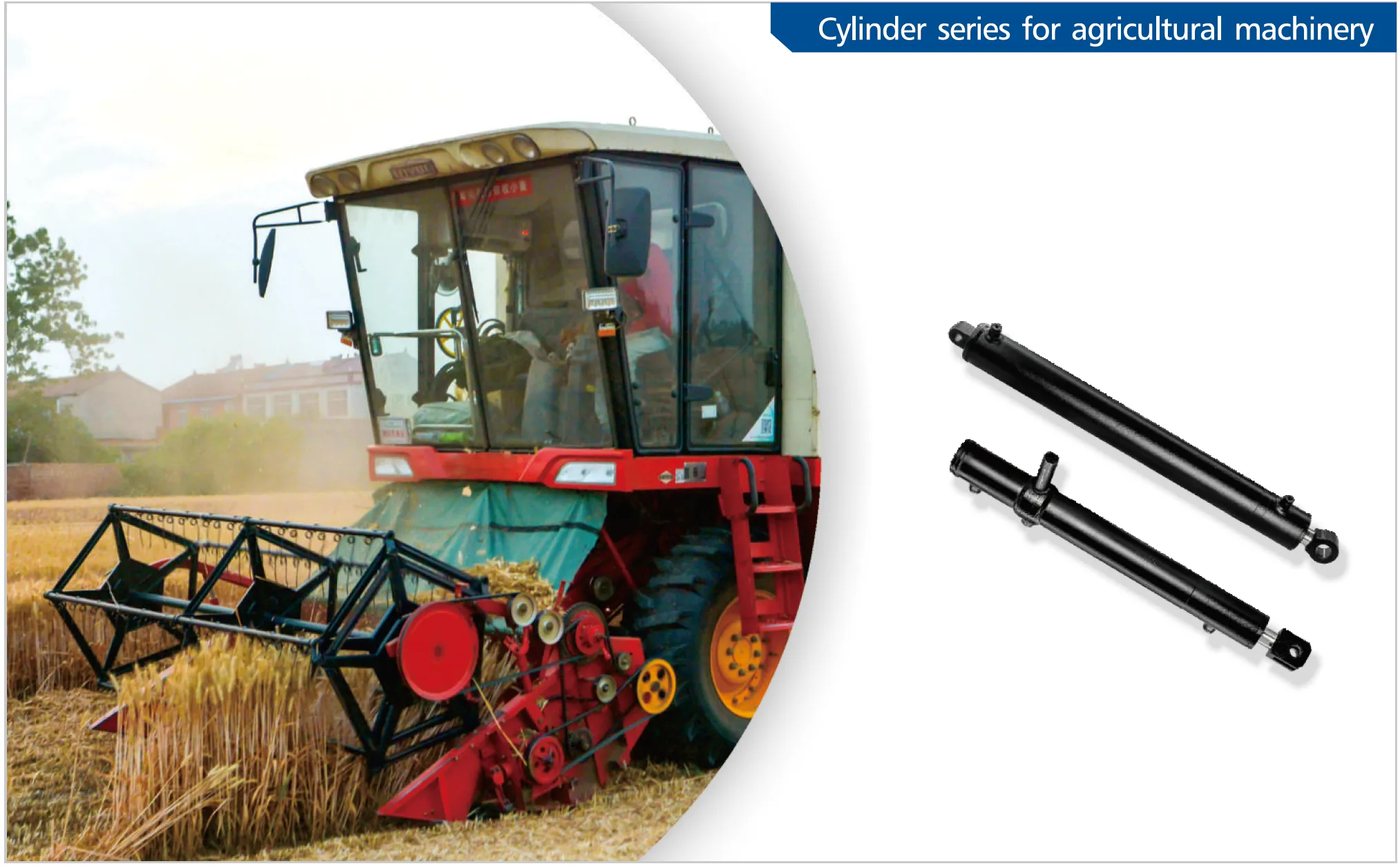
Applications of Hydraulic Cylinder for Agriculture
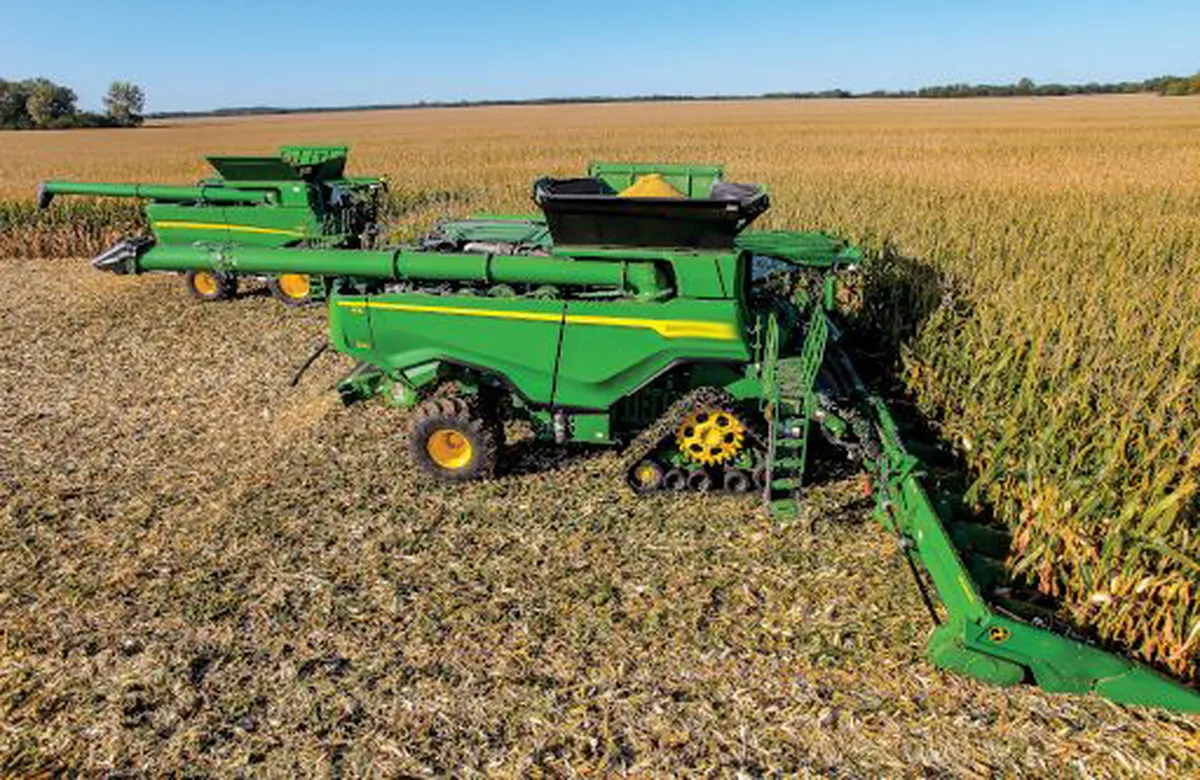
Hydraulic Cylinder for Corn Harvester
Hydraulic cylinders in corn harvesters are essential for tasks such as adjusting the header height, grain bin flipping, and controlling steering. The hydraulic grain unloading cylinder ensures efficient transfer of harvested corn into storage or transport units, while the hydraulic support plate lifting cylinder provides stability during operation, enabling precise and reliable harvesting in varying field conditions.
Hydraulic Cylinder for Rice Harvester
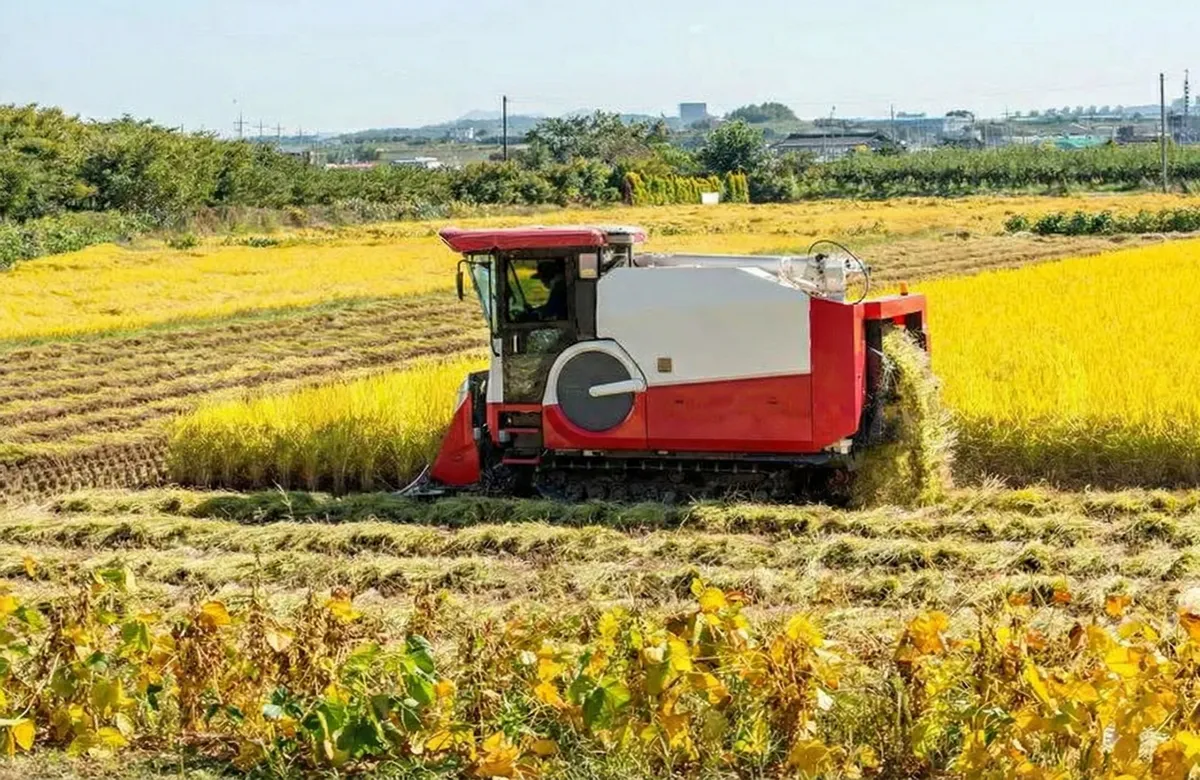
In rice harvesters, hydraulic cylinders are used to control the header height, steering, and grain unloading processes. The hydraulic header cylinder adjusts the cutting level to optimize rice harvesting efficiency, even in uneven fields. Similarly, the hydraulic steering cylinder ensures smooth maneuvering, while the hydraulic grain unloading cylinder facilitates quick and efficient unloading of rice grain into storage.
Hydraulic Cylinder for Corn Seeder
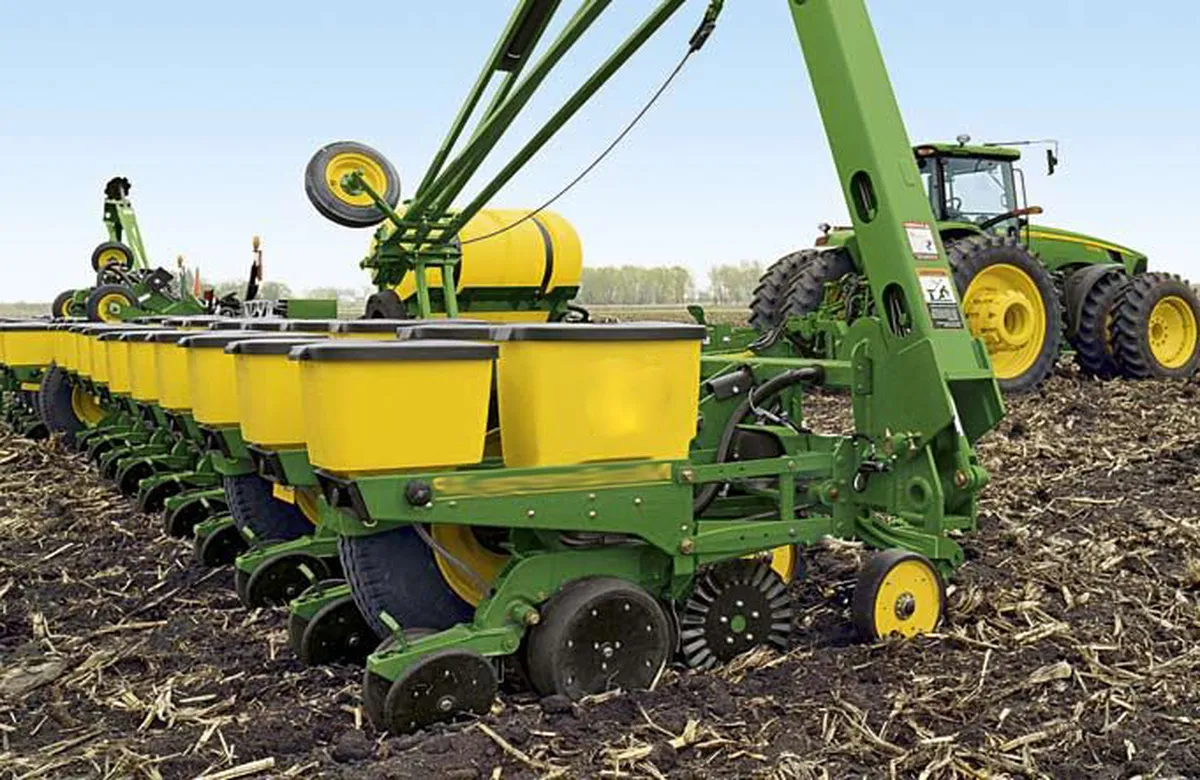
Corn seeders rely on hydraulic cylinders for row marker adjustment, lifting, and depth control. The hydraulic lifting cylinder raises or lowers the seeder during operation, ensuring seamless planting. Hydraulic steering cylinders provide precise directional control, ensuring uniform seed placement in rows, which is critical for maximizing crop yield while maintaining operational efficiency.
Hydraulic Cylinder for Wheat Planter
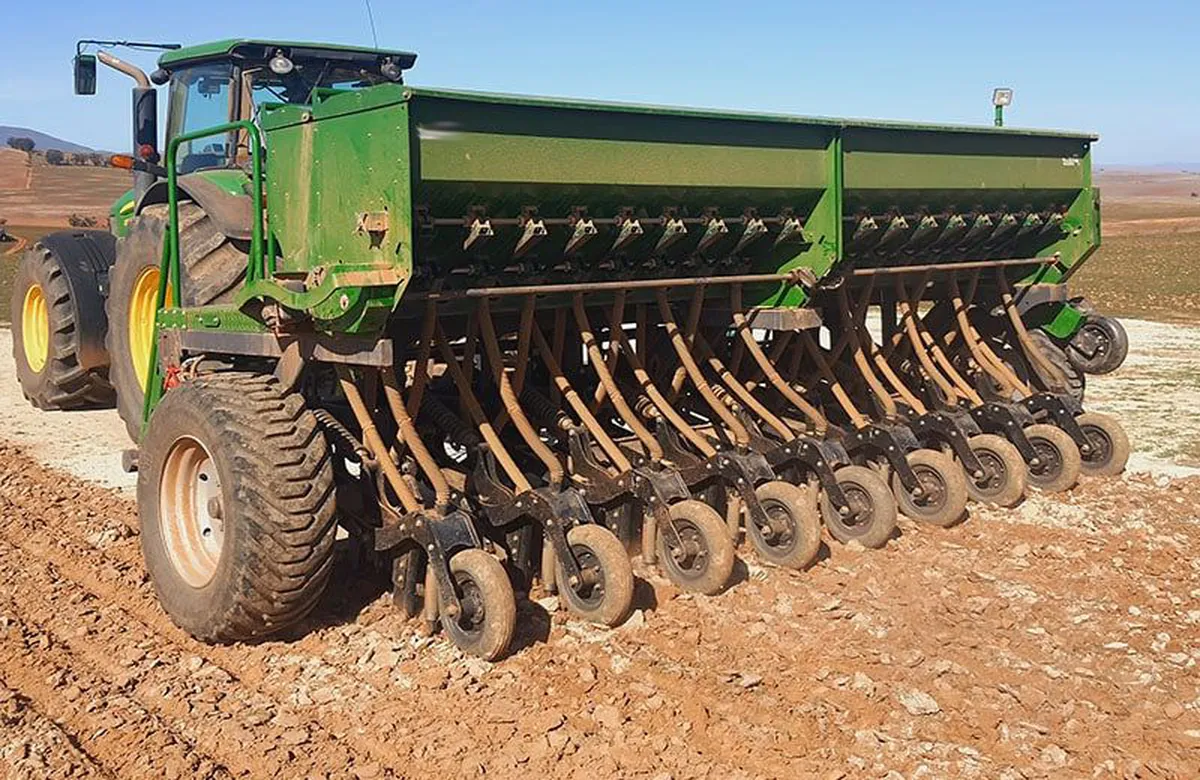
In wheat planters, hydraulic cylinders are used for depth adjustment, steering, and folding or unfolding the planter for transport or field operation. The hydraulic depth control cylinder ensures consistent seed placement depth, improving germination rates. Hydraulic cylinders also allow quick adjustments to the planter’s configuration, enabling versatility and enhanced productivity across different field conditions.
Hydraulic Cylinder for Silage Harvester
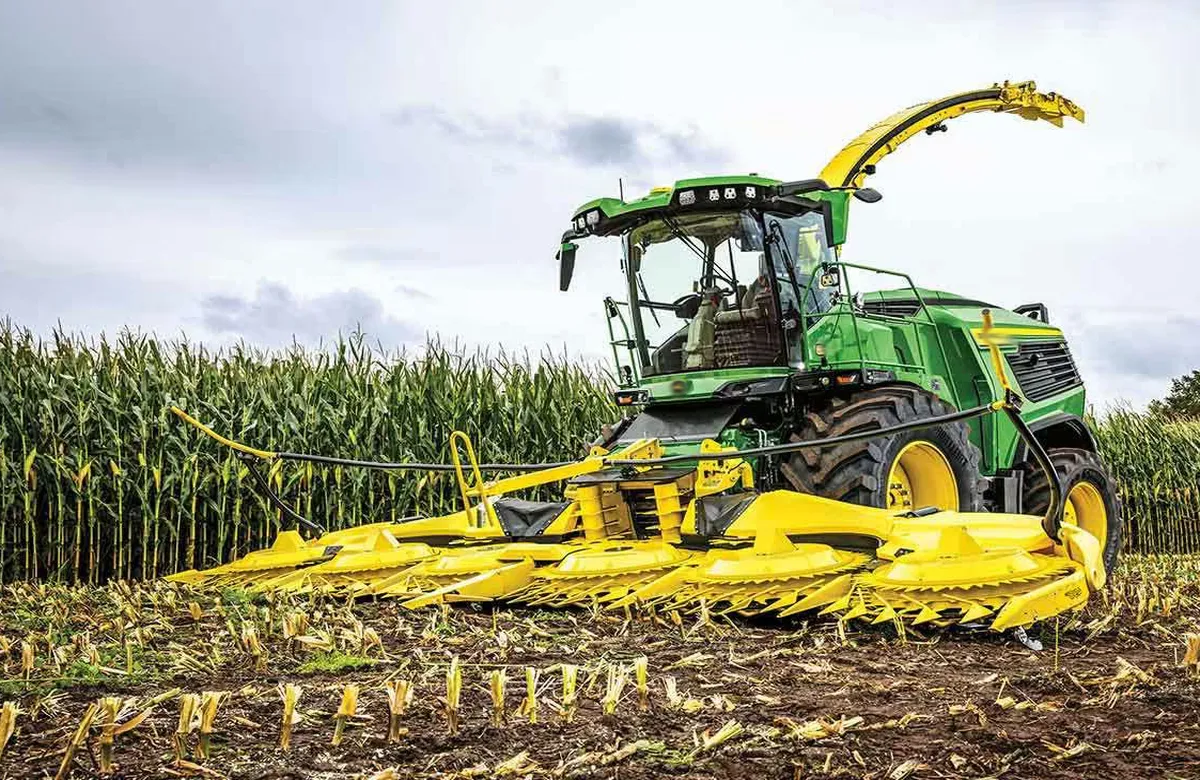
Silage harvesters utilize hydraulic cylinders for controlling cutter head height, steering, and forage unloading. The hydraulic cutter height cylinder adjusts cutting levels to maximize forage collection, while the hydraulic unloading cylinder seamlessly transfers the silage into trailers or storage. These cylinders ensure smooth and efficient operations, even under heavy workloads.
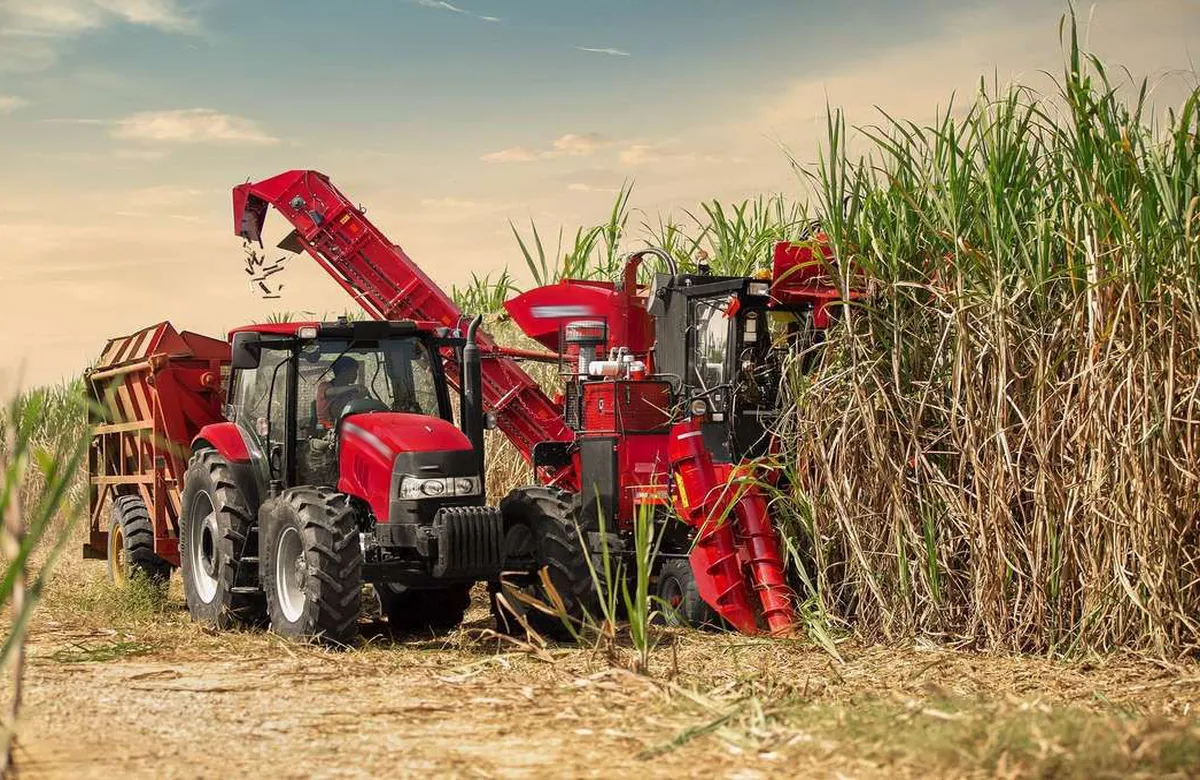
Hydraulic Cylinder for Sugarcane Harvester
In sugarcane harvesters, hydraulic cylinders are critical for tasks such as cutter height adjustment, trash removal, and loading harvested cane into trailers. The hydraulic cutter adjustment cylinder enables precise cutting height control, while the hydraulic steering cylinder ensures smooth navigation through dense fields. These components enhance harvesting efficiency and adaptability in challenging terrains.
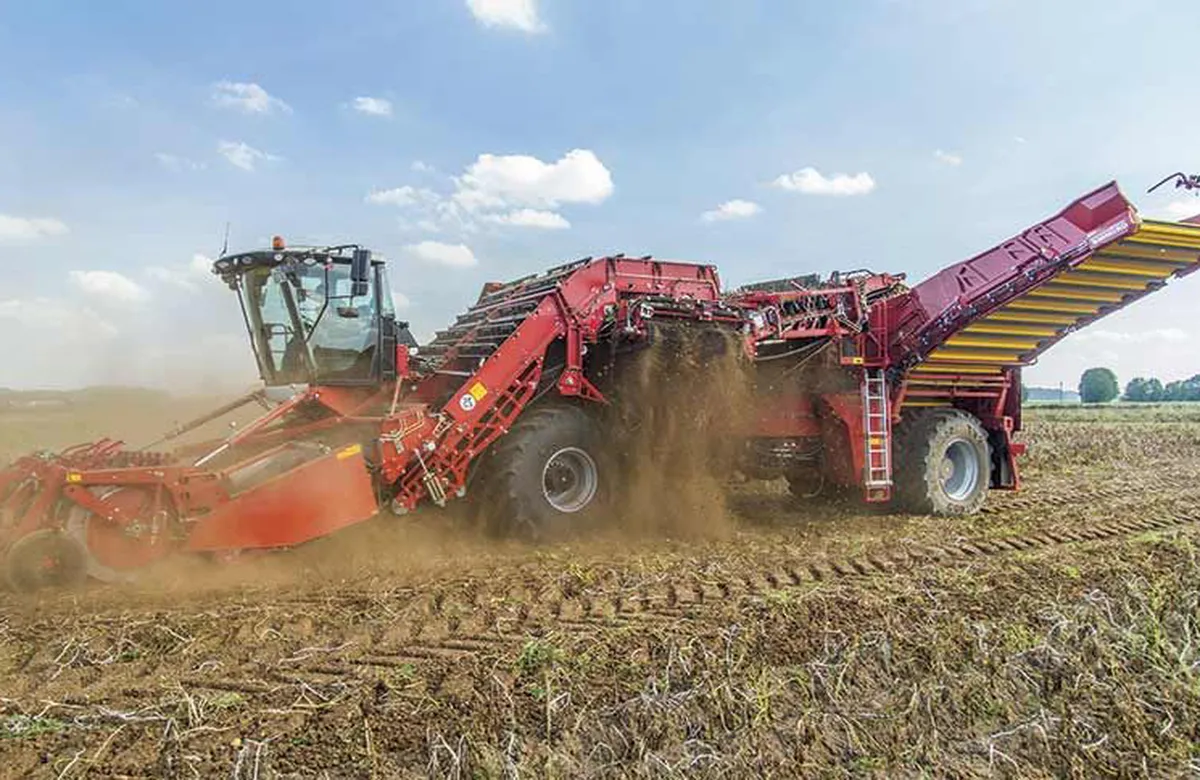
Hydraulic Cylinder for Potato Harvester
Hydraulic cylinders in potato harvesters are used for lifting the digger, adjusting depth, and unloading the harvested potatoes. The hydraulic lifting cylinder ensures smooth operation of the digging mechanism, while the hydraulic unloading cylinder facilitates efficient transfer of potatoes into storage bins, reducing product damage and increasing harvesting speed.
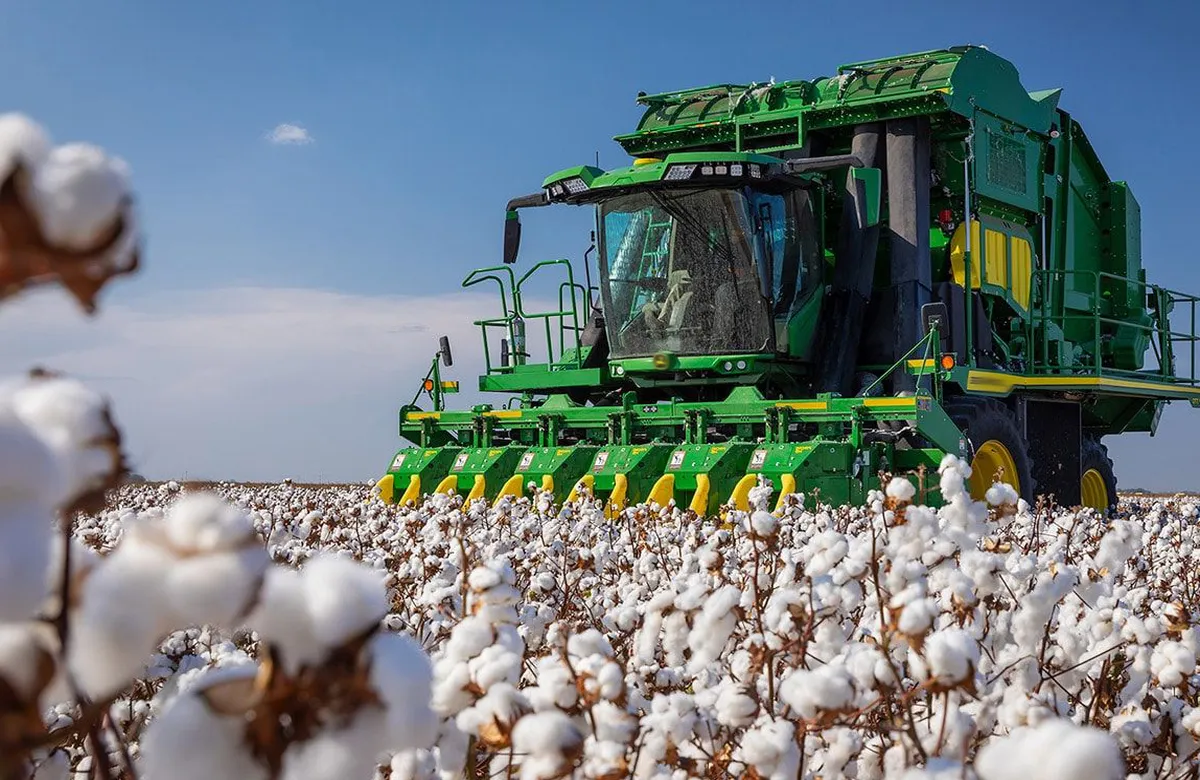
Hydraulic Cylinder for Cotton Picker
Cotton pickers use hydraulic cylinders for basket lifting, unloading, and steering. The hydraulic lifting cylinder raises and lowers the cotton basket for efficient collection and unloading. Additionally, the hydraulic steering cylinder provides precise control over the machine’s movement, ensuring effective harvesting in large-scale farming operations.
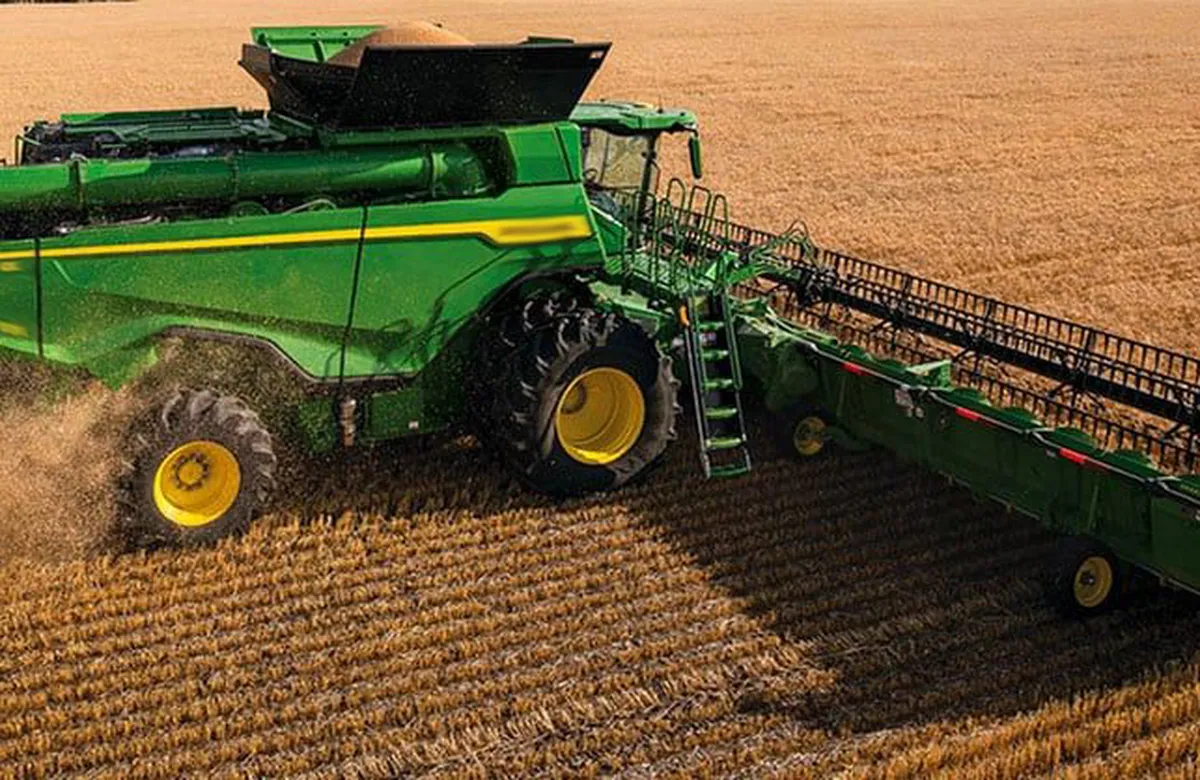
Hydraulic Cylinder for Combine Harvester
Combine harvesters use hydraulic cylinders for a variety of functions, including header height adjustment, grain unloading, and steering. The hydraulic header cylinder ensures optimal cutting height for various crops, while the hydraulic unloading cylinder facilitates quick and efficient grain transfer. These cylinders are integral to improving harvesting efficiency and reducing operational downtime.
FAQs of Agriculture Hydraulic Cylinders
How Does a Hydraulic Cylinder for Corn Harvester Work?
What Are Agricultural Machinery Hydraulic Cylinders Used For?
What Maintenance Is Required for Hydraulic Cylinder for Rice Harvester?
Can I Customize a Hydraulic Cylinder for Planter & Seeder?
What Pressure Can Agricultural Machinery Hydraulic Cylinders Handle?
How to Install a Hydraulic Cylinder in Farm Equipment?
What Are the Advantages of Telescopic Hydraulic Cylinders in Agriculture?
How Often Should I Replace Seals in Hydraulic Cylinders for Agricultural Machinery?
Are Hydraulic Cylinders for Farm Equipment Corrosion-Resistant?
What Is the Lifespan of a Hydraulic Cylinder for Corn Harvester?
How to Troubleshoot Slow Movement in Hydraulic Cylinder for Rice Harvester?
Can Hydraulic Cylinders Improve Efficiency in Planter & Seeder Operations?
Customer Reviews
–Maria Gonzalez, Farm Owner, Guadalajara
–Juan Perez, Tractor Operator, Chihuahua
–Ana Ramirez, Agricultural Supervisor, Veracruz
–Carlos Lopez, Equipment Mechanic, Monterrey
–Sofia Hernandez, Harvesting Team Lead, Puebla
–Diego Morales, Farm Manager, Tijuana