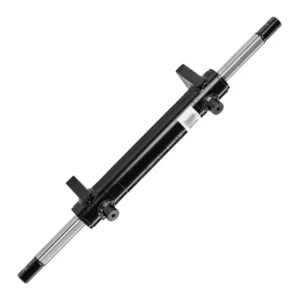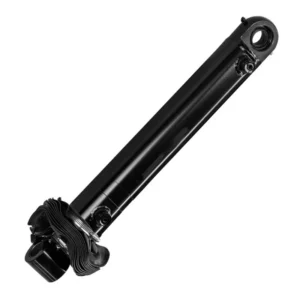
Hydraulic Lifting Cylinder for Mast Type Aerial Work Platforms
In the realm of elevated access equipment, the hydraulic lifting cylinder stands as a pivotal element, particularly for mast-type aerial work platforms. This component facilitates controlled vertical motion, enabling operators to reach heights that would otherwise be inaccessible without extensive scaffolding or ladders. Constructed from high-strength materials such as steel alloys, these cylinders convert hydraulic energy into mechanical force, ensuring smooth extension and retraction of the mast structure.
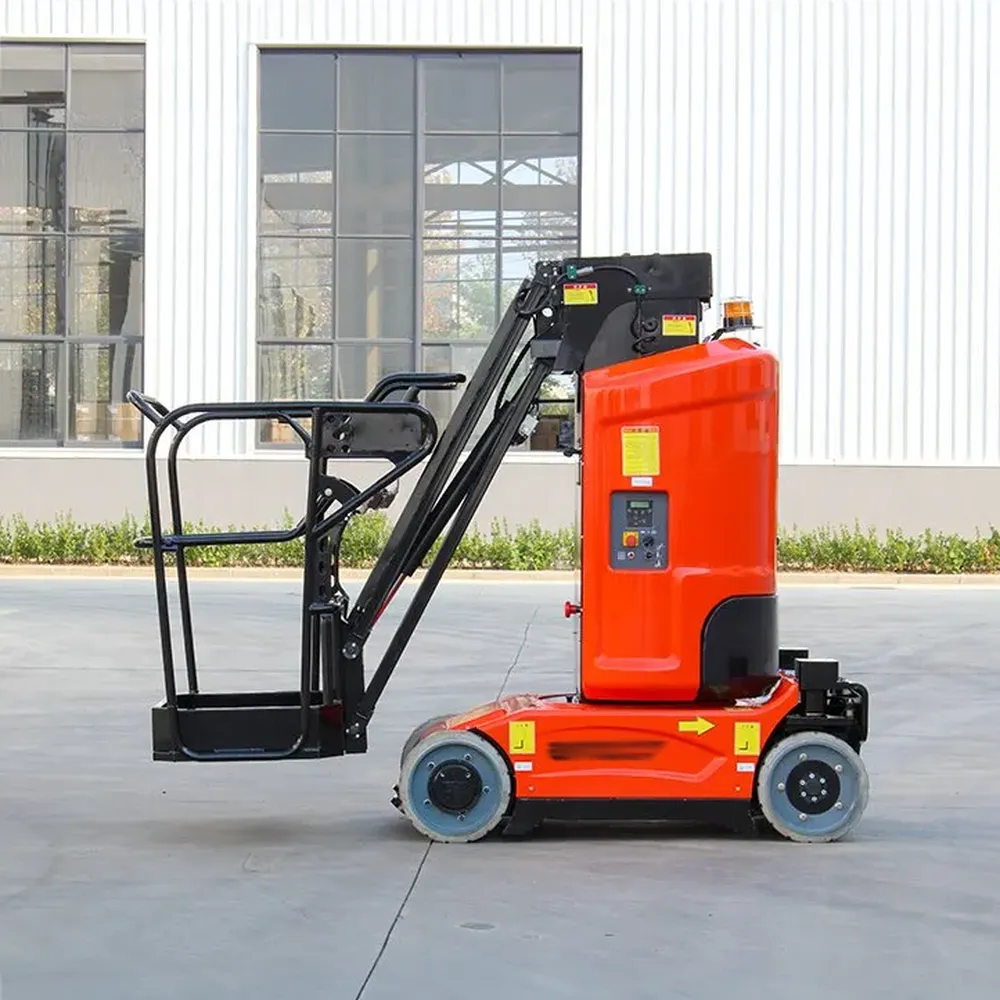
Mast Type Aerial Work Platform Hydraulic Lifting Cylinder Overview
In the realm of elevated access equipment, the hydraulic lifting cylinder stands as a pivotal element, particularly for mast-type aerial work platforms. This component facilitates controlled vertical motion, enabling operators to reach heights that would otherwise be inaccessible without extensive scaffolding or ladders. Constructed from high-strength materials such as steel alloys, these cylinders convert hydraulic energy into mechanical force, ensuring smooth extension and retraction of the mast structure. Their design prioritizes safety and efficiency, incorporating features like overload protection and precise pressure regulation to handle varying loads in dynamic environments. For industries requiring frequent height adjustments, such as building maintenance or inventory management, the hydraulic lifting cylinder provides a dependable solution that minimizes downtime and enhances productivity.
Beyond basic functionality, the lifting hydraulic cylinder integrates seamlessly with aerial work platforms, offering versatility across different models and applications. Engineers often select these cylinders for their ability to withstand environmental stresses, including exposure to dust, moisture, and temperature fluctuations common in outdoor settings. With specifications tailored to specific needs—like cylinder diameters ranging from 65mm to 80mm—these units ensure optimal performance without compromising on compactness. Users benefit from reduced maintenance requirements due to superior sealing technologies that prevent fluid leaks, thereby extending the operational lifespan.
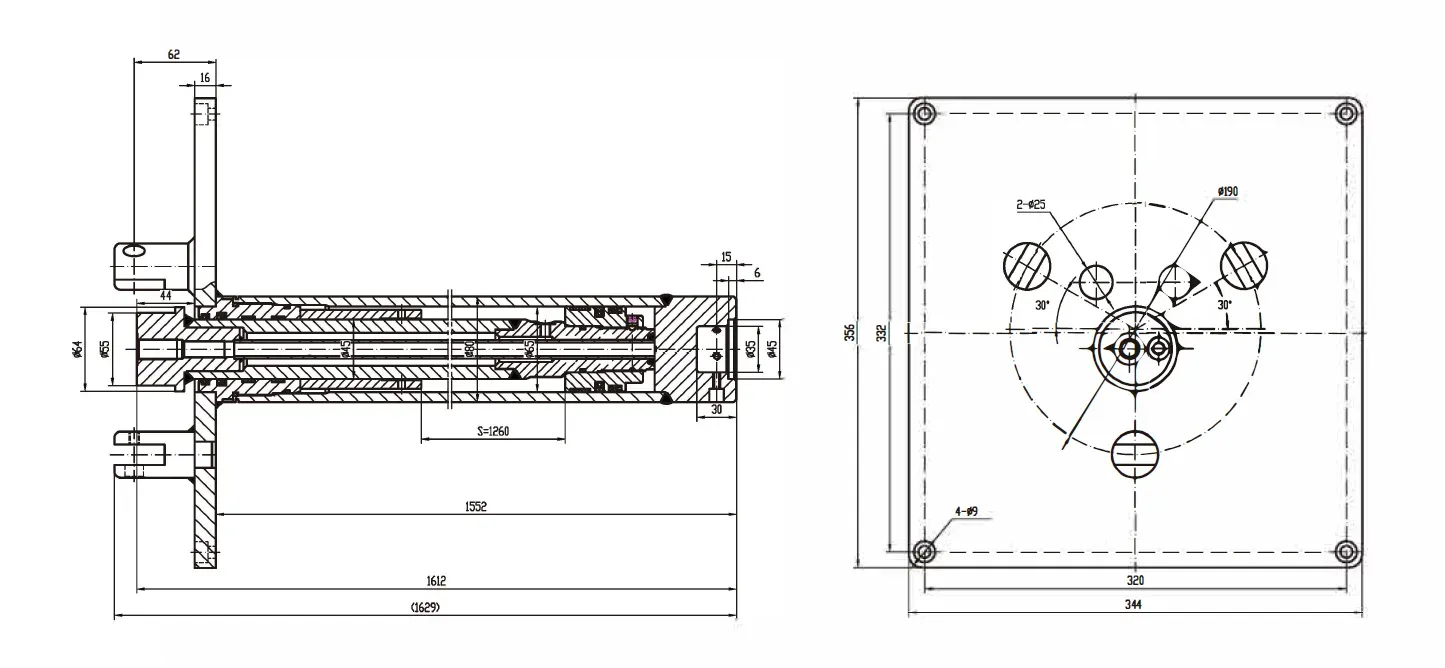
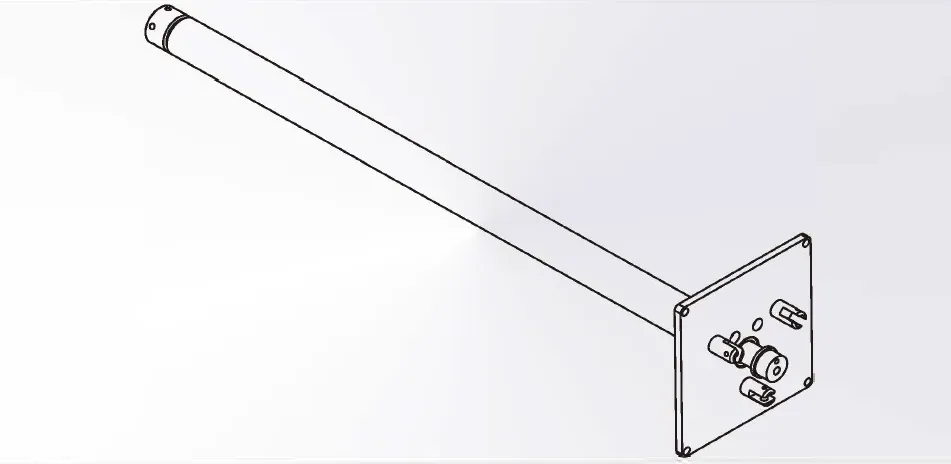
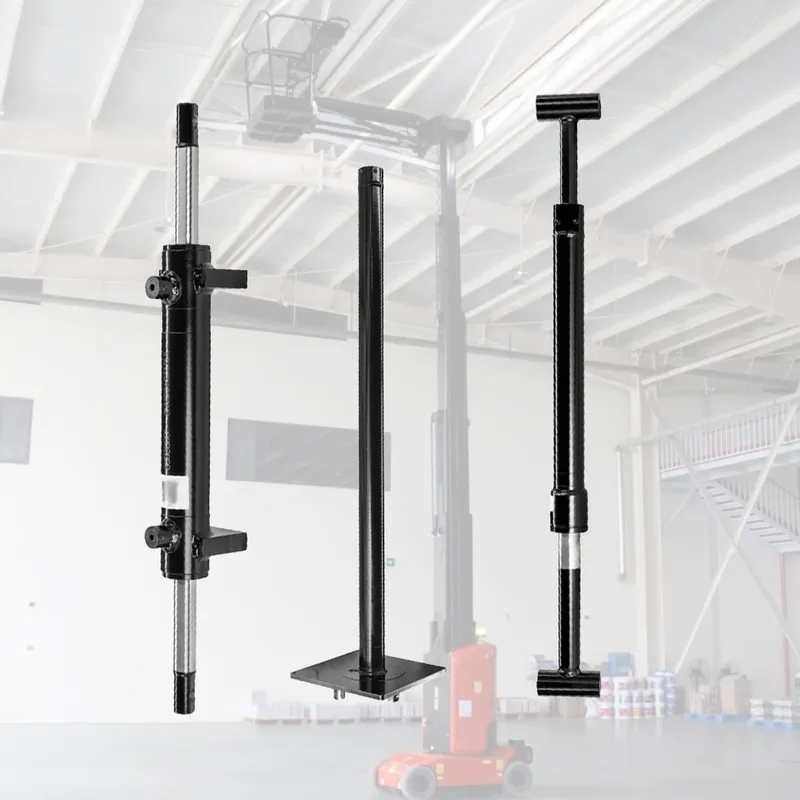
Hydraulic Lifting Cylinder Dimensions
Technical Specifications
| Lifting Hydraulic Cylinder | ||||||
| Cylinder model | Specifications | Working pressure | Maximum withstand pressure | Trip | Installation distance | Weight |
| CMNYY11112006 | Φ65xΦ45x1260 | 18MPa | 27MPa | 1260 | 1629 | 54kg |
| Product Name: | Lifting Hydraulic Cylinder |
| Function: | To achieve the lifting and lowering of mast columns. |
| Cylinder diameter: | 65mm-80mm |
| Rod diameter: | 45mm-60mm |
| Travel: | 1150mm-1260mm |
| Maximum pressure: | 18MPa |
| Maximum thrust: | 90KN |
Features of Hydraulic Lifting Cylinder
The hydraulic lifting cylinder boasts an array of features that set it apart in the market for aerial work platforms. High load capacity is paramount, allowing these units to support weights that exceed standard expectations without compromising stability. Constructed from premium steel alloys, they resist deformation under stress, making them ideal for repeated heavy-duty cycles. Advanced sealing systems prevent fluid leakage, ensuring consistent operation even in contaminated environments. Compact designs enable seamless integration into mast structures, optimizing space in mobile equipment.
Precision control is another standout feature, facilitated by double-acting mechanisms that allow for smooth extension and retraction. This control minimizes vibrations, enhancing operator comfort and safety during use. Durability is enhanced through protective coatings that guard against rust and abrasion, extending service life in harsh conditions. Safety integrations, such as pressure relief valves, provide automatic safeguards against over-pressurization, reducing accident risks.
- Robust construction for longevity
- Leak-proof seals for reliability
- Versatile mounting options
- Low-friction pistons for efficiency
- Customizable stroke lengths
These features collectively contribute to a product that performs reliably across various scenarios. For example, the compact footprint allows for use in tight spaces, while the high-strength materials ensure performance in extreme temperatures. Operators value the ease of maintenance, with accessible components that simplify inspections.
In comparison to basic models, our lifting hydraulic cylinders incorporate innovative elements like reinforced rods that withstand side loads, preventing bending or failure. This design choice reflects our commitment to engineering excellence at Mexico Ever-Power, where each feature is tested rigorously.
Furthermore, energy efficiency is prioritized through optimized hydraulic flow paths, reducing the power required from the pump system. This not only lowers operational costs but also aligns with green initiatives by minimizing fuel consumption in diesel-powered platforms.
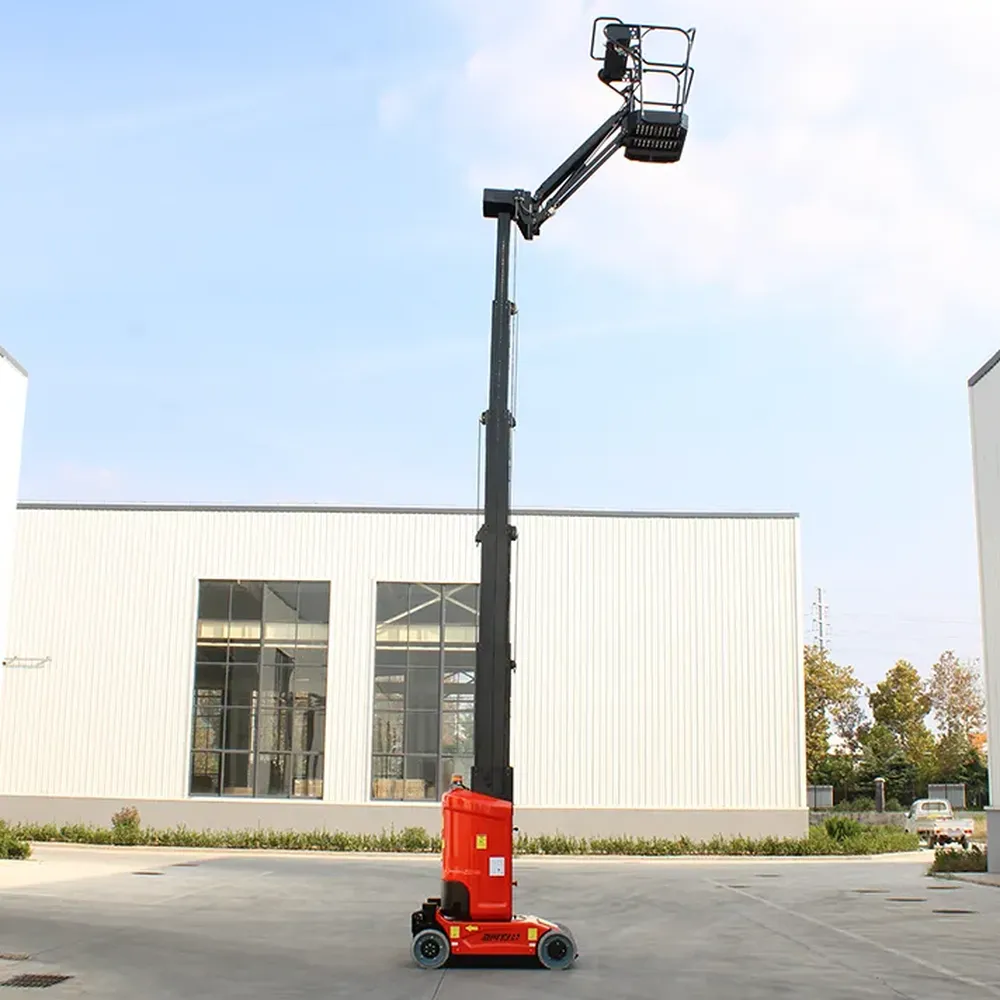
Hydraulic Cylinder for Mast Type Aerial Work Platforms
- Lifting Hydraulic Cylinder
In mast type aerial work platforms, the lifting hydraulic cylinder primarily handles vertical elevation of the platform, converting pressurized fluid into linear force to extend the mast sections smoothly and securely. This component supports heavy loads during operations like building inspections or warehouse stocking, ensuring stable positioning at heights up to several meters while incorporating safety valves to prevent sudden drops. Manufacturers often design these with double-acting mechanisms for controlled ascent and descent, adapting to diverse site conditions in Mexico's construction and logistics sectors. - Swing Rod Hydraulic Cylinder
The swing rod hydraulic cylinder facilitates angular adjustments and boom positioning in mast type aerial work platforms, enabling operators to maneuver the arm for optimal reach in confined spaces such as urban maintenance tasks. With typical cylinder diameters ranging from 55mm to 65mm and rod sizes of 40mm to 60mm, it allows variable amplitude movements that enhance flexibility during facade repairs or equipment installations. This setup relies on precise hydraulic control to maintain balance under varying loads, contributing to safer and more efficient workflows in industrial environments. - Steering Hydraulic Cylinder
Steering hydraulic cylinders in mast type aerial work platforms manage directional control and platform orientation, allowing precise navigation around obstacles in dynamic work sites like telecommunications setups or facility upkeep. These cylinders integrate with the chassis to provide responsive turning, often featuring robust seals for durability in outdoor exposures. By enabling smooth pivots and alignments, they reduce operator effort and improve access accuracy, which is essential for tasks requiring exact positioning in Mexico's growing infrastructure projects.

Working Principle of Hydraulic Lifting Cylinder for Mast AWPs
The operational mechanism of hydraulic lifting cylinders in mast-type aerial work platforms is fundamentally based on Pascal's principle, which states that pressure exerted on a confined fluid propagates uniformly throughout the fluid. In application, a hydraulic pump delivers pressurized oil or fluid into the cylinder's base chamber, driving the piston upward and thereby extending the connected rod to elevate the mast assembly. Retraction occurs by redirecting the fluid flow to the rod-side chamber in double-acting configurations, allowing controlled descent, whereas single-acting variants rely on gravitational pull or external forces for lowering, often supplemented by return springs for smoother motion.
This uniform pressure transmission guarantees balanced force application, which is critical for achieving accurate positioning and stability in elevated operations, such as those in construction sites or warehouse environments across Mexico's diverse industrial landscapes. High-quality seals, typically made from durable elastomers like polyurethane or nitrile rubber, play a vital role in preserving system pressure by blocking fluid escape and contaminant ingress, thus safeguarding against performance degradation over time.
Key elements include:
- Pressurization of fluid to initiate extension, where the pump builds necessary force based on load requirements.
- Control via directional valves, which precisely manage fluid pathways to regulate speed and direction.
- Conversion of hydraulic energy into mechanical piston movement, translating linear force efficiently to the mast.
- Incorporation of safety locks or holding valves that engage to secure the position, preventing unintended drops during power loss or pauses.
A deeper grasp of this mechanism supports effective diagnostics; for instance, technicians can pinpoint issues like inconsistent lifting by monitoring for pressure anomalies caused by worn seals or air entrapment in the lines. At Mexico Ever-Power, our engineering team refines these systems through rigorous testing in local conditions, incorporating streamlined internal geometries to reduce frictional losses and improve response times. This approach not only boosts operational speed but also extends component longevity, minimizing downtime in high-demand settings like urban maintenance projects in Mexico City or rural agricultural facilities.
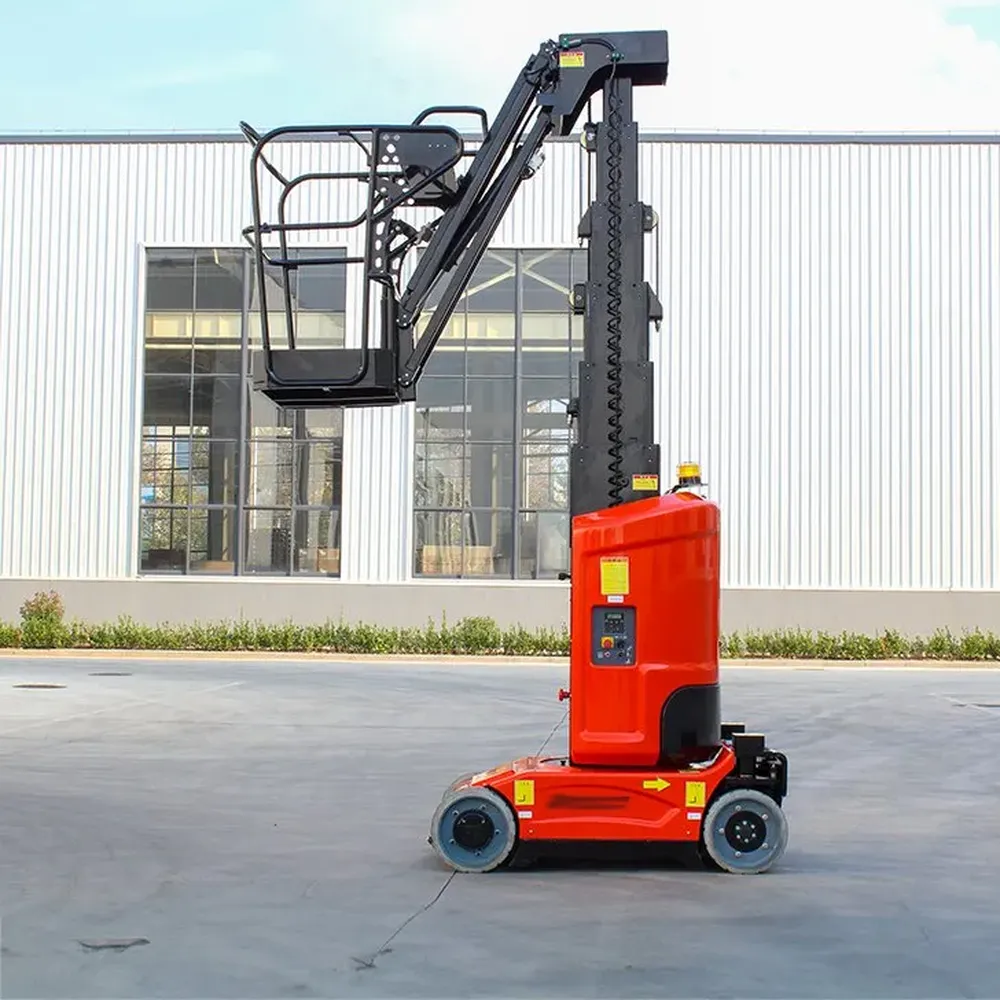
Applications of Lifting Hydraulic Cylinders in Aerial Work
1. Hydraulic lifting cylinders serve as critical components in various sectors, delivering reliable vertical movement for mast-based systems. Their robust design supports operations requiring precise elevation, ensuring worker safety and operational efficiency in demanding environments.
2. Construction Sector Applications
In construction projects across urban and rural sites in Mexico, these aerial work vehicle hydraulic cylinders enable secure access to elevated areas for tasks such as installing structural elements on high-rise buildings or conducting inspections on bridges. Workers rely on the steady lifting capability to position materials accurately, reducing the need for temporary scaffolding and minimizing project timelines. For instance, during facade cladding or window fitting on multi-story structures, the cylinders provide controlled heights up to several meters, allowing teams to operate without excessive physical strain or exposure to hazards.
3. Warehousing and Logistics Uses:
Within large-scale warehouses and distribution centers, hydraulic lifting cylinders facilitate efficient retrieval from high-bay shelving systems. They power platforms that elevate operators to access inventory stored at upper levels, streamlining order fulfillment and stock rotation processes. In facilities handling diverse goods like automotive parts or consumer products, this application cuts down on manual handling, enhances throughput during peak seasons, and integrates seamlessly with automated conveyor setups to maintain continuous workflow.
4. Building Maintenance Operations
For ongoing upkeep in commercial and residential buildings, these cylinders support technicians in reaching overhead fixtures such as lighting arrays, ventilation ducts, or HVAC units. Their stability ensures safe positioning during repairs or replacements, particularly in confined spaces like atriums or mechanical rooms, where traditional ladders prove inadequate. Regular use in property management helps prevent downtime by enabling quick interventions, such as bulb changes or filter cleanings, while adhering to occupational safety standards.
5. Industrial Equipment Servicing
In manufacturing plants and heavy industry settings, hydraulic lifting cylinders assist in servicing oversized machinery, such as overhead cranes or assembly line components. Technicians can elevate themselves to inspect or repair elevated parts without disrupting production lines, promoting preventive maintenance that extends equipment lifespan. This is particularly valuable in sectors like metal fabrication or chemical processing, where precise access to high-mounted valves or motors is essential for operational continuity.
Why Choose Mexico Ever-Power's Hydraulic Lifting Cylinder?
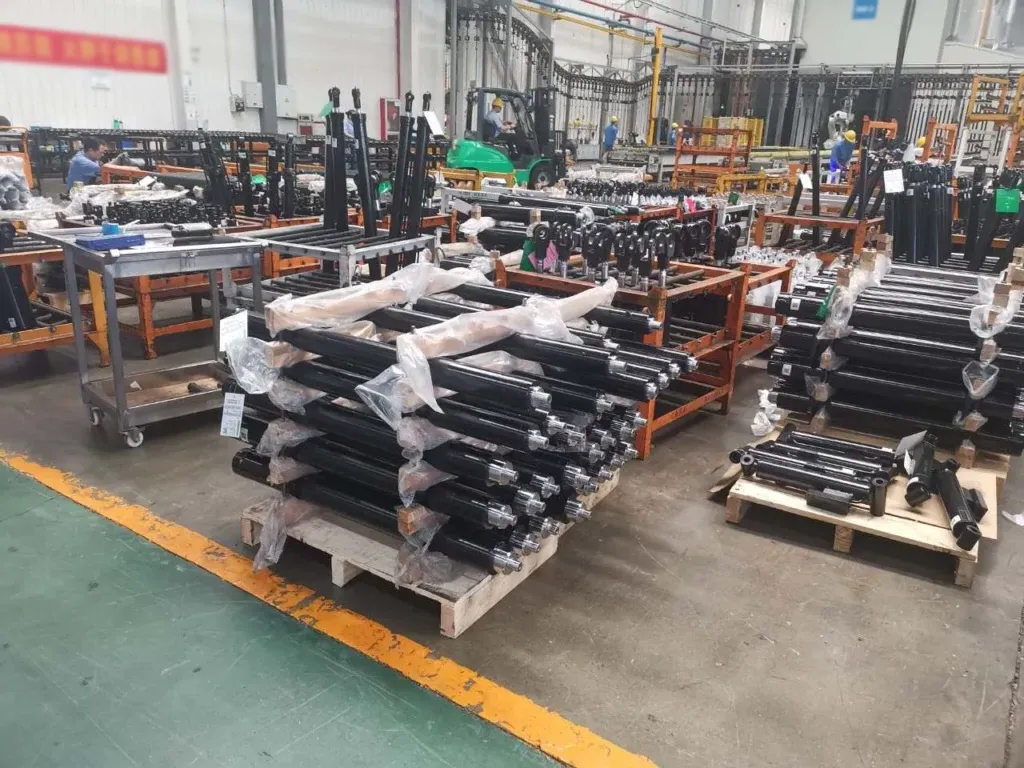
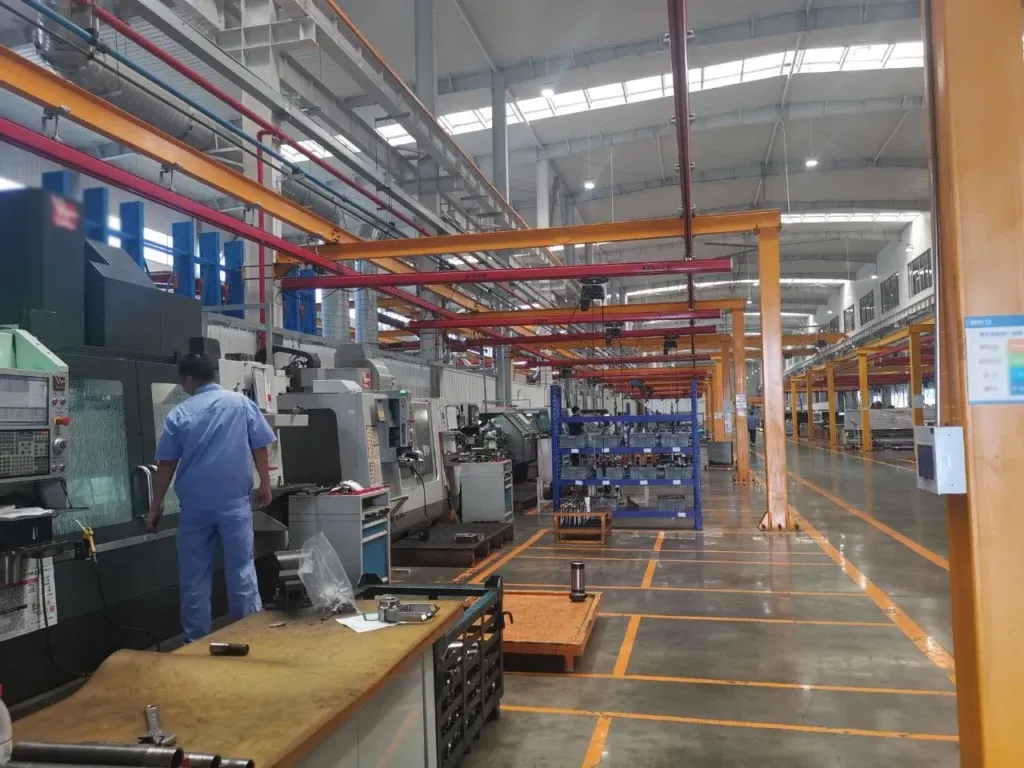
Mexico Ever-Power Hydraulic Cylinder Co., Ltd., established in May 1978 as a high-tech enterprise, delivers more than 45 years of dedicated expertise in producing mid- to high-end hydraulic components, with a primary emphasis on hydraulic cylinders. Our expansive facility, covering 103 acres, includes specialized production workshops equipped for advanced manufacturing, supported by a workforce exceeding 400 professionals who drive ongoing improvements in hydraulic technology. We concentrate on a broad array of products, such as cylinders for forklifts, industrial vehicles, engineering machinery, aerial work platforms, sanitation equipment, wind power systems, agricultural tools, mining operations, marine applications, oil and gas sectors, offshore installations, tunnel boring machines, and dump trucks or trailers. This specialization ensures that our hydraulic lifting cylinders for mast-type aerial work platforms are crafted to handle demanding elevation tasks with precision and durability.
Our in-house research institute, coupled with a hydraulic product testing laboratory and a high-tech R&D center, fosters innovation through independent intellectual property rights in critical equipment design and production. This setup allows us to refine cylinder performance, incorporating features like enhanced sealing for leak prevention and robust materials for extended service life under variable loads. Quality assurance remains paramount, with a thorough system encompassing complete production protocols and rigorous testing methods that align with global standards, guaranteeing consistent reliability in every unit shipped.
On the international front, our products reach over 34 countries spanning Asia, Europe, North America, South America, Africa, and Oceania, including key partners in the United States, Canada, and Mexico. In North America, particularly Mexico, we prioritize responsive local service, leveraging advanced technological precision to meet regional demands in construction, logistics, and maintenance industries. This global footprint underscores our ability to adapt cylinders for diverse environmental conditions, from urban high-rises to remote industrial sites.
 |
 |
 |
 |
FAQs
Q: How does a lifting hydraulic cylinder differ from other types?
A: Compared to general-purpose hydraulic cylinders, a lifting variant tailored for mast-type aerial work platforms is engineered specifically for upright force applications, incorporating elevated pressure tolerances up to 18MPa and refined valve systems for exact motion regulation to prioritize operator protection. These adaptations make them more suitable for sustained vertical operations, unlike horizontal-push models used in machinery, ensuring greater stability and load distribution in environments demanding repeated height changes without compromising structural integrity.
Q: Can hydraulic lifting cylinders be customized for specific applications?
A: Absolutely, at Mexico Ever-Power, we provide extensive customization options for hydraulic lifting cylinders, including modifications to stroke distances, material compositions for enhanced corrosion resistance in humid climates, or integration of specialized seals to suit unique mast configurations in aerial work platforms. This flexibility allows adaptation to niche requirements, such as heavier load ratings for mining operations or compact designs for urban maintenance, backed by our engineering team's consultations to align precisely with client specifications and regulatory standards.
Q: How to install a lifting hydraulic cylinder on a mast-type AWP?
A: Installing a lifting hydraulic cylinder on a mast-type aerial work platform starts with aligning the cylinder base to the fixed mounting brackets using high-torque bolts, followed by linking the extendable rod to the mast linkage points, securing hydraulic connections with leak-proof fittings, and conducting initial low-pressure tests to confirm smooth functionality. Always refer to our detailed installation manual for torque specifications and safety checks, which helps prevent misalignment issues common in field setups across Mexico's varied construction sites.
Q: What maintenance is required for a hydraulic lifting cylinder?
A: Essential maintenance for a hydraulic lifting cylinder involves monthly examinations of seal conditions to detect early wear, monitoring fluid volumes and replacing contaminated oil every six to twelve months with manufacturer-recommended grades, and wiping down external surfaces to remove debris that could lead to abrasion. Incorporating pressure gauge readings during routines ensures optimal performance, while scheduling professional overhauls annually extends reliability, especially in high-usage scenarios like warehouse operations where downtime impacts productivity.
Q: Are lifting hydraulic cylinders safe for heavy loads?
A: Indeed, lifting hydraulic cylinders are designed with inherent safety measures for substantial loads, including built-in overload safeguards that automatically vent excess pressure and reinforced casings from high-tensile steel capable of managing thrusts up to 90KN in rigorous settings. These elements, combined with fail-safe locking mechanisms, mitigate risks of collapse during extended holds, making them dependable for heavy-duty applications in Mexico's infrastructure projects where compliance with safety protocols is non-negotiable.
Q: What materials are used in manufacturing hydraulic lifting cylinders?
A: Manufacturing hydraulic lifting cylinders typically employs premium-grade steel alloys for the main barrel and rod to provide exceptional strength against compressive forces, augmented by protective layers like chrome plating or epoxy coatings to combat rust in moist or dusty atmospheres. Internal components often feature resilient elastomers for seals and composite bushings for reduced friction, selected for their longevity and performance in diverse operational contexts, ensuring the unit withstands Mexico's climatic variations effectively.
Q: How to troubleshoot common issues with hydraulic lifting cylinders?
A: Addressing typical problems in hydraulic lifting cylinders begins with checking for fluid leaks around seals by visually inspecting joints and wiping areas clean, while sluggish movements often stem from insufficient oil levels or air bubbles—resolved through bleeding the system and topping up with clean fluid. For erratic pressure, use a gauge to test pump output and examine valves for blockages, recommending professional diagnostics if issues persist to avoid escalation in operational settings.
Customer Reviews
Juan P. – Monterrey:
We've been relying on these hydraulic lifting cylinders for our construction rigs for about eight months now, and the quality really stands out—they handle up to 18MPa pressure without a hitch, even on rough terrain sites. No leaks or breakdowns so far, which has kept our projects on schedule. The team's impressed with how smoothly they extend the masts, making high-access jobs less of a hassle. Definitely a solid pick for heavy-duty work.
Maria L. – Mexico City:
I ordered a batch of these lifting cylinders for our warehouse setup, and the service from Mexico Ever-Power was top-notch—they answered all my questions about specs like the 1260mm stroke right away and even suggested custom tweaks. Delivery arrived in just four days, faster than expected, which helped us avoid any downtime. The cylinders themselves are sturdy and perform reliably under daily loads.
Carlos V. – Guadalajara:
After trying a few brands, these hydraulic lifting cylinders from Ever-Power have been a game-changer for our maintenance crew. We've used them for over a year on mast platforms for HVAC repairs, and the corrosion-resistant coatings hold up well in humid conditions. Smooth operation with no jerky movements, but what really won me over was the quick response from their support when we needed replacement seals—shipped overnight.
Ana R. – Tijuana:
The build on these cylinders is impressive; we've integrated them into our aerial platforms for telecom installations, and they manage 90KN thrusts effortlessly without any strain after five months of frequent use. Logistics were seamless, arriving well-packaged and on time, which is crucial for our border-area projects. Overall, they've boosted our efficiency without breaking the bank.
Luis M. – Puebla:
Service attitude here is excellent—when I called about fitting a Φ65xΦ45 model to our existing masts, the rep walked me through the details patiently and followed up to ensure everything worked. The cylinders have been in operation for seven months now, providing consistent lifts in our factory setting. Minor issue with initial setup, but their guidance fixed it fast.
Sofia G. – Cancun:
These lifting hydraulic cylinders exceeded expectations in terms of durability; after nine months in coastal environments, no signs of rust or wear on the steel alloys, even with salt exposure. We appreciate the precise control for our resort maintenance tasks, though the initial cost was a bit higher, the long-term reliability makes it worth it. Shipping took a week, but it was tracked the whole way.
Roberto H. – Veracruz:
Focusing on the logistics side, Ever-Power nailed it with same-week delivery to our port facility, which kept our operations rolling without delays. The cylinders, with their 1260mm travel, have transformed how we handle elevated inspections on shipping equipment—smooth and powerful after four months. Quality feels premium, and the price was competitive compared to imports.
Additional information
| Edited by | Yjx |
|---|