Hydraulic Cylinder for Mining Dump Truck
Engineered for extreme mining conditions. Our heavy-duty hydraulic cylinders deliver unmatched lifting power, precise steering, and reliable suspension for dump trucks operating in the harshest environments worldwide.
Why Hydraulic Cylinders Are the Backbone of Mining Dump Trucks
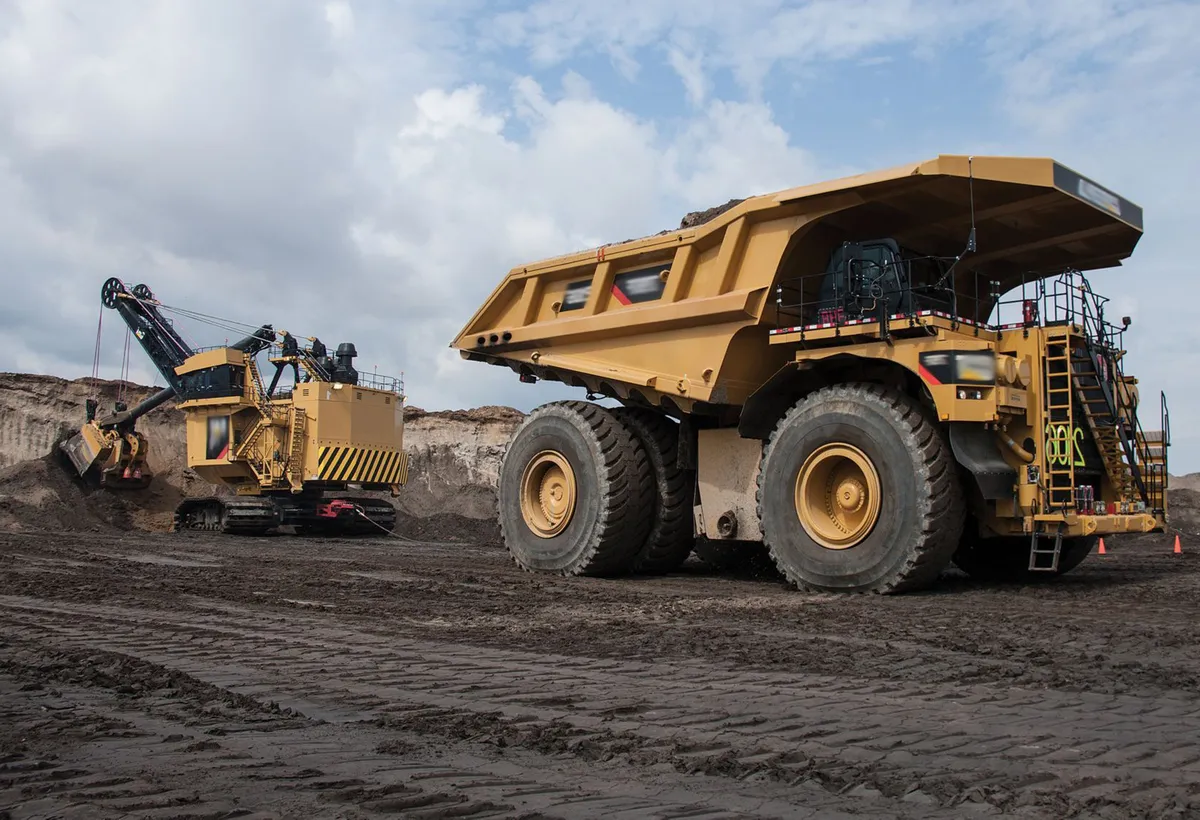
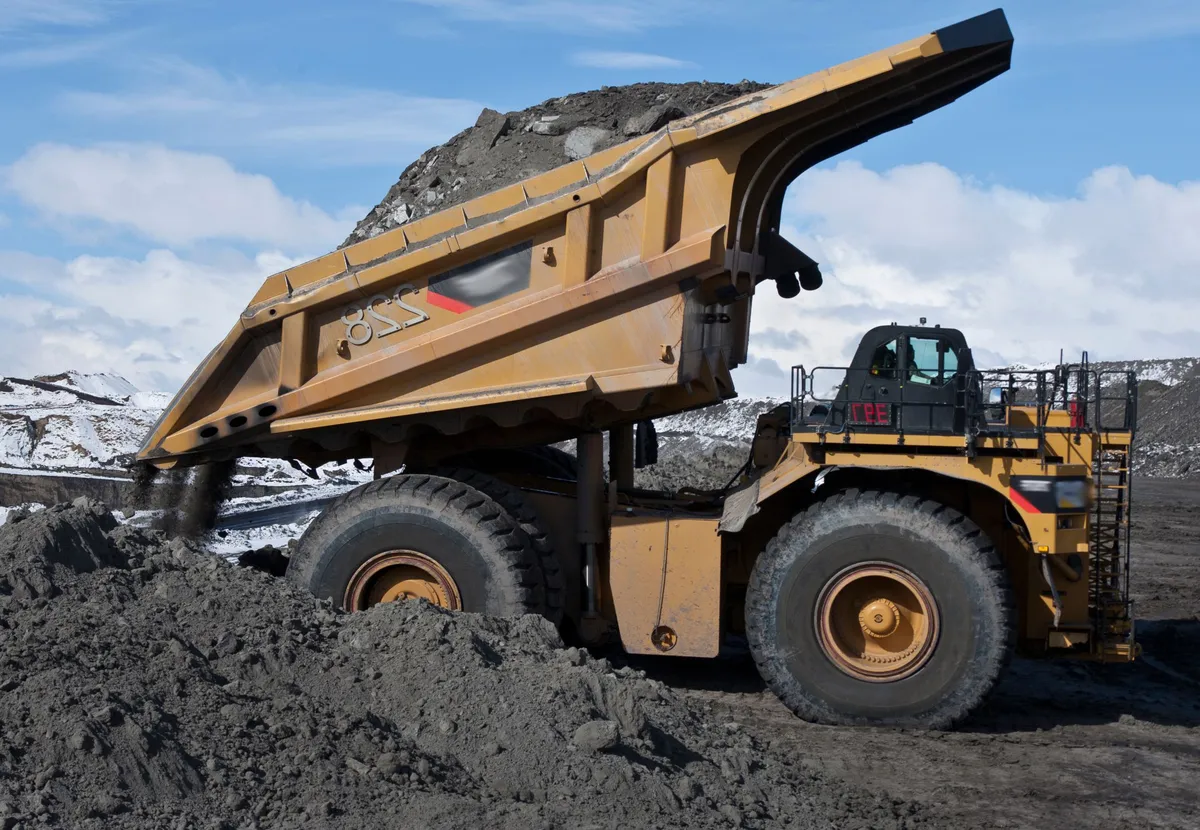
In large-scale open-pit and underground mining, the mining dump truck hydraulic cylinder is far more than a power transmission component. It is the critical link between raw hydraulic energy and the controlled, repeatable mechanical motion that keeps ore moving, equipment stable, and operators safe. Every time a dump body rises to discharge 200+ tons of blasted rock, every time the front axle absorbs a crater-sized pothole at 40 km/h, and every time the steering knuckle pivots a 400-ton chassis around a hairpin haul-road curve, one or more hydraulic cylinders are doing the real work.
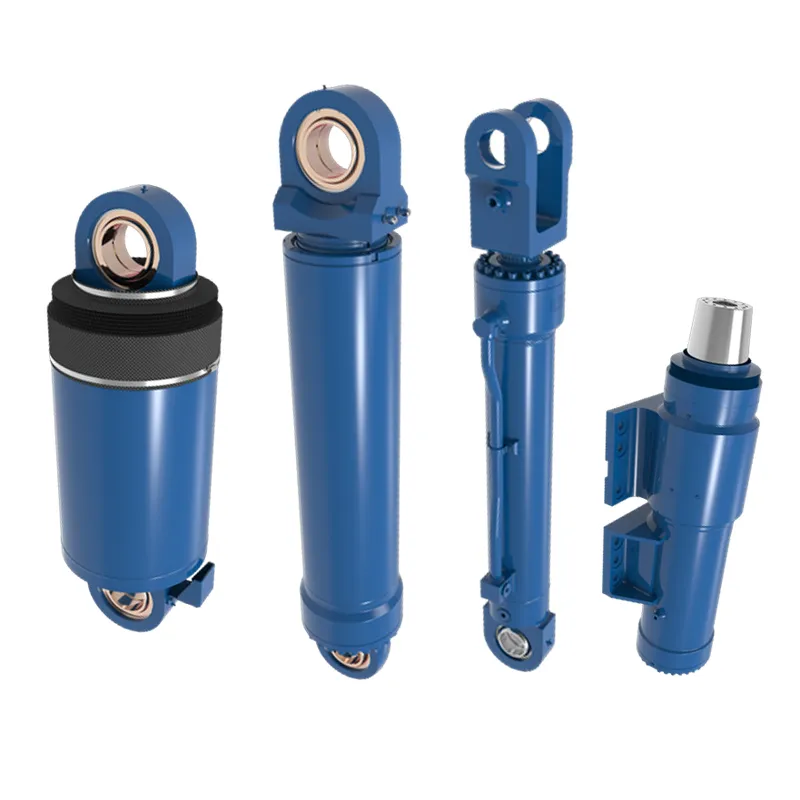
From a system-engineering standpoint, the cylinders fitted to a mining haul truck fall into four functional families: lifting hydraulic cylinders (body hoist), steering hydraulic cylinders, front suspension hydraulic cylinders, and rear suspension hydraulic cylinders. Each family faces a unique combination of load magnitude, duty cycle, shock profile, and environmental exposure. A lifting cylinder, for instance, must develop enough force to raise a loaded body through a full dump angle in under 25 seconds, then retract smoothly under gravity without cavitation. A suspension cylinder, by contrast, operates as a combined spring-damper unit, cycling millions of times over its service life while absorbing vertical loads that can spike to three times the static value when the truck hits a bench edge.
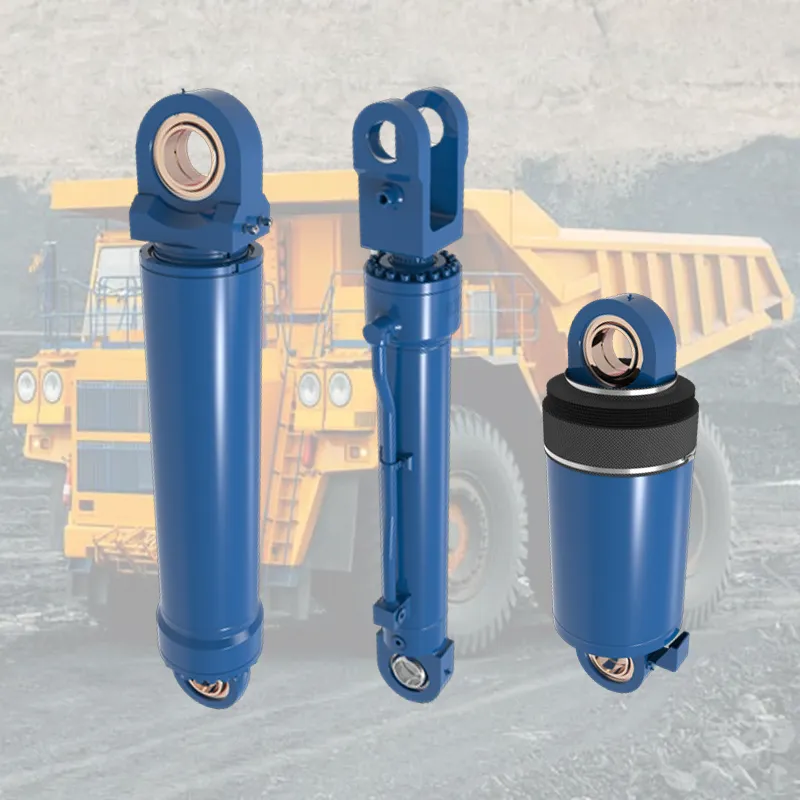
Choosing the right hydraulic cylinder manufacturer is therefore not a matter of catalogue shopping. It requires an understanding of bore-to-rod ratios, seal compatibility with biodegradable fluids, chrome-plating adhesion under thermal cycling, and dozens of other engineering trade-offs that separate a cylinder which lasts 15,000 hours from one that fails at 4,000. That is exactly the kind of deep, application-specific expertise we bring to every order.
Applications Across the Dump Truck Platform
A single rigid-frame mining dump truck may carry six to twelve individual hydraulic oil cylinders depending on model and configuration. The body-hoist system typically uses two or three large-bore double acting hydraulic cylinders mounted between the frame rails and the dump body pivot. The steering circuit employs a pair of steering hydraulic cylinders connected to a flow-amplified orbital valve, translating low-effort operator input into the enormous lateral force required to articulate massive tires. Front and rear suspension assemblies each rely on dedicated gas-over-oil or pure hydraulic cylinder-accumulators that smooth the ride, protect the frame from fatigue cracking, and keep the tires in contact with uneven haul-road surfaces.
Beyond the truck itself, the same cylinder design philosophy extends to support equipment that shares the pit floor: graders maintaining haul-road grade, loaders filling the trucks, dozers pushing muck piles, drill rigs preparing blast patterns, and excavators loading from the bench face. When all of these machines run cylinders built to the same quality standard, fleet managers gain the enormous advantage of consolidated spare-parts inventories and a single hydraulic cylinder repair protocol across the entire operation.
Technical Specifications and Customizable Parameters
Every mine site presents different payloads, altitudes, ambient temperatures, and maintenance philosophies. That is why each of our mining dump truck hydraulic cylinders is fully customizable. The tables below outline the adjustable parameter ranges for lifting, steering, front suspension, and rear suspension cylinders. If your application falls outside a listed range, contact our engineering team for a feasibility review.
Lifting Hydraulic Cylinder (Body Hoist)
| Parameter | Customizable Range / Options |
|---|---|
| Bore Diameter | 180 mm – 400 mm |
| Rod Diameter | 120 mm – 280 mm |
| Stroke Length | 800 mm – 2,500 mm |
| Working Pressure | 16 – 35 MPa |
| Burst Pressure | Up to 70 MPa |
| Retracted Length (C-C) | 1,200 mm – 3,400 mm |
| Mounting Style | Trunnion, Clevis, Cross-tube Pin, Custom Lug |
| Cylinder Tube Material | ST52 / 27SiMn / AISI 1045 honed tube |
| Piston Rod Material | 42CrMo / CK45 / AISI 4140, hard chrome plated (20-40 micron) |
| Seal Kit | Parker, Hallite, NOK, Trelleborg; NBR / FKM / PTFE compound |
| Surface Finish (Rod) | Ra 0.2 or better |
| Operating Temperature | -40 C to +120 C |
| Corrosion Protection | QPQ treatment, ceramic coating, nickel chrome plating available |
Steering Hydraulic Cylinder
| Parameter | Customizable Range / Options |
|---|---|
| Bore Diameter | 100 mm – 220 mm |
| Rod Diameter | 60 mm – 140 mm |
| Stroke Length | 300 mm – 900 mm |
| Working Pressure | 16 – 25 MPa |
| Mounting Style | Spherical bearing eye, Clevis with pin, Flange |
| Tube Material | ST52 / 27SiMn honed tube |
| Rod Material | 42CrMo / CK45, hard chrome plated |
| Seal Kit | Parker, Hallite; FKM / PTFE combination |
| Operating Temperature | -40 C to +110 C |
Front Suspension Hydraulic Cylinder
| Parameter | Customizable Range / Options |
|---|---|
| Bore Diameter | 160 mm – 320 mm |
| Rod Diameter | 100 mm – 220 mm |
| Stroke Length | 200 mm – 500 mm |
| Working Pressure | 20 – 35 MPa (gas-over-oil optional) |
| Charging Pressure (N2) | 2.5 – 6.5 MPa (where applicable) |
| Mounting Style | Upper / Lower Pin, Flange |
| Tube / Rod Material | 27SiMn / 42CrMo, chrome plated |
| Operating Temperature | -40 C to +120 C |
Rear Suspension Hydraulic Cylinder
| Parameter | Customizable Range / Options |
|---|---|
| Bore Diameter | 200 mm – 380 mm |
| Rod Diameter | 140 mm – 260 mm |
| Stroke Length | 250 mm – 600 mm |
| Working Pressure | 20 – 35 MPa |
| Charging Pressure (N2) | 3.0 – 7.0 MPa |
| Mounting Style | Pin mount, Custom bracket |
| Tube / Rod Material | 27SiMn / 42CrMo, chrome plated |
| Seal Brand Options | Parker, Hallite, NOK, Trelleborg |
| Operating Temperature | -40 C to +120 C |
| Corrosion Protection | QPQ, ceramic coat, nickel chrome plating |
Need dimensions or pressure ratings outside these ranges? Our design engineers can evaluate your requirements within 48 hours. Reach out to our engineering team with your truck model and operating conditions.
Compatible Replacement for Major Mining Truck Brands
Disclaimer: All brand names, model numbers, and trademarks mentioned below are the property of their respective owners. They are referenced solely to help buyers identify the correct hydraulic cylinder replacement and are not intended to imply endorsement or affiliation.
Our mining dump truck hydraulic cylinder products are designed as direct-fit or adaptable replacements for the OEM cylinders installed on the following major equipment platforms:
- Caterpillar 785, 789, 793, 797 series rigid-frame trucks
- Komatsu HD785, HD985, 830E, 930E, 960E electric-drive trucks
- Hitachi EH3500, EH4000, EH5000 rear-dump trucks
- Liebherr T264, T274, T284 ultra-class haul trucks
- BelAZ 7513, 7530, 7555, 75710 series
- Terex / Unit Rig MT3700, MT4400, MT5500
- XCMG XDE110, XDE150, XDE240 mining trucks
- SANY SRT95C, SRT55D rigid-frame trucks
For each platform, we replicate the original mounting geometry, port configuration, stroke, and force output. We also hold dimensional records for over 600 individual part numbers, so cross-referencing your existing OEM hydraulic cylinder parts number to our catalogue is usually straightforward. If we do not have your exact part number on file, send us the cylinder and we will reverse-engineer it within five working days.
Core Technical Advantages
Ultra-Low Friction Seal System
Friction is the silent killer of hydraulic cylinder seals. High friction not only wastes energy and generates heat, it also accelerates seal wear and leads to stick-slip behavior that undermines fine control. We address this with a multi-lip seal stack combining PTFE-bronze guide rings, low-friction rod wipers, and step-cut wear bands. The result is a breakaway pressure consistently below 2% of working pressure, a benchmark that many competitor designs struggle to achieve at 4%-5%.
High-Rigidity Cylinder Barrel and Piston Rod Manufacturing
Barrel distortion under load changes the bore geometry, which causes localized seal overloading and premature leakage. We machine our barrels from forged 27SiMn or ST52 seamless tube, then deep-hole hone to an ID tolerance of H8 and a surface finish better than Ra 0.4. Piston rods are induction-hardened to HRC 55-62 across the bearing length, then ground and polished before receiving a hard chrome layer of 20-40 microns with a micro-cracked structure that retains a thin oil film. This combination maintains concentricity under full side-loading, extending the life of every hydraulic cylinder component in the assembly.
Thermal Stability and Fatigue Life Optimization
Mining dump trucks operate in ambient conditions ranging from -40 C at Arctic mines to +55 C in desert pits. Our cylinders are designed with controlled piston-to-bore clearance and FKM (Viton) seal compounds that maintain their elastic properties across this full band. On the fatigue side, we perform finite-element stress analysis on every new design and target a minimum of two million full-load pressure cycles before any inspection interval. Weld joints on trunnion mounts and clevis eyes are post-weld heat treated and ultrasonically inspected to eliminate residual stress concentrators.
Internal Cushioning and End-of-Stroke Damping
Uncontrolled deceleration at stroke end generates pressure spikes that can exceed burst ratings and hammer mounting hardware. Our cushion design uses a tapered spear that progressively restricts exhaust flow, decelerating the piston over the final 50-80 mm of travel. Adjustable needle valves allow the operator to fine-tune the cushion rate for different load conditions. This protects the entire circuit, from hoses to pump, and reduces structure-borne noise in the cab.
Corrosion and Contamination Defense
Dust, water, acidic run-off, and salt spray are constant threats in mining environments. Beyond standard hard chrome plating, we offer optional QPQ (quench-polish-quench) nitriding on piston rods, which produces a compound layer that is both harder and more chemically resistant than chrome alone. Cylinder tubes receive an internal phosphate coating followed by a petroleum-based preservative. External surfaces are grit-blasted to Sa 2.5 and coated with a two-pack epoxy-polyurethane system rated for C5 marine-industrial exposure.
Precision Port and Fitting Integration
Mismatched port threads are a frustrating source of leaks, especially when replacing OEM cylinders with aftermarket units. We stock BSP, NPT, SAE O-ring boss, and metric port options, and every port is reamed and counter-bored in a single CNC setup to guarantee perpendicularity and thread depth accuracy. O-ring grooves are cut to ISO 3601 tolerances, so customers can rely on first-fit sealing without retapping or adapters.
Manufacturing Process and Quality Control
1. Full In-House Production
From raw material receipt to finished-cylinder dispatch, every process step takes place under one roof. Incoming steel tube and bar stock are verified against mill test certificates using our own spectrometer. Cutting, turning, boring, honing, grinding, welding, chrome plating, painting, seal installation, and final assembly are all performed by our trained personnel using purpose-built machinery. This vertical integration removes the quality gaps that arise when sub-assemblies pass through multiple vendors.
2. 100% Factory Testing
No cylinder leaves our facility without passing a battery of tests. Every unit undergoes hydrostatic proof testing at 1.5 times rated working pressure, functional stroke testing under load, external and internal leak-rate measurement (acceptable threshold: zero drop in 3 minutes at rated pressure), and dimensional verification against the approved drawing. Suspension cylinders also receive a nitrogen charge test and gas-tightness hold. Test certificates with serial-number traceability are supplied with every shipment.
3. Certifications and Traceability
Our production facility holds ISO 9001:2015 certification, and our welding procedures comply with ISO 3834-2. Cylinder tubes and rods carry full heat-and-lot traceability from the steelmaker through to the finished product. For customers in regulated mining jurisdictions, we can also provide material certificates conforming to EN 10204 Type 3.1 or 3.2 as required.
4. Continuous Improvement and Field Feedback Loop
We maintain a living database of field returns and warranty claims, categorized by failure mode, truck model, operating hours, and mine location. This data feeds directly into design revisions: if a particular seal profile shows elevated wear on trucks operating in a copper-gold pit with pH 3 water contamination, we upgrade the compound for that application. The same feedback loop has driven improvements in rod plating thickness, cushion spear geometry, and bearing material selection over the past decade.
Typical Mining Equipment Applications
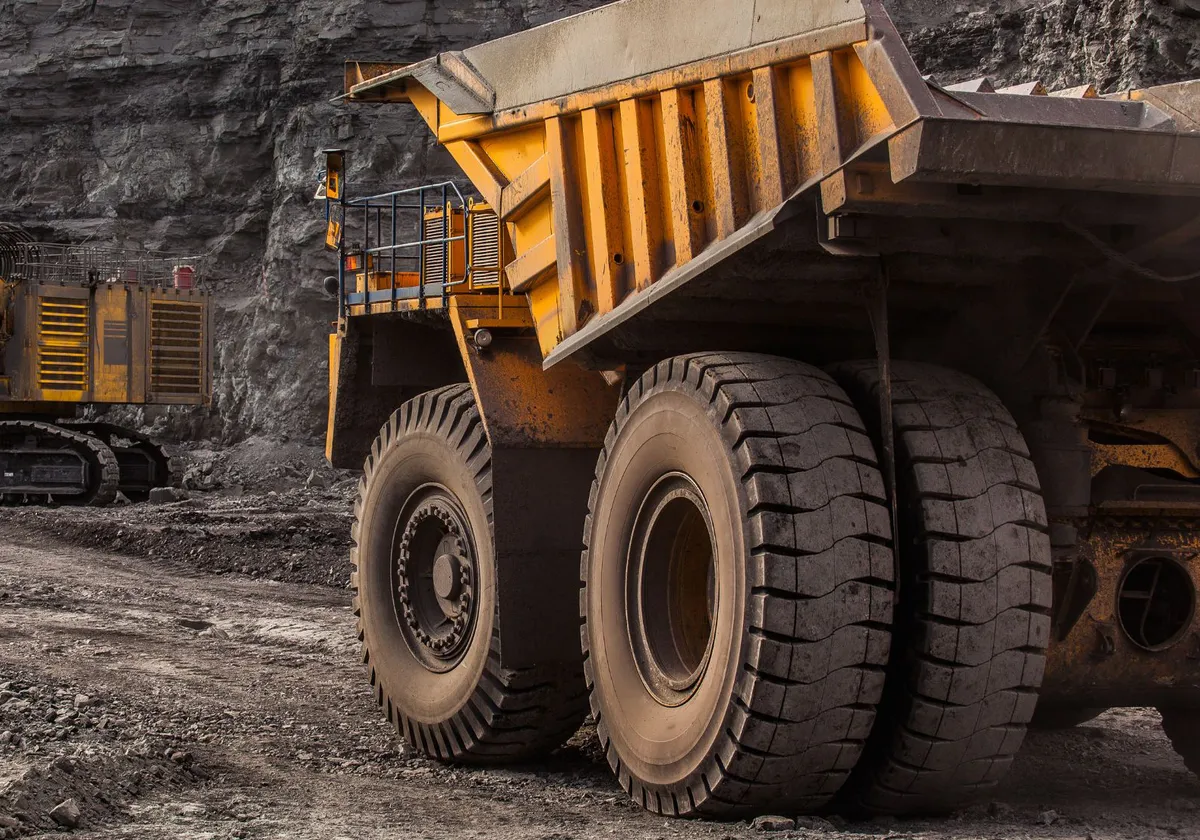
While the hydraulic cylinder for mining dump truck is our flagship product line, the same engineering discipline applies across the full range of mining mobile equipment. Here is a closer look at where our cylinders work in the pit and underground.
1. Mining Grader
Blade lift cylinders, blade shift cylinders, circle-turn motor mounting cylinders, articulation cylinders. Graders maintaining haul-road profile rely on precise, low-hysteresis cylinders for grade accuracy within 10 mm over a 4.8 m blade span.
2. Mining Loader
Boom lift cylinders, bucket-tilt cylinders, steering cylinders. Both wheel loaders (15-45 yd3 bucket) and LHD (load-haul-dump) machines for underground use. The high cycle count on loader cylinders demands exceptional hydraulic cylinder piston seal longevity.
3. Mining Dozer
Blade lift cylinders, blade-tilt cylinders, ripper-lift and ripper-tilt cylinders. Track-type dozers pushing muck or ripping hard overburden put extreme side-loads on rod bearings, requiring our reinforced gland design.
4. Mining Drill Rig
Feed cylinders, mast-raise cylinders, tramming cylinders, stabilizer-leg cylinders. Drill rigs require very smooth, judder-free feed motion to maintain hole straightness, which is where our ultra-low-friction seal technology excels.
5. Mining Excavator
Boom cylinders, arm (stick) cylinders, bucket cylinders. Mining-class excavators in the 200-800 ton range generate digging forces exceeding 1,500 kN, demanding cylinder barrels with wall thicknesses over 40 mm and rods above 200 mm diameter.
6. Mining Scaling Machine
Boom-section cylinders, breaker-mounting cylinders, stabilizer cylinders. These machines operate in confined underground headings where a cylinder failure could endanger operators, so redundancy and leak-before-burst design are critical.
7. Mining Underground Truck
Smaller-bore versions of the surface dump truck cylinder family, adapted for the tighter clearances, steeper grades, and more corrosive ventilation air found in underground haulage drifts.
8. Mining Drilling Jumbo
Feed cylinders, boom-swing and boom-lift cylinders, ROPS cylinder locks. Jumbos demand cylinders that tolerate constant vibration and high-frequency low-amplitude oscillation from percussive drilling without loosening port fittings or wearing bearing surfaces.
Performance Comparison: Standard vs. Our High-Performance Hydraulic Cylinders
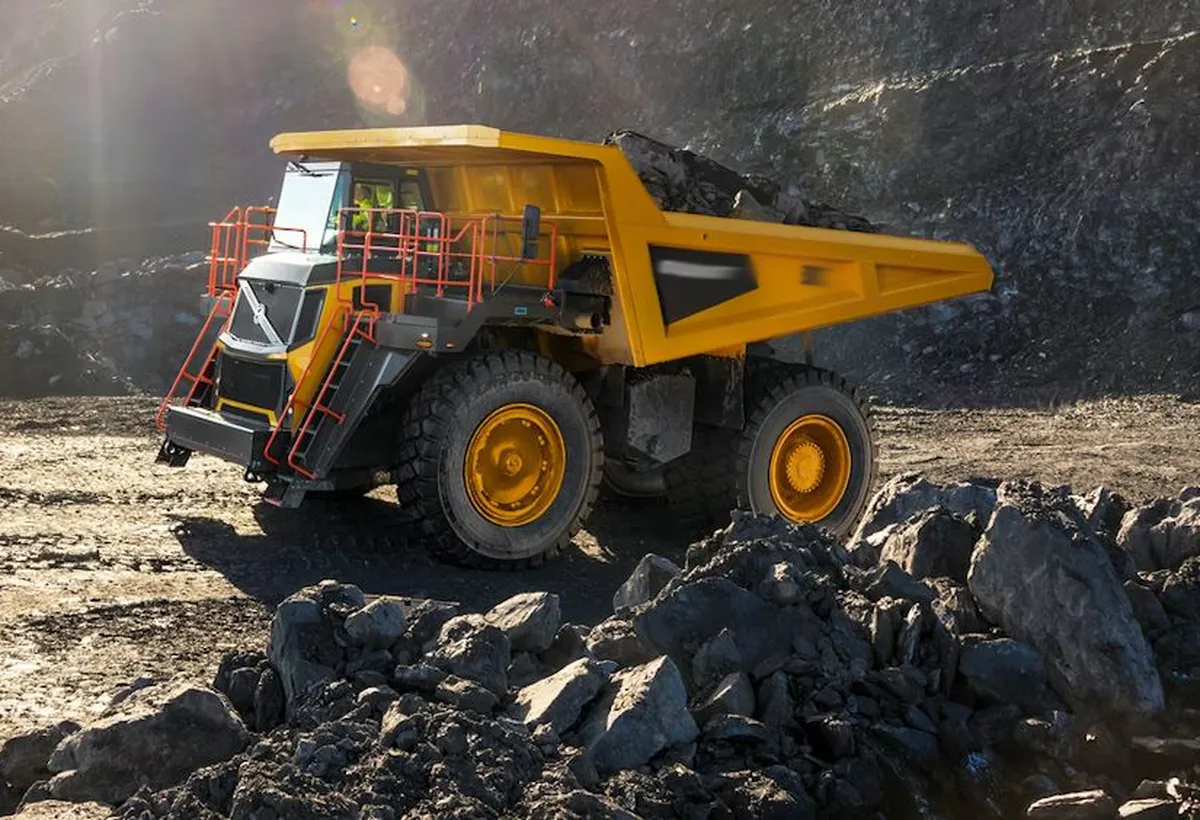
Not all hydraulic cylinders for sale are created equal. The table below highlights measurable differences between a typical commercial-grade cylinder and our mining-grade product across the factors that matter most to fleet owners and maintenance planners.
| Feature | Standard Hydraulic Cylinder | Our Mining-Grade Cylinder |
|---|---|---|
| Rod Surface Finish | Ra 0.4 – 0.8 | Ra 0.2 or better |
| Chrome Plating Thickness | 10 – 15 micron | 20 – 40 micron, micro-cracked |
| Seal Brands | Generic / unbranded | Parker, Hallite, NOK, Trelleborg |
| Burst Pressure Rating | 2x working pressure | 3x – 4x working pressure |
| Fatigue Life (cycles) | 500,000 – 800,000 | 2,000,000+ |
| Operating Temperature Range | -20 C to +80 C | -40 C to +120 C |
| Internal Cushioning | Fixed orifice or none | Adjustable tapered spear cushion |
| Weld Inspection | Visual only | Ultrasonic + magnetic particle |
| Traceability | Batch-level | Individual serial number, full material certs |
| Typical Service Life (mining) | 4,000 – 6,000 hours | 12,000 – 18,000 hours |
Real-World Case Studies
Case 1 – Copper Mine, Sonora, Mexico
Customer: A mid-size open-pit copper mining operation running a fleet of twelve 180-ton class haul trucks.
Challenge: The mine was experiencing body-hoist cylinder failures every 3,500 hours on average, causing unplanned downtime of roughly 14 hours per event. The OEM supplier quoted a 16-week lead time for replacements.
How They Found Us: The maintenance superintendent discovered our website through a Google search for mining dump truck hydraulic cylinder replacement in March 2024. After reviewing our product pages, he submitted a quote request along with the OEM part numbers.
Outcome: We delivered eight hydraulic lifting cylinders within six weeks. After 11 months in service, none of the units had shown any measurable external leakage, and hoist cycle times improved by 1.8 seconds compared to the OEM cylinders. The mine estimated annual savings of over USD 140,000 in reduced downtime alone.
“We took a chance on a new supplier, and it paid off. The cylinders are still running perfectly after nearly a year. The faster hoist cycle might seem small, but across 40 loads per shift, it adds up.” – Maintenance Superintendent, Sonora Operation
Case 2 – Iron Ore Mine, Western Australia
Customer: A Tier-1 iron ore producer operating 240-ton and 360-ton haul trucks across three pit areas.
Challenge: Premature chrome flaking on front suspension cylinder rods after exposure to highly abrasive red dust. The OEM warranty did not cover environmental wear.
How They Found Us: Their procurement team was referred to us by a peer mining company in Chile in July 2023. A video call with our engineering manager confirmed we could offer QPQ-treated rods as an upgrade.
Outcome: We supplied 24 front suspension cylinders with QPQ nitrided rods over two shipments. After 14 months and 9,200 average operating hours, rod surface inspections showed no measurable chrome loss. The customer has since ordered rear suspension and steering cylinders for the same fleet.
“The QPQ rods are holding up far better than anything we have tried before. We are now standardizing on this supplier for all suspension cylinders.” – Reliability Engineer, Pilbara Division
Case 3 – Coal Mine, Kalimantan, Indonesia
Customer: A mining contractor operating 20 units of 100-ton class trucks in tropical conditions with high humidity and seasonal flooding.
Challenge: Steering cylinder seal failure caused by water ingress through worn rod wipers. The contractor was replacing seal kits every 2,000 hours, generating high labor and parts costs.
How They Found Us: The fleet manager contacted us through a LinkedIn inquiry in November 2023 after reading one of our technical articles on hydraulic cylinder seals for tropical applications.
Outcome: We supplied a complete set of 40 steering hydraulic cylinders with upgraded triple-lip wiper seals and stainless-steel scraper rings. After 8 months, seal replacement intervals extended to over 6,000 hours, reducing annual seal kit consumption by 65%.
“The triple-lip wiper design is the real difference. We used to pull rods and find water staining under the gland. That is completely gone now.” – Fleet Manager, South Kalimantan
Case 4 – Gold Mine, Cajamarca, Peru
Customer: A high-altitude gold mining operation at 4,200 meters elevation, running 150-ton trucks on steep haul roads with gradients up to 12%.
Challenge: Rear suspension cylinders lost nitrogen charge rapidly at altitude due to temperature swings of 35 C within a single shift (from below-zero dawn to hot midday sun). Trucks rode harshly, accelerating frame cracking.
How They Found Us: The mine’s mechanical engineering manager met our sales representative at the Extemin mining expo in Arequipa in September 2024 and discussed the specific altitude-related challenges.
Outcome: We redesigned the gas seal arrangement using a dual-barrier configuration with high-temperature FKM O-rings and a metal backup ring. Nitrogen retention improved dramatically: charge loss dropped from 15% per month to under 2%. Frame crack incidence fell by 40% in the first six months.
“At this altitude, everything is harder. These cylinders are the first ones that actually hold their charge through our temperature cycles. Our frame repair budget dropped noticeably.” – Chief Mechanical Engineer, Cajamarca
Case 5 – Diamond Mine, Yakutia, Russia
Customer: An open-pit diamond mine operating in extreme cold, with winter temperatures regularly reaching -50 C.
Challenge: Standard NBR seals in the body-hoist cylinders became brittle and cracked during cold starts, leading to catastrophic leaks and dump-body drop incidents.
How They Found Us: The mine’s procurement office found our company through an industry directory listing for hydraulic cylinder manufacturers specializing in arctic-rated equipment, and made initial contact by email in January 2024.
Outcome: We supplied 16 lifting cylinders fitted with HNBR and FKM low-temperature seals validated to -55 C, along with a pre-heating port that allows warm hydraulic fluid to circulate through the cylinder before the first lift of the day. Zero cold-start seal failures have been reported in the first full winter of operation.
“We used to dread the first dump cycle every morning. Now the cylinders start cleanly even at -48 C. The pre-heat port was a simple idea that solved a big problem.” – Operations Director, Yakutia
Common Fault Diagnosis and Troubleshooting
Even the best-built hydraulic cylinder will eventually encounter operating issues, especially in the punishing environment of a mining pit. Below are the faults we see most often, together with their probable causes and corrective actions.
External Oil Leakage at the Rod Gland
Probable causes: worn rod seal, scored piston rod surface, loose gland retainer bolts, or degraded wiper seal allowing abrasive contamination past the first barrier. Action: inspect the rod surface under bright light for scoring or chrome loss. Replace the complete seal kit (not individual seals) and torque gland bolts to specification. If the rod is damaged, re-chrome or replace.
Slow or Incomplete Stroke Extension
Probable causes: internal bypass past the piston seal (cylinder extends under pressure but drifts back when the valve closes), low system flow due to pump wear, or restricted inlet hose. Action: isolate the cylinder and apply rated pressure to the cap-end port with the rod-end port open to tank. If oil flows freely from the rod port, the piston seal is bypassing and must be replaced. If flow is minimal, investigate the pump and valve circuit.
Jerky or Stick-Slip Motion
Probable causes: air entrapment in the cylinder, excessive seal friction from incorrect seal specification, or insufficient lubrication of guide rings. Action: bleed the cylinder through the highest port while cycling slowly. Check that seals match the application data sheet. Ensure hydraulic fluid viscosity is within the recommended range for ambient temperature.
Excessive Heat Generation
Probable causes: continuous internal leakage converting hydraulic energy to heat, relief valve set too close to working pressure, or undersized cylinder being loaded beyond rating. Action: measure case-drain temperature. If the cylinder body is significantly hotter than the supply hose, suspect internal leakage. Verify relief valve settings and recalculate the required cylinder bore for the actual load.
Banging or Hammering at End of Stroke
Probable causes: cushion not engaged, cushion needle valve fully open, or cushion spear/sleeve worn. Action: verify that the cushion plunger enters the cushion bore before the piston contacts the end cap. Adjust the needle valve to restrict flow progressively. Replace worn cushion components.
Nitrogen Charge Loss (Suspension Cylinders)
Probable causes: damaged gas seal, loose charge valve, or cracked separator piston. Action: check charge pressure with a calibrated gauge. If pressure is below specification, recharge and monitor. If pressure drops again within 48 hours, disassemble and inspect the gas seal and separator piston for damage.
How to Select the Right Mining Dump Truck Hydraulic Cylinder
Selecting the correct mining hydraulic cylinder is a process, not a single decision. Here is the step-by-step approach we recommend to every customer, whether you are replacing a single unit or re-cylindering an entire fleet.
Step 1: Identify the Cylinder Function
Determine whether you need a lifting, steering, front suspension, or rear suspension cylinder. Each function has fundamentally different load profiles, stroke requirements, and mounting constraints. Mixing up a suspension cylinder order with a hoist cylinder order is more common than you might think, especially on trucks where multiple cylinders share similar external dimensions.
Step 2: Record the OEM Part Number or Measure the Cylinder
The fastest path to a correct replacement is providing the original equipment part number. If the nameplate is missing or illegible, measure the bore diameter, rod diameter, stroke, retracted center-to-center length, and port size/thread type. Photographs of the mounting ends, ports, and any unique features (cushion adjusters, proximity sensor bosses) are extremely helpful.
Step 3: Define the Operating Conditions
Ambient temperature range, altitude, contaminant exposure (dust type, water chemistry), and duty cycle (hours per day, loads per shift) all influence seal material, rod coating, and corrosion protection choices. A cylinder destined for a desert gold mine in Mexico will be configured differently from one headed to a subarctic iron ore operation.
Step 4: Specify Any Upgrades or Special Requirements
This is where you can gain performance beyond OEM baseline. Options include QPQ rod treatment, ceramic piston coatings, high-temperature seal compounds, integrated position sensors for payload monitoring systems, and custom paint colors to match fleet livery.
Step 5: Request a Quotation and Engineering Review
Submit your requirements through our contact page. Our engineers will review the application, confirm compatibility, and provide a detailed quotation including lead time, test protocol, and shipping method. For fleet orders, we offer staged delivery schedules aligned with your planned maintenance windows.

Frequently Asked Questions
Ready to Upgrade Your Mining Dump Truck Hydraulic Cylinders?
Whether you need a single replacement cylinder, a complete fleet re-cylinder program, or a custom-engineered solution for a unique application, our team is ready to help. Tell us about your truck model, operating conditions, and performance goals, and we will deliver a cylinder that exceeds your expectations.