Hydraulic Cylinder for Pallet Stacker Truck
Precision-engineered hydraulic lifting cylinders built to deliver reliable, high-capacity performance in pallet stacker trucks across demanding warehouse and industrial environments.
The Core Role of Hydraulic Cylinders in Pallet Stacker Trucks
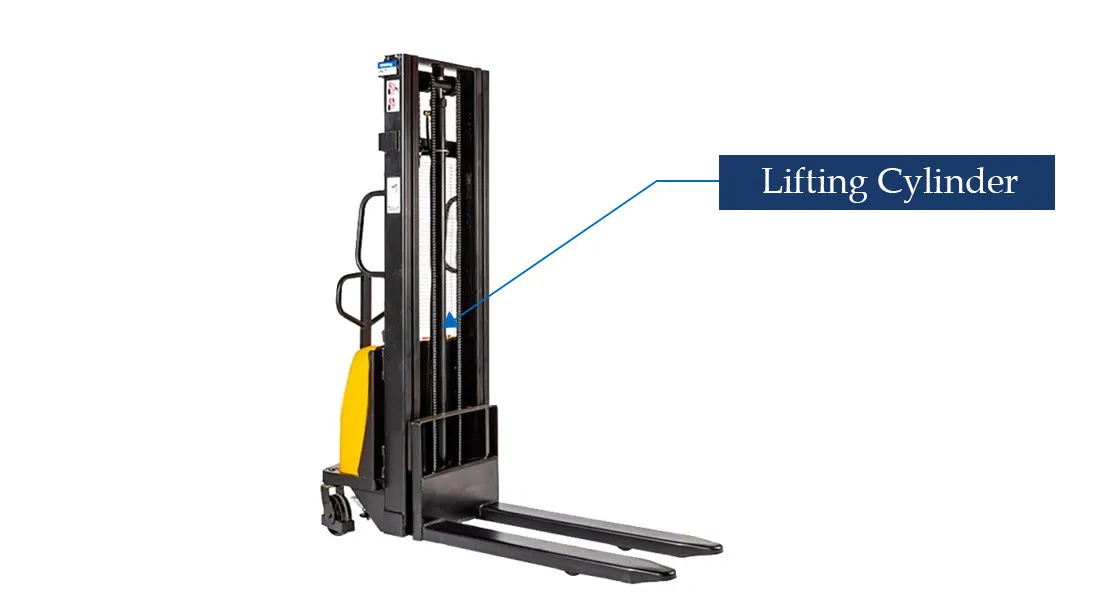
In modern material handling, the pallet stacker truck hydraulic cylinder serves as the primary force-generating component responsible for lifting, lowering, and precisely positioning loads. Whether you operate a walk-behind stacker, a ride-on unit, or a fully automated guided vehicle, the hydraulic cylinder is the heart of your lifting system. Without a well-built hydraulic lift cylinder, even the most advanced stacker frame cannot deliver consistent load handling.
A pallet stacker truck relies on one or more hydraulic lifting cylinders to convert hydraulic fluid pressure into smooth linear motion. This controlled movement allows operators to raise palletized goods to specific rack heights, stack containers in tight warehouse aisles, and transport heavy materials safely across facility floors. The cylinder must deliver precise stroke control under loads that commonly range from 1,000 kg to 2,500 kg, and sometimes higher in specialized industrial configurations.
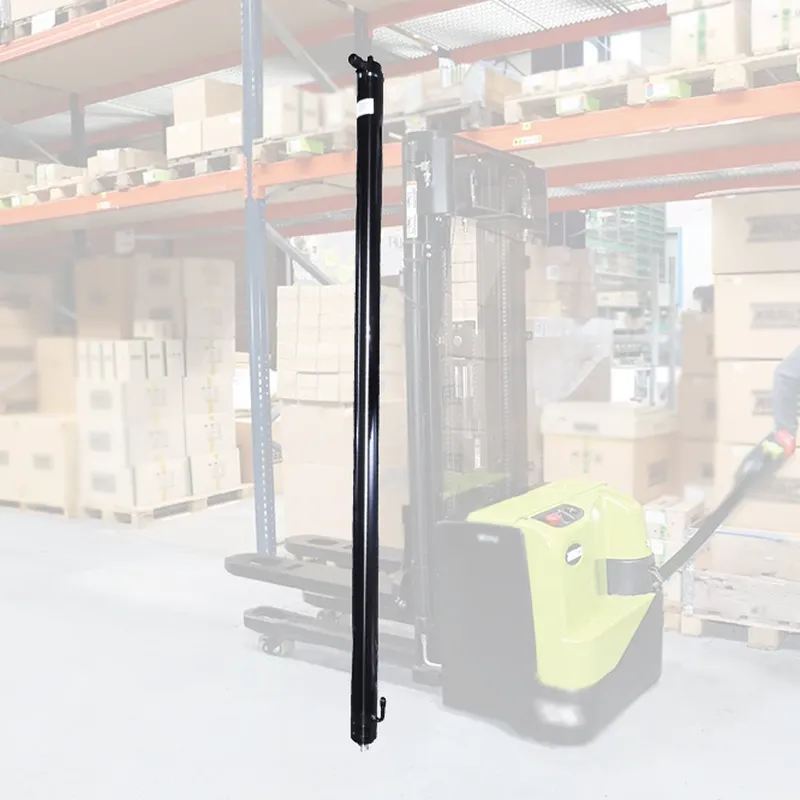
From a practical standpoint, the quality of your hydraulic cylinder directly impacts three critical areas: operational uptime, load safety, and long-term cost of ownership. A poorly manufactured cylinder may develop internal leakage after just a few thousand cycles, causing drift that puts operators and inventory at risk. In contrast, a properly designed hydraulic oil cylinder with high-grade seals and precision-honed bore surfaces can sustain hundreds of thousands of cycles with minimal performance degradation.
Our hydraulic cylinders are purpose-built for pallet stacker applications. Every dimension, material selection, and surface treatment is chosen with the specific duty cycle of stacker trucks in mind. That means tighter bore tolerances, optimized rod-to-bore ratios, and seal packages selected for the frequent start-stop operation that characterizes warehouse lifting equipment. If you are looking for a trusted hydraulic cylinder manufacturer that understands the demands of material handling, you are in the right place.
Technical Specifications
Below you will find the customizable specification ranges for our pallet stacker truck hydraulic cylinders. Each unit is manufactured to order, allowing you to match the cylinder precisely to your machine requirements.
Basic Specification Range
| Parameter | Customizable Range |
|---|---|
| Bore Diameter | 40 mm – 120 mm |
| Rod Diameter | 25 mm – 80 mm |
| Stroke Length | 200 mm – 2,500 mm |
| Working Pressure | 16 MPa – 25 MPa |
| Burst Pressure | Up to 50 MPa |
| Action Type | Single acting / Double acting |
| Retracted Length | Customized per application |
| Load Capacity | 1,000 kg – 3,500 kg |
Mounting Options
| Mounting Style | Description |
|---|---|
| Flange Mount (Front/Rear) | Bolted flange at the cap or head end for rigid, in-line installations |
| Trunnion Mount | Pin-style pivot mounting for applications requiring angular movement |
| Clevis Mount | Fork-and-pin connection at the rod end, allowing oscillation |
| Foot Mount | Base-mounted feet for vertical or horizontal fixed installations |
| Custom / OEM Mount | Designed to match your existing stacker frame geometry exactly |
Material and Surface Treatment
| Component | Material / Treatment |
|---|---|
| Cylinder Tube | Honed seamless steel tube (20# / 45# / ST52) |
| Piston Rod | Hard chrome-plated 45# steel or CK45, chrome thickness 20-30 microns |
| Piston | Ductile iron or forged steel, with wear rings and PTFE-based seals |
| End Caps | Cast or forged steel, precision machined |
| Seals | Parker / Hallite / NOK or equivalent, NBR / FKM / PU compounds |
| External Finish | Zinc plating, nickel plating, or painted per customer specification |
Environmental Adaptability
| Condition | Specification |
|---|---|
| Operating Temperature | -20 C to +80 C (extended range available) |
| Hydraulic Fluid Compatibility | Mineral-based ISO VG 32/46/68, biodegradable fluids on request |
| Corrosion Protection | Chrome rod, zinc-plated exterior, optional epoxy coating |
| Dust / Contamination | Rod scraper seals and dust wipers included as standard |
Key Features and Advantages
Choosing the right hydraulic cylinder for pallet stacker truck applications means looking beyond basic dimensions. Here is what sets our cylinders apart from standard market options:
- Full OEM Compatibility: Each cylinder is reverse-engineered and validated against original equipment dimensions, port locations, and mounting geometry to guarantee a drop-in fit.
- Extended Seal Life: We use premium polyurethane and PTFE compound seals rated for over 500,000 cycles under normal stacker operating conditions, significantly reducing downtime for seal replacement.
- Low-Friction Rod Finish: Our piston rods feature a mirror-grade hard chrome surface with Ra less than 0.2 micrometers, which minimizes seal wear and ensures buttery-smooth rod travel throughout the stroke.
- Zero-Leak Design Philosophy: Precision-machined gland assemblies combined with multi-lip seal arrangements virtually eliminate external leakage, even under high cycle-count operations.
- Compact Envelope: Optimized retracted-to-extended length ratios allow our cylinders to fit in tight stacker mast channels without sacrificing usable stroke.
- Corrosion Resistance: Standard zinc or nickel plating on external surfaces, plus chrome rod protection, makes these cylinders suitable for cold storage, humid warehouses, and semi-outdoor environments.
Compatible Brand Replacements
Note: All brand names mentioned below are the property of their respective owners. They are referenced here solely for cross-referencing and selection convenience, and do not imply any affiliation or endorsement.
Our pallet stacker truck hydraulic cylinders are designed as direct replacements for the lifting cylinders found in a wide range of well-known equipment brands. If you are maintaining or refurbishing a fleet of stackers, our cylinders provide a cost-effective, high-quality alternative to OEM parts. Compatible brands include:
- Toyota Material Handling
- Crown Equipment Corporation
- Jungheinrich
- Linde Material Handling
- Hyster-Yale (Hyster and Yale brands)
- Mitsubishi Forklift Trucks
- BT (now part of Toyota)
- STILL (KION Group)
- Noblelift
- EP Equipment
- Hangcha
If your stacker brand is not listed, contact our engineering team with your existing cylinder part number or machine model. We can produce a matching replacement based on your specifications or a sample unit.
Core Technical Advantages
Ultra-Low Friction Sealing Technology
Our engineering team selects hydraulic cylinder seals from compound families specifically formulated for low breakaway pressure. By combining PTFE-based piston seals with polyurethane rod seals, we achieve a friction coefficient that is 30-40% lower than conventional NBR-only seal packages. This translates into smoother lift initiation, reduced operator fatigue on manual stackers, and lower energy consumption on electric-powered units. The seal geometry is optimized through finite element analysis to maintain consistent contact pressure across the full operating temperature range.
High-Rigidity Cylinder Barrel and Rod Manufacturing
The cylinder barrel starts as a cold-drawn seamless steel tube, which is then deep-hole honed to achieve bore tolerances within H8 class and surface roughness below Ra 0.4 micrometers. Our hydraulic cylinder piston rods are manufactured from induction-hardened CK45 steel, ground to f7 tolerance, and finished with industrial hard chrome plating ranging from 20 to 30 microns thick. This combination delivers outstanding resistance to side loading and rod bending, which is critical in stacker mast applications where alignment may shift slightly under heavy loads.
Thermal Stability and Fatigue Life Optimization
Pallet stacker trucks often operate in rapid cycling environments where the cylinder temperature can climb significantly during peak shifts. We address this with seal compounds rated to +100 C continuous duty and barrel-to-gland interfaces designed with controlled thermal expansion clearances. Fatigue life is verified through accelerated endurance testing at 120% of rated working pressure. Every design must survive a minimum of 1 million test cycles before it is approved for production release.
Precision Internal Cushioning
For double acting hydraulic cylinder configurations, we integrate adjustable internal cushioning at both stroke ends. This decelerates the piston smoothly before it reaches the end cap, preventing metal-to-metal impact that causes noise, vibration, and accelerated component wear. Cushioning is especially valuable in automated stacker systems where cycle speeds are high and mechanical shock must be minimized to protect both the cylinder and the mast structure.
Advanced Anti-Corrosion Rod Protection
Beyond standard chrome plating, we offer optional ceramic-composite rod coatings for customers operating in highly corrosive environments such as chemical storage facilities, salt-laden coastal warehouses, or food-processing cold rooms. These coatings resist pitting and micro-cracking far better than chrome alone, extending rod service life by up to 3 times in aggressive conditions.
Integrated Position Sensing Capability
For fleet operators moving toward smart warehouse management, we offer cylinders pre-machined to accept magnetostrictive linear position sensors. This allows real-time stroke position feedback to the stacker PLC, enabling precise height indexing, load-height verification, and predictive maintenance alerts based on actual cylinder usage data.

Manufacturing Process and Quality Control
End-to-End In-House Production
As a vertically integrated hydraulic cylinder manufacturer, we control every step of production under one roof. Raw steel tube is received, inspected for chemical composition and dimensional conformity, then processed through cutting, honing, welding, machining, chrome plating, assembly, and final testing. This approach eliminates the quality variability that often comes with outsourced sub-components and enables rapid turnaround on custom orders.
100% Factory Testing
Every hydraulic cylinder that leaves our facility undergoes a full functional test. This includes proof pressure testing at 1.5 times rated working pressure, leakage testing under sustained load, stroke measurement verification, and rod seal leak-down testing. Each cylinder receives a unique serial number linked to a digital test report that records all measured values. Customers can request a copy of this report at any time.
Certifications and Traceability
Our manufacturing facility operates under ISO 9001:2015 quality management standards. Raw material certificates (EN 10204 3.1) are maintained on file for every production batch. Each finished cylinder can be traced back to its source steel heat number, machining operator, assembly technician, and test results. For customers in regulated industries, we can also supply CE documentation and additional third-party inspection reports upon request.
Continuous Improvement and R&D
We invest continuously in process improvements and new manufacturing technologies. Recent upgrades include CNC deep-hole drilling centers for tighter bore tolerances, automated welding cells for consistent seam quality, and laser-guided rod straightening equipment. Our R&D team works closely with customers to develop application-specific cylinder designs and test protocols that push the boundaries of performance and durability.
Typical Applications
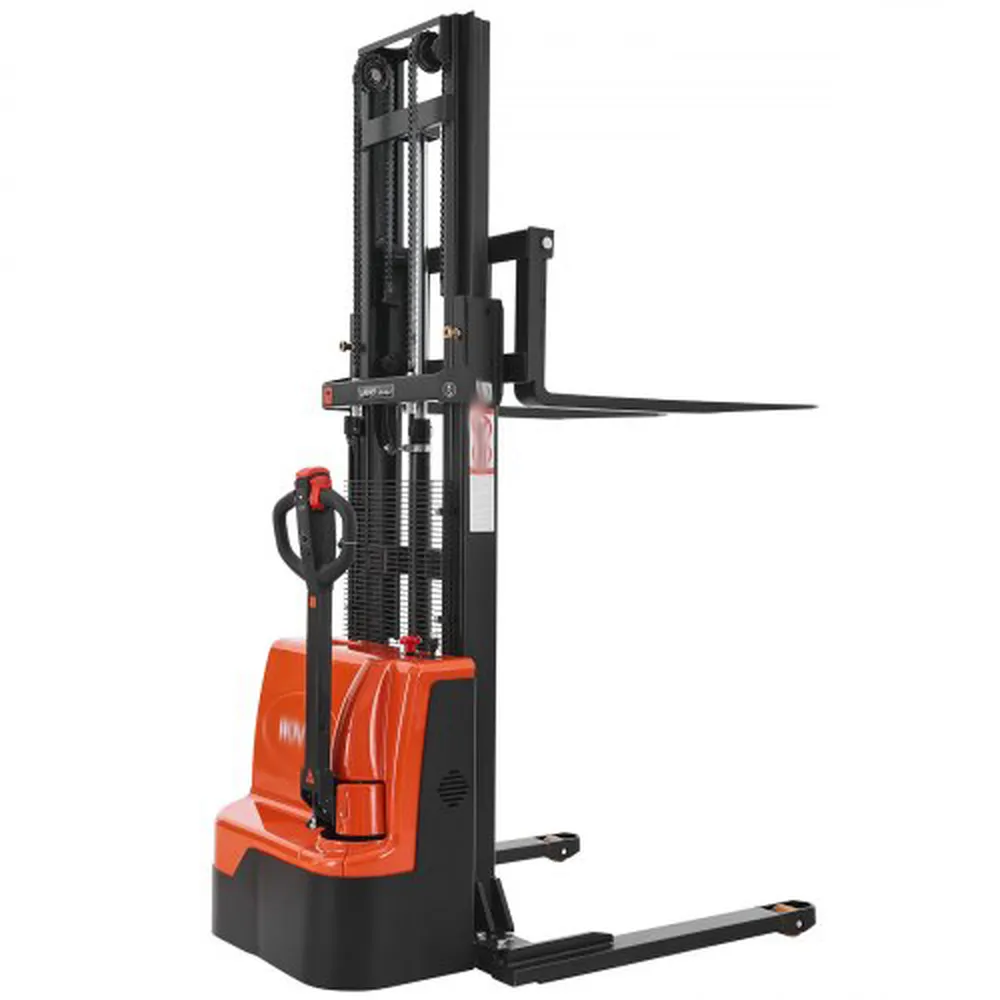
Our hydraulic lifting cylinder products serve a wide spectrum of industries. While pallet stacker trucks are the primary platform, the same engineering principles and build quality make our cylinders suitable for many related material handling and industrial applications.
Warehousing and Distribution
This is the most common environment for pallet stackers. Our cylinders handle the repetitive lifting and lowering of goods on pallets in distribution centers, third-party logistics hubs, and fulfillment warehouses. The low-friction seal design is particularly valuable here, where operators may perform hundreds of lift cycles per shift and energy savings directly reduce operating costs.
Manufacturing
On production floors, pallet stackers move raw materials to assembly lines and finished products to staging areas. Cylinder durability is critical because manufacturing schedules cannot tolerate unplanned downtime. Our cylinders are built with that reality in mind, delivering consistent performance across two- and three-shift operations.
Construction Industry
Compact pallet stackers are increasingly used on construction sites to move bagged cement, bricks, and hardware. Dust, vibration, and temperature swings are everyday challenges. Our enhanced dust-wiper seals and corrosion-resistant rod finishes protect the cylinder internals from contamination and premature wear.
Agriculture Industry
Farm supply warehouses, feed mills, and grain storage facilities all use pallet stackers to manage heavy sacked goods. Our cylinders perform reliably in the dusty, humid conditions common in agricultural settings, thanks to robust sealing and optional stainless-steel port fittings.
Retail Industry
Big-box retailers and large grocery chains depend on pallet stackers for backroom inventory management. Quick, quiet, and reliable lifting is essential in environments where customer proximity demands smooth operation. Our single acting hydraulic cylinder configurations are popular in retail for their simplicity and low maintenance requirements.
Automotive Industry
Auto parts distribution centers and assembly plant logistics areas rely heavily on pallet stackers. The ability to handle varying load weights, from lightweight plastic components to heavy engine blocks, requires a hydraulic cylinder with broad load tolerance and precise speed control.
Mining and Extractive Industry
Underground supply rooms and surface warehouses at mining operations use stackers to manage consumables and spare parts. Extreme temperatures, dust, and vibration make this one of the toughest environments for hydraulic equipment. Our reinforced gland assemblies and heavy-duty rod scrapers are designed to withstand these conditions.
Oil and Gas Industry
Logistics bases for oil and gas operations handle heavy drill pipe components, valve assemblies, and chemical drums with pallet stackers. Explosion-proof or spark-resistant configurations may be required. We can customize cylinder assemblies with non-sparking materials and special plating to meet site safety requirements.
Forestry Industry
Sawmills, lumber yards, and paper mills use stackers to manage bundled timber, pulp bales, and finished goods. Exposure to moisture and wood debris is constant. Our optional epoxy-coated exteriors and enhanced wiper seals provide the extra protection these environments demand.
Explore our full range of forklift hydraulic cylinders to find the right configuration for your application.

Comparative Analysis: Standard vs. Our High-Performance Hydraulic Cylinders
| Feature | Standard Hydraulic Cylinder | Our High-Performance Cylinder |
|---|---|---|
| Bore Honing Finish | Ra 0.6 – 1.0 um | Ra 0.2 – 0.4 um |
| Chrome Plating Thickness | 10 – 15 microns | 20 – 30 microns |
| Seal Life (cycles) | 200,000 – 300,000 | 500,000+ |
| Proof Pressure Test | Often skipped or sampled | 100% tested at 1.5x rated pressure |
| External Leakage | Acceptable minor weeping | Zero-leak standard |
| Traceability | Batch-level only | Individual serial number with full digital test record |
| Warranty Period | 6 – 12 months | 18 – 24 months |
| Custom Mounting Options | Limited to catalog sizes | Fully customizable to OEM drawings |
Real-World Case Studies
Case 1: Logistics Company in Monterrey, Mexico
Client: A regional third-party logistics provider operating 45 electric pallet stacker trucks across three distribution centers in Nuevo Leon.
Challenge: The original OEM lifting cylinders were developing internal leakage after 14-16 months of use, causing load drift during rack placement at upper shelf heights. Replacement parts from the equipment dealer had a 6-8 week lead time and cost approximately 40% more than the client’s maintenance budget allowed.
How They Found Us: The client’s maintenance manager discovered our website through a Google search for “pallet stacker truck hydraulic cylinder manufacturer” in March 2024. After reviewing our product specifications and requesting a sample unit for bench testing, they placed an initial order of 20 cylinders.
Result: After 18 months in service, none of the replacement cylinders have shown measurable drift. The client has since standardized on our cylinders for all new stacker rebuilds, reporting a 35% reduction in per-unit cylinder cost and a delivery lead time of just 3 weeks.
“We tested one cylinder for two weeks before committing. The rod finish quality and seal performance matched or exceeded the original equipment. The cost difference made the decision easy.” – Maintenance Director, Monterrey facility
Case 2: Automotive Parts Distributor in Guadalajara, Mexico
Client: An aftermarket automotive parts wholesaler with a 12,000 square meter warehouse running 18 walk-behind stackers from two different brands.
Challenge: Managing two separate cylinder part numbers from two different suppliers was creating inventory headaches and driving up spare parts costs. The client needed a single-source supplier who could provide compatible replacement cylinders for both stacker brands.
How They Found Us: Their purchasing manager was referred by a business contact who had already ordered from us. They sent us technical drawings and sample cylinders from both brands in June 2024.
Result: We reverse-engineered both designs and delivered 30 cylinders within 4 weeks. The client consolidated their entire cylinder inventory to a single part number per stacker model, reducing their carrying cost by approximately 25%. No failures have been reported through the first 12 months.
“Having one reliable supplier for both our Toyota and Crown stackers simplified our whole spare parts operation. Quality has been spot on.” – Purchasing Manager
Case 3: Cold Storage Facility in Queretaro, Mexico
Client: A frozen food distributor operating pallet stackers inside a -25 C cold storage environment.
Challenge: Standard hydraulic cylinder seals were hardening and cracking within 8-10 months due to the extreme cold, leading to frequent oil leaks and safety concerns. The food-grade environment demanded zero contamination from hydraulic fluid.
How They Found Us: The facility manager contacted us through our website inquiry form in August 2024, specifically asking about low-temperature seal options for forklift hydraulic cylinder applications in cold storage.
Result: We supplied cylinders fitted with FKM seals rated to -30 C and added a secondary containment groove on the rod gland to capture any incidental seepage before it could reach the warehouse floor. After 14 months of continuous cold storage operation, all cylinders remain leak-free.
“Cold storage is brutal on hydraulic equipment. These cylinders have held up far better than anything we used before. Zero leaks in over a year.” – Facility Manager, Queretaro
Case 4: Beverage Manufacturer in Mexico City
Client: A large-scale bottled water and soft drink producer using 28 ride-on pallet stackers for warehouse operations and truck loading.
Challenge: The high humidity and occasional water splash in the production area was causing visible corrosion on cylinder rod surfaces within 6 months, accelerating seal degradation and requiring frequent hydraulic cylinder repair.
How They Found Us: Their engineering team found our company page while searching for “hydraulic cylinder manufacturer corrosion resistant” in November 2023. After a phone consultation and factory capability review, they ordered a trial batch of 10 units.
Result: We supplied cylinders with enhanced nickel-chrome rod plating and epoxy-coated barrels. After 20 months of continuous service in the wet production environment, rod surface condition remains excellent with no measurable pitting. The client has since ordered a total of 56 units across multiple machine models.
“The corrosion resistance alone justified the switch. We went from replacing rods every few months to not worrying about them at all.” – Plant Engineer
Case 5: Building Materials Retailer in Puebla, Mexico
Client: A chain of building supply stores with 8 locations, each using 2-4 manual pallet stackers for yard and warehouse operations.
Challenge: Sourcing affordable replacement cylinders for an older fleet of stackers that were no longer supported by the original manufacturer. Aftermarket parts from local suppliers were inconsistent in quality.
How They Found Us: The operations director found us through a LinkedIn post shared by one of our existing customers in January 2025. He sent photos and measurements of the worn-out cylinders via WhatsApp for a quick quotation.
Result: We manufactured 24 replacement lift hydraulic cylinders based on the provided dimensions and delivered them within 3 weeks. Feedback after 10 months of service confirms all units are performing well, and the cost was roughly 45% less than the only other aftermarket quote the client received.
“I did not expect this quality at this price point. Delivery was fast, communication was excellent, and the cylinders fit like originals.” – Operations Director

Maintenance Tips for Long Cylinder Life
Inspect the Piston Rod Surface Regularly
Every two weeks, visually inspect the exposed portion of the piston rod for scratches, dents, or signs of corrosion. Even minor surface damage can compromise the rod seal, allowing contaminants to enter the cylinder bore and accelerate internal wear. If you notice any chrome flaking or linear scoring, schedule a maintenance intervention before the damage worsens.
Monitor Hydraulic Fluid Condition
The quality of hydraulic oil directly affects the lifespan of all hydraulic cylinder components. Check the fluid level daily and inspect for discoloration, cloudiness, or unusual odor monthly. Change the hydraulic fluid according to the equipment manufacturer’s recommended interval, or sooner if particle counts or acid number tests indicate degradation. Contaminated fluid is the single biggest cause of premature seal and bore wear.
Replace Seals Proactively
Do not wait for visible leakage to replace hydraulic cylinder seals. A good practice is to schedule seal kit replacements at fixed intervals based on your operational hours, typically every 3,000 to 5,000 operating hours or once every 18-24 months, whichever comes first. Proactive seal changes are far less expensive than emergency repairs and prevent the secondary damage that often accompanies seal failure.
Keep the Cylinder and Surrounding Area Clean
Dirt, dust, and debris that accumulate around the rod gland and port connections can work their way past the wiper seal during rod retraction. Make it part of your daily pre-shift routine to wipe down the cylinder rod area and check that the dust boots or wiper covers are intact. In particularly dusty environments, consider adding external rod covers or bellows for additional protection.
Check Mounting Hardware and Alignment
Loose mounting bolts or misaligned cylinder installations create side loads on the piston rod that the cylinder was not designed to handle. Periodically torque-check all mounting fasteners and verify that the cylinder centerline remains aligned with the mast or lifting mechanism. Misalignment is a common but often overlooked cause of uneven rod wear and premature gland seal failure in hydraulic cylinder for forklift and stacker applications.
Record and Track Cylinder Performance
Maintain a log for each cylinder that records installation date, operating hours, seal changes, fluid changes, and any observed issues. Over time, this data helps you identify patterns and predict maintenance needs before they become failures. For larger fleets, integrating cylinder serial numbers into your CMMS system allows efficient tracking and simplifies warranty claims if needed.

How to Choose the Right Hydraulic Cylinder for Your Pallet Stacker
Selecting the correct hydraulic cylinder for pallet stacker truck applications involves more than matching bore and stroke dimensions. Here is a practical approach to ensure you get the right cylinder the first time:
1. Identify your machine make and model. The stacker manufacturer, model number, and year of production determine the cylinder specifications. If you have the original cylinder part number, that is the fastest path to an exact replacement.
2. Define the operating parameters. Confirm the required working pressure, maximum load capacity, and stroke length for your specific application. If you are upgrading from a standard cylinder to a higher-performance unit, discuss your operating conditions with our engineering team so they can recommend the optimal bore-to-rod ratio and seal configuration.
3. Consider the operating environment. Temperature extremes, humidity, chemical exposure, and contamination levels all influence material and seal selection. A cylinder destined for a climate-controlled warehouse has different requirements than one operating in an outdoor lumber yard or a cold storage facility.
4. Choose the right mounting style. Verify the mounting type, bolt pattern, and port locations against your stacker frame. If you are adapting a cylinder from a different source, even a small deviation in mounting geometry can cause installation issues and misalignment.
5. Plan for maintenance access. Select a cylinder design that allows straightforward seal replacement and rod inspection without requiring complete disassembly of the stacker mast. This saves significant labor time and cost over the life of the equipment.

Frequently Asked Questions
What is the typical lead time for a custom pallet stacker truck hydraulic cylinder order?
Can you supply both single acting and double acting hydraulic cylinders for pallet stackers?
Do you offer hydraulic cylinder repair services or just new cylinders?
What is the minimum order quantity for custom hydraulic cylinders?
How do I know if your hydraulic cylinder will fit my existing pallet stacker truck?
What warranty do you provide on pallet stacker hydraulic cylinders?
Can your hydraulic lifting cylinders operate in cold storage or freezer environments?
Do you ship hydraulic cylinders to Mexico and other Latin American countries?
What information do I need to provide when requesting a quotation for a hydraulic cylinder?
How does your pricing compare to OEM hydraulic cylinder replacements?
Ready to Get Started?
Custom Hydraulic Cylinders Built to Your Exact Specifications
Whether you need a single prototype or a production run of 500 units, our team is ready to deliver precision-engineered pallet stacker truck hydraulic cylinders on time and on budget. Share your drawings, part numbers, or sample cylinders, and we will handle the rest.