The Core Role of a Hydraulic Cylinder in Wood Splitting
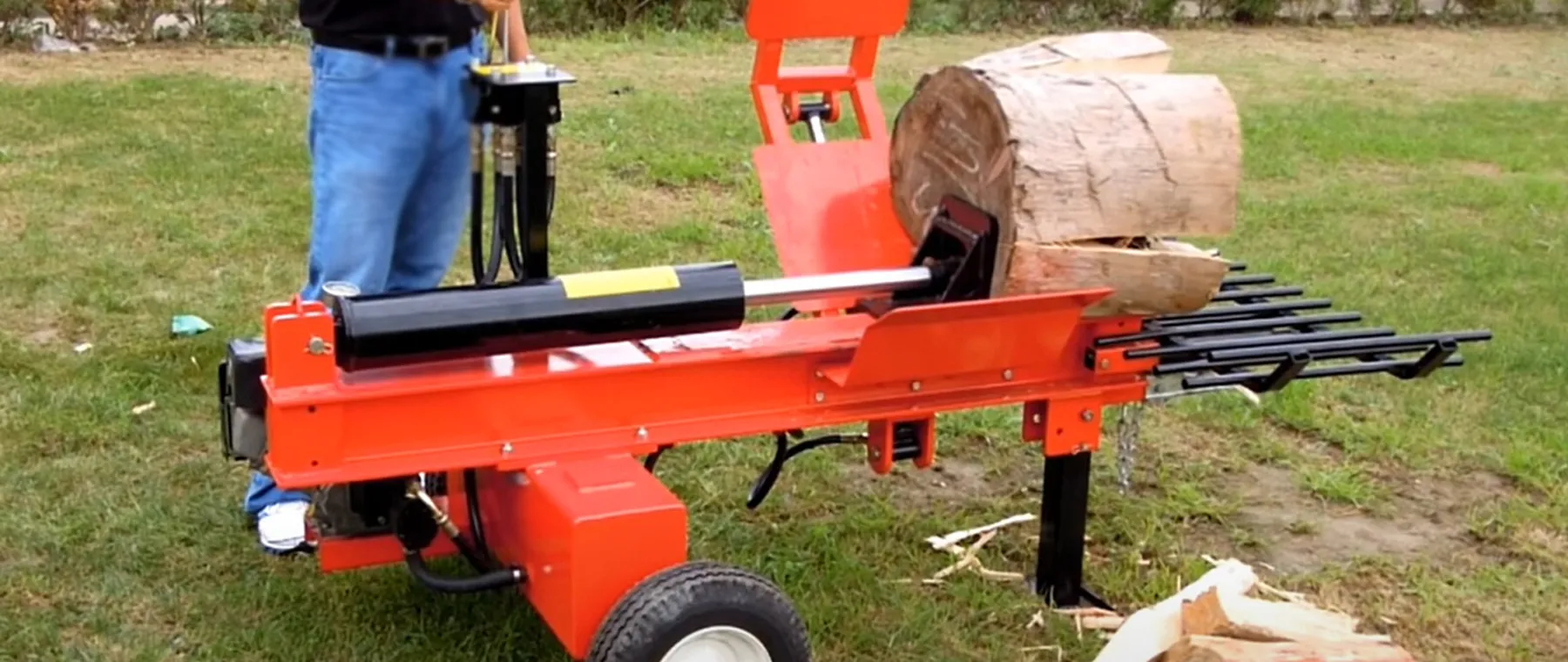
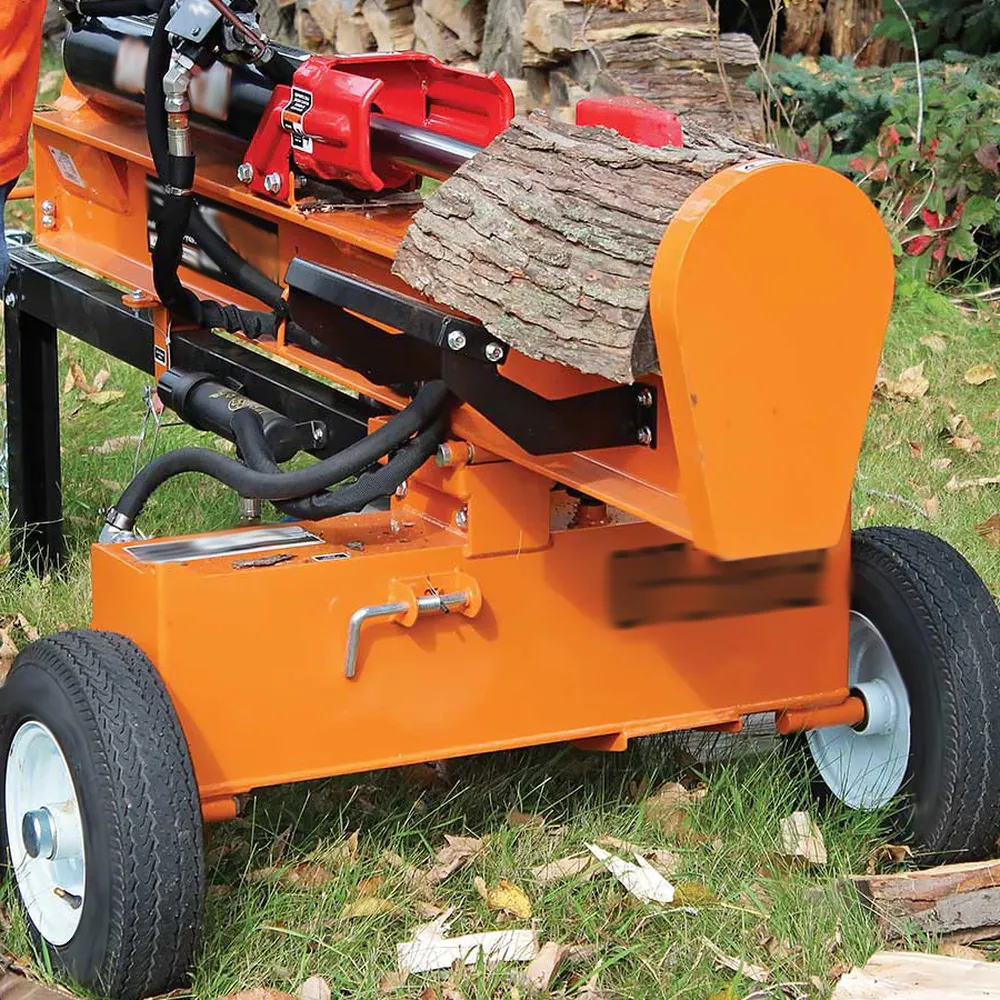
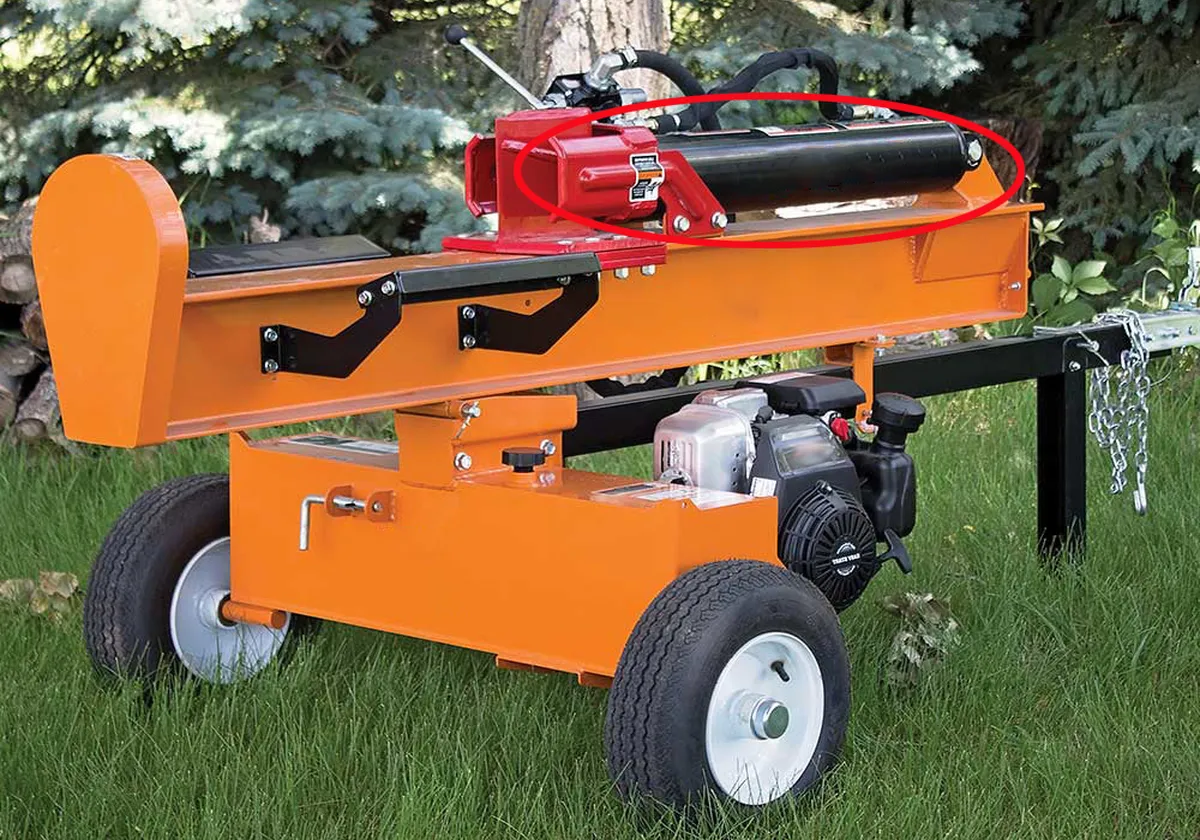
A hydraulic cylinder for wood splitter machines is the component that converts hydraulic pressure into the raw linear force needed to drive a splitting wedge through hardwood, knotty logs, and dense rounds. Without a properly sized and well-built cylinder, even the most powerful hydraulic pump becomes useless. The cylinder is the muscle behind every split, and its bore diameter, stroke length, rod strength, and seal integrity directly determine how much tonnage the splitter can deliver and how long the machine will last under heavy workloads.
Over the past two decades, I have worked with hundreds of firewood processors, sawmill operators, and OEM equipment builders across North America, Europe, and Latin America. One lesson stands out above everything else: the cylinder is where you either save money or lose it. A cheap, poorly finished hydraulic cylinder will leak, drift, and fail within a season or two. A precision-manufactured cylinder with proper honing, chrome plating, and engineered seals will run trouble-free for years, even under daily commercial use.
Wood splitter hydraulic cylinders must handle repeated high-pressure cycles, sudden shock loads when the wedge meets a tough knot, exposure to outdoor elements, and temperature swings from freezing winters to hot summers. That is a punishing duty cycle, and it demands a cylinder built to a higher standard than what you find on most generic replacements.
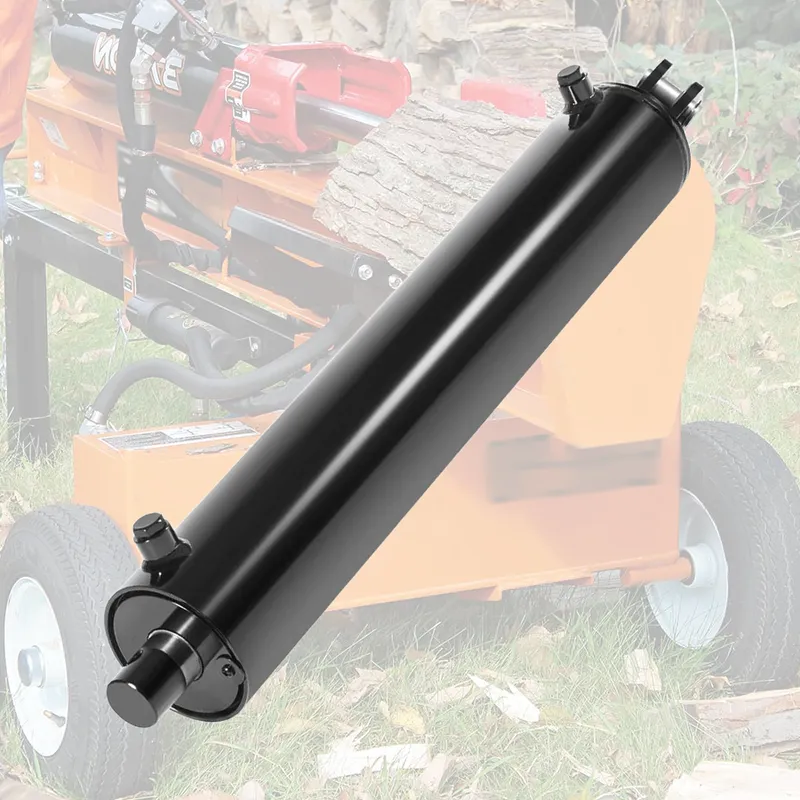
Whether you are building a new wood splitter from scratch, upgrading an aging machine, or sourcing replacement hydraulic cylinders for wood splitters in bulk for your equipment line, understanding the technical requirements is essential. The sections below cover everything you need to make a confident buying decision, from specifications and materials to real-world case studies and troubleshooting.
Technical Specifications and Customizable Parameters
Every wood splitting application has unique force, speed, and mounting requirements. Our log splitter hydraulic cylinder line is fully customizable across the following parameter ranges. These are not off-the-shelf limitations; they represent the engineering envelope within which we manufacture cylinders tailored to your exact machine design.
Basic Specifications Range
| Parameter | Available Range / Options |
|---|---|
| Bore Diameter | 3 in / 3.5 in / 4 in / 4.5 in / 5 in (76 – 127 mm) |
| Rod Diameter | 1.5 in / 1.75 in / 2 in / 2.5 in / 3 in (38 – 76 mm) |
| Stroke Length | 16 in / 20 in / 24 in / 30 in / 36 in (406 – 914 mm) |
| Working Pressure | 2,500 – 3,000 PSI (172 – 207 bar) |
| Burst Pressure | 10,000 PSI (689 bar) minimum |
| Action Type | Single acting hydraulic cylinder / Double acting hydraulic cylinder |
| Pin Hole Diameter | 1 in / 1.25 in / 1.5 in / Custom |
| Port Size | SAE #8 / #10 / #12 (NPT and BSPP available) |
| Retracted Length | Varies by stroke; typical 4 in bore x 24 in stroke: approx. 34.5 in |
Mounting Options
| Mounting Style | Description |
|---|---|
| Cross Tube (Pin Eye) | Most common for wood splitters; pin-to-pin mounting at both ends |
| Clevis Mount | Allows angular movement; used on some horizontal splitters |
| Tang Mount | Flat plate welded to cap end for bolt-on attachment |
| Custom Bracket | Designed to match OEM frame geometry; drawings accepted |
Materials and Surface Treatment
| Component | Material / Treatment |
|---|---|
| Cylinder Tube | SAE 1026 / ST52 seamless steel, honed to Ra 0.2 – 0.4 um |
| Piston Rod | C1045 / CK45 hard chrome plated, 20+ um thickness, ground and polished |
| Piston | Ductile iron or forged steel, precision machined |
| End Caps | Welded or threaded construction, zinc plated or painted |
| Seals | Parker / NOK / Hallite polyurethane and nitrile; Viton for high-temp |
| Exterior Finish | Black oxide, zinc plating, or powder coat (custom colors available) |
Environmental Adaptability
Our wood splitter hydraulic cylinder products are engineered for harsh outdoor environments. Standard operating temperature range is -22 F to 200 F (-30 C to 93 C). Seal compounds can be upgraded to Viton for sustained high-temperature operation, or to low-temp nitrile for northern climates. All external fasteners and cross tubes are corrosion-resistant, and optional full zinc plating or marine-grade coating is available for coastal or humid regions, including the tropical and subtropical zones common throughout Mexico and Central America.

Compatible Replacement for Major Wood Splitter Brands
Note: Brand names mentioned below are used solely for the purpose of cross-referencing and helping buyers identify compatible replacement cylinders. All trademarks are the property of their respective owners. We are not affiliated with, endorsed by, or connected to any of the brands listed.
Our hydraulic cylinder for wood splitter equipment is designed as a direct-fit or adaptable replacement for cylinders used in the following popular brands:
- County Line (Tractor Supply Co.) — 20-ton through 35-ton models
- Huskee — residential and semi-commercial splitters
- Champion Power Equipment — 25-ton and 34-ton splitters
- Boss Industrial — horizontal/vertical combo units
- NorthStar — commercial-grade 30-ton and 37-ton machines
- Iron and Oak — high-tonnage commercial splitters
- SpeeCo — compact and mid-range splitters
- Brave — pro-series splitters used in forestry operations
- Troy-Bilt — consumer-grade models
- WEN — entry-level electric and gas-powered splitters
If your machine is not listed, send us the bore, stroke, pin dimensions, and a photo of the existing cylinder. Our engineering team will confirm fitment, usually within 24 hours.
Core Technical Advantages
1. Ultra-Low Friction Seal System
Standard wood splitter hydraulic cylinder seals create excessive friction and wear, which generates heat and robs splitting force. Our cylinders use a multi-stage sealing arrangement with PTFE-energized rod seals, polyurethane piston seals, and a separate wiper to keep contaminants out. This combination reduces breakaway pressure by up to 30% compared to generic seal kits, meaning more of your pump’s output reaches the splitting wedge instead of being wasted as friction heat.
2. High-Rigidity Cylinder Tube and Piston Rod
The cylinder barrel is manufactured from seamless cold-drawn steel tube, honed to a mirror finish internally. This is not the same as welded-seam tube that many budget hydraulic oil cylinder suppliers use. Seamless tube eliminates the weak point where a weld seam can crack under cyclic pressure loading. The piston rod is induction-hardened C1045 steel with hard chrome plating at least 20 microns thick, ground and polished to a surface roughness well below Ra 0.2 um. This surface quality directly extends seal life and prevents rod corrosion, even in outdoor storage conditions.
3. Thermal Stability Under Sustained Operation
Commercial firewood operations run splitters for 8 to 12 hours a day during peak season. Under that kind of duty cycle, hydraulic fluid temperature climbs, seal elastomers soften, and poorly designed cylinders start to leak internally. Our cylinders are designed with tighter piston-to-bore clearances and heat-resistant seal compounds that maintain their sealing force even when oil temperature reaches 180 F. This means consistent splitting tonnage from the first log of the morning to the last log at dusk.
4. Fatigue Life Optimized for Cyclic Loading
A wood splitter cylinder extends and retracts hundreds of times per day. Each cycle generates stress reversals in the rod, piston, welds, and mounting points. We apply shot peening to high-stress weld zones and radius all internal transitions to eliminate stress concentrators. The result is a fatigue life rating that exceeds 500,000 full-pressure cycles, validated through in-house endurance testing.
5. Precision Port Alignment and Flow Optimization
Misaligned ports cause turbulence, pressure spikes, and premature fitting wear. Every port on our cylinders is CNC-machined perpendicular to the bore axis with chamfered entries to ensure smooth oil flow. This reduces cycle times slightly and eliminates the high-frequency vibration that can loosen fittings over time.
6. Full Zinc Plating Option for Corrosion Resistance
For customers operating in coastal environments, tropical climates, or anywhere machines are stored outdoors year-round, we offer full zinc plating on the barrel, end caps, and cross tubes. This is not just paint; it is an electrochemical barrier that provides sacrificial corrosion protection and dramatically extends the external service life of the cylinder. This option is especially popular among our buyers in Mexico, the Caribbean, and Southeast Asia.

Manufacturing Process and Quality Control
In-House Manufacturing from Raw Material to Finished Product
Unlike trading companies that assemble cylinders from outsourced parts, we control every step of production. Steel tube is cut, honed, and tested in our facility. Piston rods are turned, induction-hardened, chrome-plated, and ground on our own production lines. Pistons are CNC-machined from bar stock. End caps are welded by certified welders using MIG or submerged arc processes, then inspected with ultrasonic testing. This vertical integration as a hydraulic cylinder manufacturer allows us to trace every component back to the original heat lot of steel, which is critical for OEM customers who need documentation for their own quality programs.
100% Factory Testing Before Shipment
Every single hydraulic wood splitter cylinder is pressure-tested before it leaves the plant. We test at 1.5 times the rated working pressure and hold for a minimum of two minutes, monitoring for any pressure drop. Simultaneously, we check for external leakage at every seal point and port connection. Cylinders that do not achieve zero visible leakage under test pressure are rejected. This is not sampling-based inspection; it is 100% testing of every unit produced.
Certifications and Traceability
Our manufacturing facility holds ISO 9001:2015 certification. Material test certificates (MTCs) are available for all steel and chrome plating. Seal materials come with batch-traceable documentation from the seal manufacturer. For customers requiring it, we provide a full quality dossier including dimensional inspection reports, pressure test records, and material certificates tied to the serial number of each cylinder. Learn more about our manufacturing standards on the About Us page.
Typical Applications
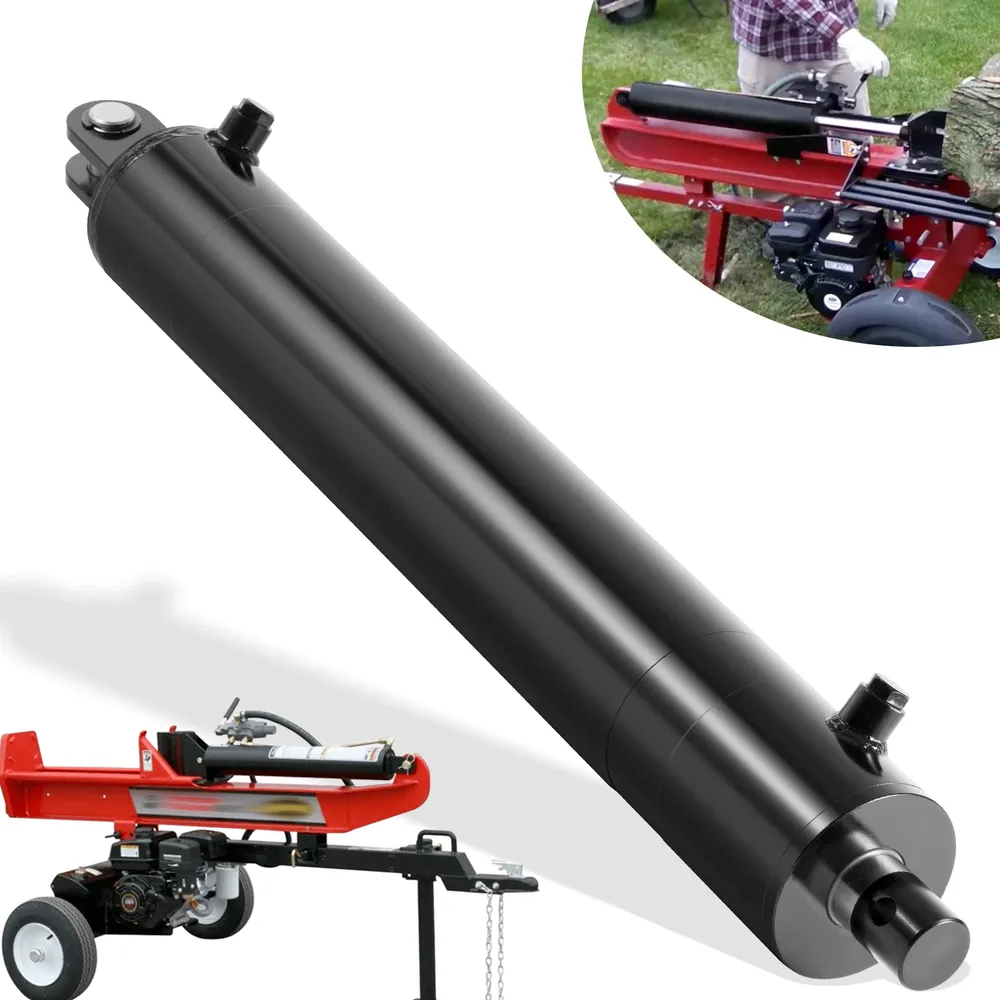
1. Residential and Homeowner Wood Splitters
Small to mid-size gas or electric splitters in the 15-ton to 28-ton range, used for seasonal firewood preparation. These typically use a 3.5 in or 4 in bore single acting hydraulic cylinder with a 24 in stroke. The cylinder needs to be compact, affordable, and capable of handling oak, maple, and similar domestic hardwoods without difficulty.
2. Commercial Firewood Processing
High-volume firewood businesses split 10 to 30 cords per day during peak season. These operations demand a 4.5 in or 5 in bore cylinder with faster cycle times and the thermal endurance to handle continuous 8 to 12 hour shifts. Double acting hydraulic cylinder configurations are common here because they allow powered return strokes that significantly reduce cycle time compared to spring-return or gravity-return single-acting designs.
3. Horizontal, Vertical, and Combination Splitters
Vertical splitters handle oversized rounds that are too heavy to lift onto a horizontal beam. Combination machines switch between both orientations. Our cylinders support both configurations and can be supplied with appropriate port locations and mounting hardware for either setup.
4. Processor-Mounted Splitters
Firewood processors combine a conveyor, saw, and splitter into one integrated machine. The splitter cylinder on a processor runs at much higher cycle rates than a standalone unit. We supply reinforced cylinders with upgraded seals and increased rod diameter for this demanding application, where cumulative cycle counts can reach hundreds of thousands per season.
5. Forestry and Land Clearing
Skid steer-mounted and tractor-mounted splitter attachments used in land clearing and forestry management. These require robust mounting, higher pressure ratings, and corrosion-resistant finishes to handle the outdoor conditions. Our hydraulic cylinder for log splitter attachments meets these needs with heavy-duty cross tube pins and optional marine-grade coatings.

Standard Cylinders vs. Our High-Performance Wood Splitter Cylinders
Not all log splitter hydraulic cylinders are created equal. The table below highlights the differences between typical aftermarket cylinders and what we deliver.
| Feature | Generic Aftermarket Cylinder | Our High-Performance Cylinder |
|---|---|---|
| Cylinder Tube | Welded seam tube, machine-honed | Seamless cold-drawn tube, mirror-honed to Ra 0.2 um |
| Chrome Plating Thickness | 10 – 15 um | 20 – 30 um, with optional duplex nickel-chrome |
| Seal Brand | Unbranded / generic | Parker, NOK, or Hallite with batch traceability |
| Pressure Testing | Sample-based or none | 100% tested at 1.5x rated pressure |
| Fatigue Life | Not specified | 500,000+ full-pressure cycles validated |
| Material Traceability | None | Full MTCs linked to serial number |
| Warranty | 6 months typical | 18 months standard, extended terms for OEM contracts |
| Customization | Limited to catalog sizes | Full custom bore, stroke, mounting, ports, and finish |
Real-World Case Studies
Case 1: Commercial Firewood Business in Durango, Mexico
Customer: Lena Maderas S.A. de C.V., a family-run firewood supplier serving restaurants and residential customers across Durango state.
Challenge: Their existing 4-inch bore cylinders from a domestic supplier were leaking internally after just one season, resulting in slow cycle times and loss of splitting force on mesquite and oak rounds.
How they found us: Their purchasing manager searched for wood splitter hydraulic cylinders for sale online in March 2024 and submitted an inquiry through our website contact form.
Solution: We supplied 12 units of 4.5 in bore x 24 in stroke double-acting cylinders with Viton seals for high-temperature operation and full zinc plating for humidity resistance.
Result: After 14 months of continuous operation, zero cylinders required seal replacement. Cycle time improved by approximately 22%, and the customer reported a noticeable increase in daily output. They placed a repeat order in May 2025.
Customer feedback: “We had gone through three different cylinder suppliers in four years. These are the first cylinders that have made it through an entire season without a single leak. The build quality is obvious as soon as you hold one in your hands.” — Ing. Roberto Saldana, Operations Manager
Case 2: OEM Equipment Builder in Jalisco, Mexico
Customer: A mid-size agricultural equipment manufacturer producing horizontal/vertical combo wood splitters for the Mexican and Central American market.
Challenge: They needed a reliable hydraulic cylinder manufacturer that could deliver consistent quality across batches of 50 to 100 cylinders per month, with full dimensional inspection reports for their own QC program.
How they found us: Referred by a hydraulic hose distributor in Guadalajara in August 2023. Their engineering team reviewed our catalog and requested samples.
Solution: Custom 5 in bore x 30 in stroke single-acting cylinders with tang mount bases, SAE #10 ports, and serialized traceability packages.
Result: We have shipped over 600 cylinders since October 2023 with a field failure rate below 0.2%. Their warranty claim rate dropped by 65% compared to their previous cylinder source.
Customer feedback: “The consistency between units is remarkable. We install them straight out of the box with no rework needed. That saves us at least 30 minutes per machine on the assembly line.” — Production Director
Case 3: Forestry Cooperative in Chihuahua, Mexico
Customer: Cooperativa Forestal Sierra Madre, managing pine and oak forests across 15,000 hectares in the Sierra Madre Occidental.
Challenge: Their tractor-mounted splitter attachments required cylinders that could handle extreme cold at higher elevations (winter temperatures dropping to -10 C) while also resisting corrosion from resin and sap exposure.
How they found us: The cooperative’s mechanic found our product page for log splitter hydraulic cylinders while researching replacement options in January 2024.
Solution: 4 in bore x 24 in stroke double-acting cylinders with low-temperature nitrile seals, 25 um hard chrome plating, and powder-coated barrels.
Result: The cylinders have performed flawlessly through two winter seasons. No cold-start seal failures, no rod corrosion, and no external leaks.
Customer feedback: “We work in tough conditions at altitude, and equipment failures mean lost days. These cylinders just work, every single time, even on mornings when everything else on the tractor is stiff from the cold.” — Felipe Ortiz, Lead Mechanic
Case 4: Rental Equipment Company in Monterrey, Mexico
Customer: RentaEquipo del Norte, providing construction and landscaping equipment rentals across Nuevo Leon.
Challenge: Rental wood splitters see harsh treatment from different operators every week. Their biggest maintenance expense was replacing leaking cylinders and associated downtime.
How they found us: Found us through a Google search for best hydraulic cylinder for wood splitter in November 2023 and requested pricing for a trial batch.
Solution: 4 in bore x 24 in stroke double-acting cylinders with heavy-duty rod wipers, chrome rod boots, and zinc-plated exteriors for added abuse resistance.
Result: Over 16 months, cylinder-related maintenance dropped by 80%. Machines stayed in the rental fleet longer between service intervals, directly increasing revenue.
Customer feedback: “Rental equipment takes a beating. We need parts that can handle operators who do not read the manual. These cylinders take the abuse and keep working. That is exactly what our business needs.” — Lic. Maria Torres, Fleet Manager
Case 5: Biomass Energy Plant in Veracruz, Mexico
Customer: BioEnergia Golfo, a biomass power generation facility using wood chips and split logs as fuel feedstock.
Challenge: Their processing line required high-cycle-count cylinders that could split large eucalyptus and tropical hardwood rounds continuously, operating three shifts per day in a hot, humid coastal environment.
How they found us: Their maintenance engineer contacted us via email in June 2024 after seeing a recommendation in an industry WhatsApp group for hydraulic cylinders suppliers.
Solution: 5 in bore x 30 in stroke double-acting cylinders with Viton seals, duplex nickel-chrome rod plating, and marine-grade exterior coating. We also supplied a full set of spare wood splitter hydraulic cylinder parts including seal kits, rod wipers, and wear rings.
Result: After 11 months of three-shift operation, the original seals are still in service. Zero unplanned downtime attributable to cylinder failure. The spare parts remain unopened in their storeroom.
Customer feedback: “We burn through equipment fast in this climate. The humidity, the heat, the resin from eucalyptus — it destroys most cylinders within six months. These are the first ones that have actually lasted. We are planning to standardize on this supplier for all our hydraulic needs.” — Ing. Carlos Mendes, Plant Maintenance Supervisor
Common Fault Diagnosis and Troubleshooting
Even the best hydraulic cylinder wood splitter components will eventually need attention. Here are the most common issues and how to address them.
Loss of Splitting Force (Cylinder Drifts Under Load)
If the wedge stalls or slowly retracts when it hits a tough log, internal bypass is the most likely cause. Worn piston seals allow oil to flow past the piston instead of pushing it forward. Check hydraulic fluid level and condition first. If the fluid is full and clean, the piston seal kit needs replacement. On double-acting cylinders, also check the rod-end port for excessive return oil flow, which indicates piston seal bypass.
External Oil Leakage at the Rod
Oil weeping around the rod where it exits the gland typically points to a worn rod seal or a scored rod surface. Inspect the rod for scratches, dents, or chrome flaking. Minor surface imperfections can often be polished out with fine emery cloth. If the chrome is deeply scored or peeling, the rod needs re-chroming or replacement. Replace the rod seal and wiper at the same time.
Slow or Jerky Cylinder Movement
This is often caused by air trapped in the cylinder. Knowing how to bleed hydraulic cylinder for a wood splitter properly is essential. Fully extend and retract the cylinder several times with no load, cracking the highest port fitting slightly on each extension to allow trapped air to escape. Tighten the fitting once bubble-free oil flows. If the problem persists, check for a restricted suction filter or a failing pump.
Excessive Heat Buildup
If the cylinder barrel is too hot to touch after moderate use, check for an undersized relief valve setting, a partially blocked return filter, or a worn pump delivering excess flow at reduced pressure. Overheating accelerates seal degradation and oil breakdown, so address the root cause promptly.
Rod Corrosion or Pitting
Outdoor storage without a rod boot or protective cover exposes the chrome surface to moisture, dirt, and UV. Apply a thin coat of hydraulic oil or corrosion-inhibiting grease to the rod when the machine is stored for extended periods. For machines in coastal or high-humidity environments, consider upgrading to our duplex nickel-chrome rod plating option for long-term protection.
How to Select the Right Wood Splitter Hydraulic Cylinder
Choosing the correct hydraulic cylinder for a wood splitter involves matching several critical dimensions and specifications to your machine design and intended use. Here is a practical selection guide.
1. Bore Diameter
Bore diameter determines the splitting force generated at a given system pressure. A larger bore produces more force but requires a larger pump to maintain acceptable cycle speed. For residential splitters up to 25 tons, a 3.5 in to 4 in bore is typical. For commercial machines in the 30 to 40 ton range, 4.5 in to 5 in bores are standard. Calculate your required force using the formula: Force (lbs) = Pressure (PSI) x Piston Area (sq. in.).
2. Rod Diameter
The rod must resist buckling under the full push force of the cylinder. For most wood splitter applications, a rod diameter equal to roughly half the bore diameter provides adequate column strength. Our engineering team can run a buckling calculation for your specific stroke length and mounting orientation if needed.
3. Pin Hole Diameter
Measure the existing pin diameter on your machine frame and wedge assembly carefully. Standard pin sizes for wood splitters are 1 in and 1.25 in. Oversized pins or custom patterns are available. Ensure the pin hole on the new cylinder matches the clevis spacing on your frame.
4. Single Acting vs. Double Acting
Single acting cylinders use hydraulic pressure for the push (extend) stroke and rely on a spring, gravity, or a detent valve for the return stroke. They are simpler and less expensive. Double acting cylinders use hydraulic pressure in both directions, providing faster cycle times and powered retraction. If your operation values speed and productivity, double acting is the way to go.
5. Materials and Coatings
For basic residential use in a dry climate, standard materials with black oxide finish are sufficient. For commercial or outdoor use, upgrade to zinc plating and higher-grade seals. For tropical, coastal, or extremely cold environments, specify Viton or low-temp seals and consider duplex chrome plating on the rod.
6. Application Context
Consider the wood species you split most often, average daily runtime, whether the machine is horizontal or vertical, and whether the cylinder will be exposed to the elements. Sharing these details with our team ensures we recommend the ideal configuration for your specific use case.

Frequently Asked Questions
What size hydraulic cylinder do I need for a 25-ton wood splitter?
Can you supply hydraulic cylinder seal kits for wood splitter repairs?
What is the minimum order quantity for OEM or bulk purchases?
How long does it take to ship custom hydraulic cylinders to Mexico?
Do you offer double acting hydraulic cylinders for wood splitters?
How do I bleed air from a new hydraulic cylinder on my wood splitter?
What type of hydraulic oil should I use for my wood splitter cylinder?
Can your cylinders handle hardwoods like mesquite and ironwood?
Do you provide technical drawings and 3D models for integration into our equipment design?
What warranty do you offer on wood splitter hydraulic cylinders?
Ready to Get the Right Cylinder for Your Wood Splitter?
Custom Hydraulic Cylinder for a Wood Splitter
Whether you need a single replacement hydraulic cylinder for wood splitter equipment or a custom-engineered solution for an entire production line, our team is ready to help. We specialize in building cylinders that match your exact specifications, from bore and stroke to mounting style, seal type, and surface treatment.
Send us your dimensions, a photo of your current cylinder, or a drawing of your application, and we will respond with a detailed quotation and lead time within 24 hours.