Hydraulic Cylinder for Garbage Crane Grab Bucket
Heavy-duty double acting hydraulic cylinders engineered for extreme gripping force, high-cycle durability, and reliable waste handling performance in municipal and industrial garbage cranes.
The Core Role of Hydraulic Cylinders in Garbage Crane Grab Buckets
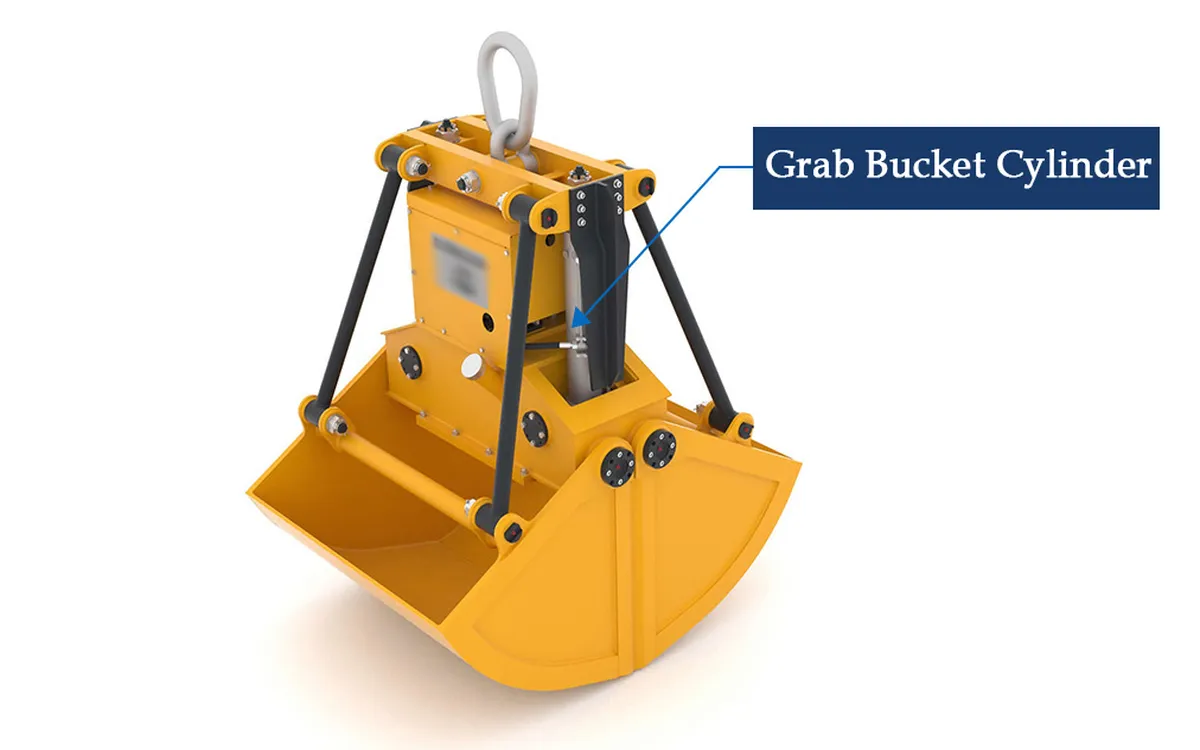
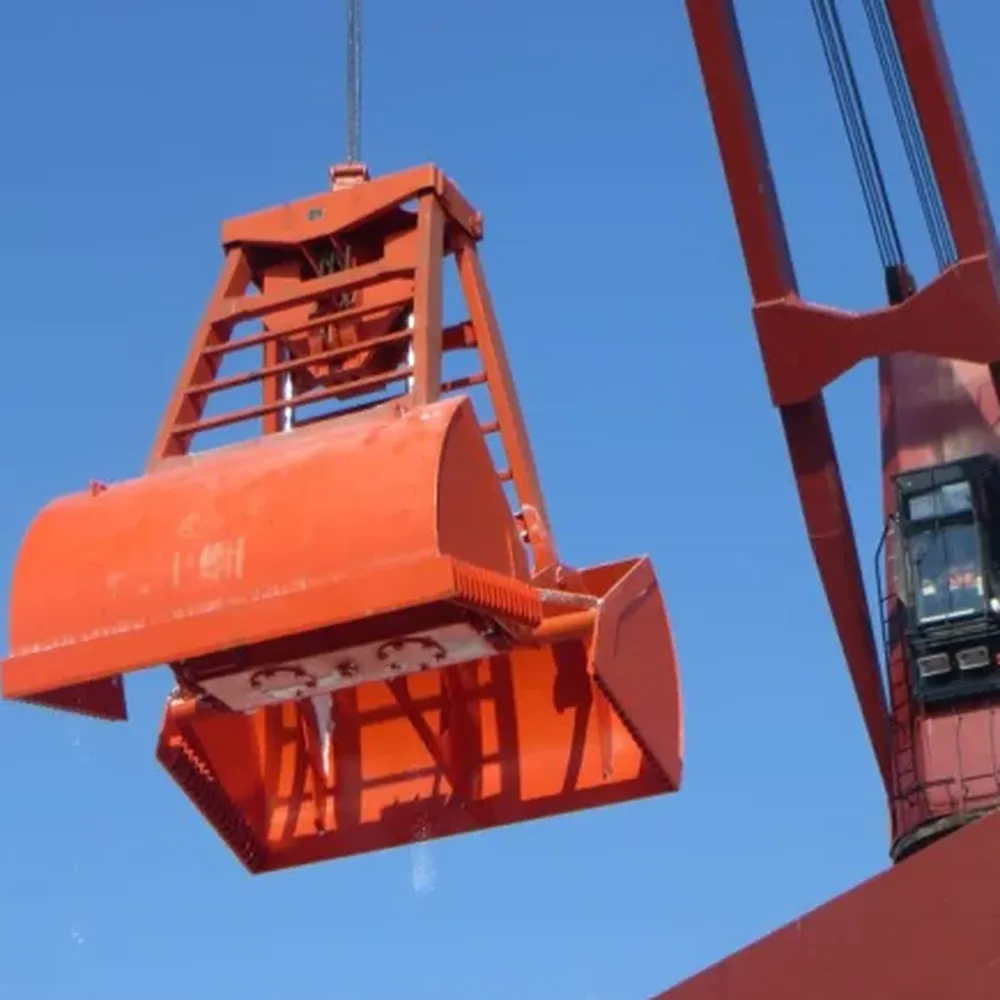
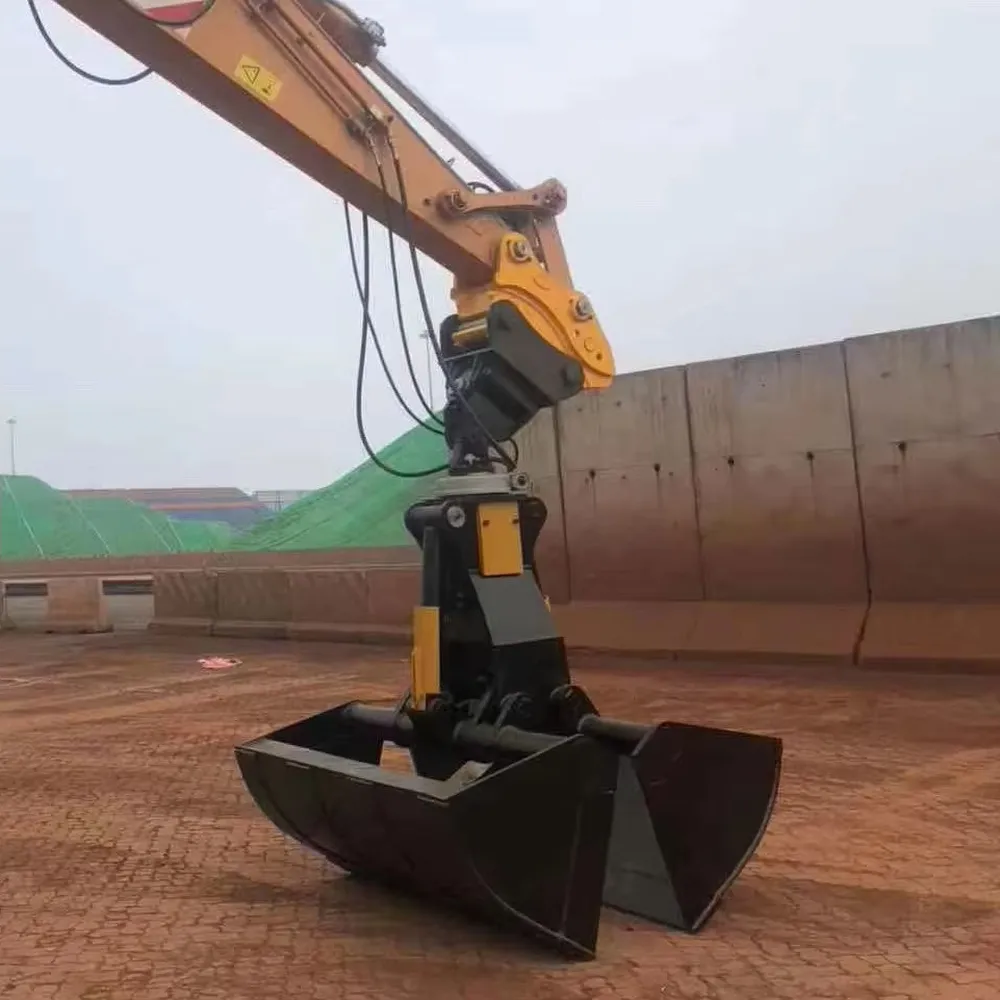
Garbage crane grab buckets rely on a specific class of hydraulic cylinder to open, close, and grip waste material with enough force to lift heavy, irregular loads cycle after cycle. In waste processing plants, transfer stations, and waste-to-energy facilities, these cylinders are the muscles behind every grab. Without a properly designed hydraulic grab bucket cylinder, the entire crane system loses productivity, precision, and safety.
The hydraulic cylinder for garbage crane grab bucket applications converts pressurized hydraulic fluid into powerful linear motion, enabling the grab bucket to clamp down on loose refuse, construction debris, or bundled recyclables. Each opening and closing action subjects the cylinder to immense side loads, shock, and vibration. That is why general-purpose cylinders simply cannot survive in this environment. Only purpose-built garbage crane hydraulic cylinders with reinforced structures, advanced seals, and corrosion-resistant finishes deliver the reliability these operations demand.
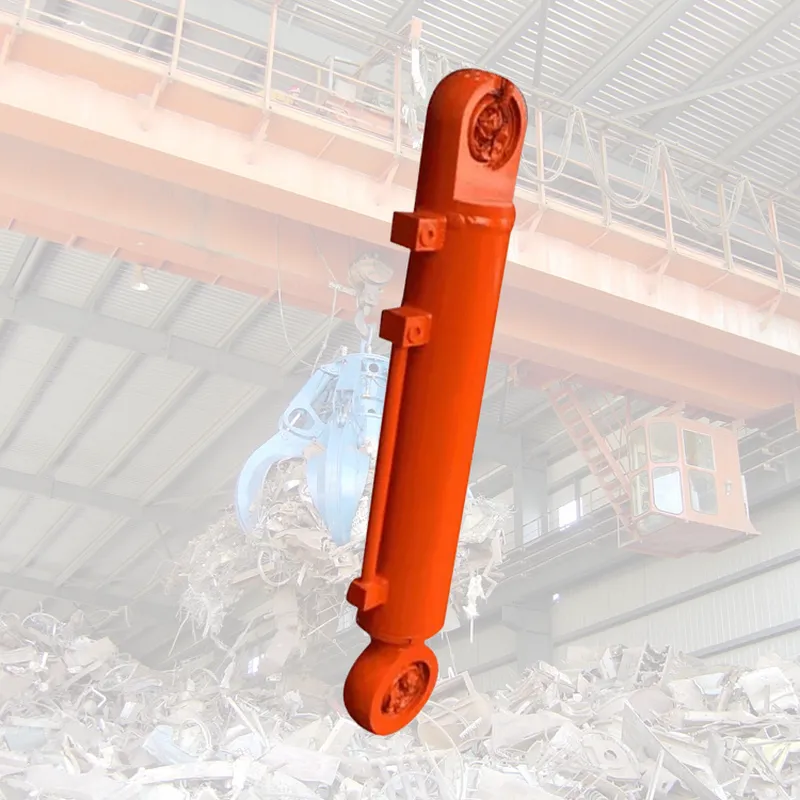
From a value perspective, a high-performance hydraulic cylinder for grab bucket directly impacts three critical metrics: uptime, maintenance cost, and throughput. When you install a cylinder designed specifically for grab bucket duty, you reduce unplanned shutdowns, extend service intervals, and increase the tonnage your facility can move per shift. For operators in Mexico and across Latin America handling growing urban waste volumes, this translates into measurable ROI within the first year of operation.
These cylinders serve in both single acting hydraulic cylinder and double acting hydraulic cylinder configurations depending on the crane design. Most modern garbage crane grabs use double acting cylinders for precise control of both opening and closing force. The cylinder must also integrate seamlessly with the crane’s hydraulic power unit, valve blocks, and control system, making dimensional accuracy and port compatibility non-negotiable requirements.
Technical Specifications and Customizable Parameters
Every waste handling facility has unique requirements. Our hydraulic cylinders for grab bucket applications are fully customizable across all critical dimensions and performance parameters. The table below outlines the standard ranges we manufacture. If your application falls outside these ranges, our engineering team will work with you to develop a solution that fits.
Basic Specifications
| Parameter | Customizable Range |
|---|---|
| Bore Diameter | 80 mm – 320 mm |
| Rod Diameter | 50 mm – 220 mm |
| Stroke Length | 200 mm – 1800 mm |
| Working Pressure | 16 MPa – 35 MPa |
| Test Pressure | 1.5x rated working pressure |
| Cylinder Action | Double acting (standard), Single acting available |
| Port Connection | BSP, SAE, NPT, Metric thread |
| Speed Range | 50 mm/s – 300 mm/s |
Mounting Options
| Mounting Style | Description |
|---|---|
| Clevis Mount (front/rear) | Pin-connected, accommodates angular movement |
| Trunnion Mount | Fixed pivot point for heavy-load stability |
| Flange Mount | Bolted directly to structural frame |
| Earring / Lug Mount | Compact pin connection for confined spaces |
| Custom Bracket | Engineered to match OEM or retrofit geometry |
Materials and Surface Treatments
| Component | Material / Treatment |
|---|---|
| Cylinder Tube | SAE 1045/1050 seamless steel, honed bore (Ra ≤ 0.4 μm) |
| Piston Rod | CK45 / 42CrMo4 chrome-plated (20-30 μm), QPQ optional |
| Piston | Ductile iron or forged steel, wear ring grooves |
| Seals | Parker, Hallite, NOK, or equivalent; FKM / NBR / PTFE |
| End Caps / Gland | Forged steel or cast steel, machined to ISO tolerances |
| Exterior Coating | Shot blasting + epoxy primer + polyurethane topcoat (salt spray ≥ 500 hrs) |
Environmental Adaptability
| Condition | Specification |
|---|---|
| Operating Temperature | -25 °C to +80 °C |
| Humidity Resistance | Designed for outdoor, high-humidity environments |
| Corrosion Protection | Multi-layer coating, chrome or QPQ rod treatment |
| Dust / Debris Protection | Heavy-duty wiper seals + metal scraper rings |
| Shock / Vibration | Built-in cushioning, reinforced clevis pins |
Features and Advantages of Our Grab Bucket Hydraulic Cylinder
When you are sourcing a hydraulic cylinder for a garbage crane grab bucket, the difference between a mediocre product and a truly reliable one comes down to engineering details that most buyers never see until something fails. Here is what sets our cylinders apart from generic alternatives:
- Precision honed cylinder bore with surface roughness controlled below Ra 0.4 micrometers, which directly reduces internal friction and extends hydraulic cylinder seals life by up to 40 percent.
- Hard chrome plated piston rod with a minimum thickness of 25 micrometers and optional Quench-Polish-Quench (QPQ) treatment for extreme corrosion environments.
- Forged steel mounting eyes and clevis pins rated for the full shock loads encountered during grab bucket clamping, not just static load ratings.
- Multi-stage sealing system combining primary lip seals, backup rings, and a heavy-duty scraper to keep contaminants out of the cylinder bore even in the dirtiest waste handling conditions.
- Integrated cushioning at both stroke ends to reduce hydraulic shock, protect the crane frame, and minimize noise during rapid cycling.
- Every cylinder is proof tested at 1.5 times maximum working pressure and functionally tested under full stroke before leaving the factory.
Direct Replacement for Leading Crane Brands
Note: All brand names mentioned below are the property of their respective owners. They are referenced solely to help buyers identify compatible replacement hydraulic cylinders for their existing equipment. No affiliation, endorsement, or sponsorship is implied.
Our hydraulic garbage crane cylinder is designed as a drop-in replacement for the grab bucket cylinders used in equipment manufactured by:
- Konecranes (CXT and S-series waste cranes)
- Liebherr (LH series material handlers with grab attachments)
- Sennebogen (8-series green line grab cranes)
- Fuchs (MHL series waste and recycling handlers)
- Aebi Schmidt / Penz (timber and waste grab cranes)
- Hiab (crane-mounted grab applications)
- Mantsinen (hydraulic material handling cranes)
- Caterpillar (CAT MH-series with grapple attachments)
We manufacture based on your OEM part number, drawing, or physical sample. Whether you need a single replacement cylinder or a bulk order for fleet retrofitting, we match the original dimensions, port layout, and pressure rating precisely. Explore our full range of garbage truck hydraulic cylinders to find the right match for your crane model.

Core Technical Advantages
1. Ultra-Low Friction Sealing System
Internal friction is the silent killer of hydraulic cylinder efficiency. Our proprietary sealing arrangement uses stepped lip geometry combined with PTFE-based guide rings that reduce breakout pressure by over 30 percent compared to conventional piston seals. This translates to smoother grab bucket operation, faster response, and significantly less heat generation inside the cylinder. Lower heat means longer oil life, fewer filter changes, and reduced system downtime. Every sealing component is sourced from global leaders including Parker Hannifin, Hallite, and NOK, selected for their proven track record in heavy-duty hydraulic oil cylinder applications.
2. High-Rigidity Cylinder Barrel and Piston Rod Manufacturing
The cylinder tube is manufactured from seamless steel tubing, cold drawn and precision honed to achieve bore straightness within 0.03 mm per meter. The hydraulic cylinder piston rod is induction hardened, precision ground to h7 tolerance, and hard chrome plated in-house for total quality control. This combination of barrel rigidity and rod hardness prevents deflection under the heavy side loads generated during grab bucket closure, protecting both the seals and the bearing surfaces from premature wear.
3. Thermal Stability and Fatigue Life Optimization
Grab bucket cylinders on garbage cranes can cycle thousands of times per day. We design for a minimum fatigue life of 1,000,000 pressure cycles at rated working pressure. Material selection, welding procedures, and stress relief treatments are all optimized using finite element analysis (FEA) to eliminate stress concentrations. The result is a cylinder that performs consistently whether operating in the humid heat of a Mexican summer or during cool winter mornings, with no loss of seal integrity or structural performance across the full -25 to +80 degree Celsius temperature range.
4. Advanced Corrosion Resistance for Waste Environments
Garbage handling is among the most corrosive operating environments for any hydraulic cylinder components. Leachate, acidic vapors, saltwater spray in coastal facilities, and constant moisture exposure attack unprotected surfaces relentlessly. Our cylinders feature a multi-barrier corrosion protection system: QPQ or hard chrome rod treatment, shot-blasted and epoxy-primed barrel surfaces, polyurethane topcoat rated for over 500 hours of salt spray exposure, and stainless steel port fittings as an option. This layered defense ensures your investment keeps performing for years, not months.
5. Integrated End-of-Stroke Cushioning
Without proper cushioning, every stroke end sends a hydraulic shock wave through the cylinder, the crane structure, and the grab bucket itself. Over thousands of cycles per day, this unchecked shock dramatically shortens the life of pins, bushings, welds, and the cylinder internals. Our adjustable cushioning system decelerates the piston smoothly in the final portion of each stroke, absorbing kinetic energy and converting it to controlled heat dissipation. The cushioning valves are adjustable in the field, allowing operators to fine-tune performance for different load conditions without removing the cylinder from the crane.
6. Contamination-Resistant Bearing Design
The gland area of a grab bucket cylinder is constantly exposed to dust, metal particles, and organic debris. We use composite bronze-filled bearings with embedded solid lubricant channels that maintain a hydrodynamic film even when external contamination is severe. Combined with our heavy-duty wiper and scraper ring assembly, this bearing design dramatically reduces the risk of rod scoring and internal contamination, two of the most common reasons for hydraulic cylinder repair in waste handling equipment.
Manufacturing Process and Quality Control
Vertically Integrated In-House Manufacturing
As a dedicated hydraulic cylinder manufacturer, we control every stage of production under one roof. Raw material inspection, CNC machining of barrels, rods, pistons, and end caps, deep hole boring, honing, chrome plating, welding, painting, seal assembly, and final testing all happen in our own facility. This vertical integration eliminates the quality variability that plagues companies that outsource critical processes. When a cylinder leaves our factory, we stand behind every component because we made every component.
100% Factory Testing Before Shipment
Every single hydraulic cylinder we produce undergoes a rigorous test protocol before release. This includes hydrostatic proof testing at 1.5x working pressure, functional stroke testing under load simulation, internal leakage measurement (must be below 5 drops per minute at rated pressure and temperature), external leakage verification (zero visible leakage), and dimensional verification against the approved drawing. Test certificates with serial number traceability are provided with each shipment, giving you documented assurance that the cylinder you receive matches the cylinder we tested.
Certifications and Full Traceability
Our manufacturing operations comply with ISO 9001:2015 quality management standards. We maintain full material traceability from raw steel mill certificates through to the finished cylinder serial number. Every batch of seal material, every heat of steel, and every lot of chrome plating solution is documented and retrievable. For customers who require additional certification such as CE marking, third-party inspection (SGS, Bureau Veritas, TUV), or specific material test reports, we accommodate these requirements as part of our standard service.
Continuous Improvement Through Field Feedback
We actively collect performance data from customers operating our cylinders in the field. This feedback loop drives ongoing improvements to our sealing arrangements, surface treatments, and structural designs. When a customer reports a premature failure or an unexpected wear pattern, we investigate, identify the root cause, and implement corrective actions across our entire production line. This is not just quality control, it is quality evolution.
Typical Applications
While the primary focus of this article is the hydraulic cylinder for garbage crane grab bucket use, these cylinders are engineered to handle a broad spectrum of demanding grab and clamp applications:
- Municipal solid waste (MSW) transfer stations, where grab cranes load waste into compactors, trucks, or incinerator feed hoppers.
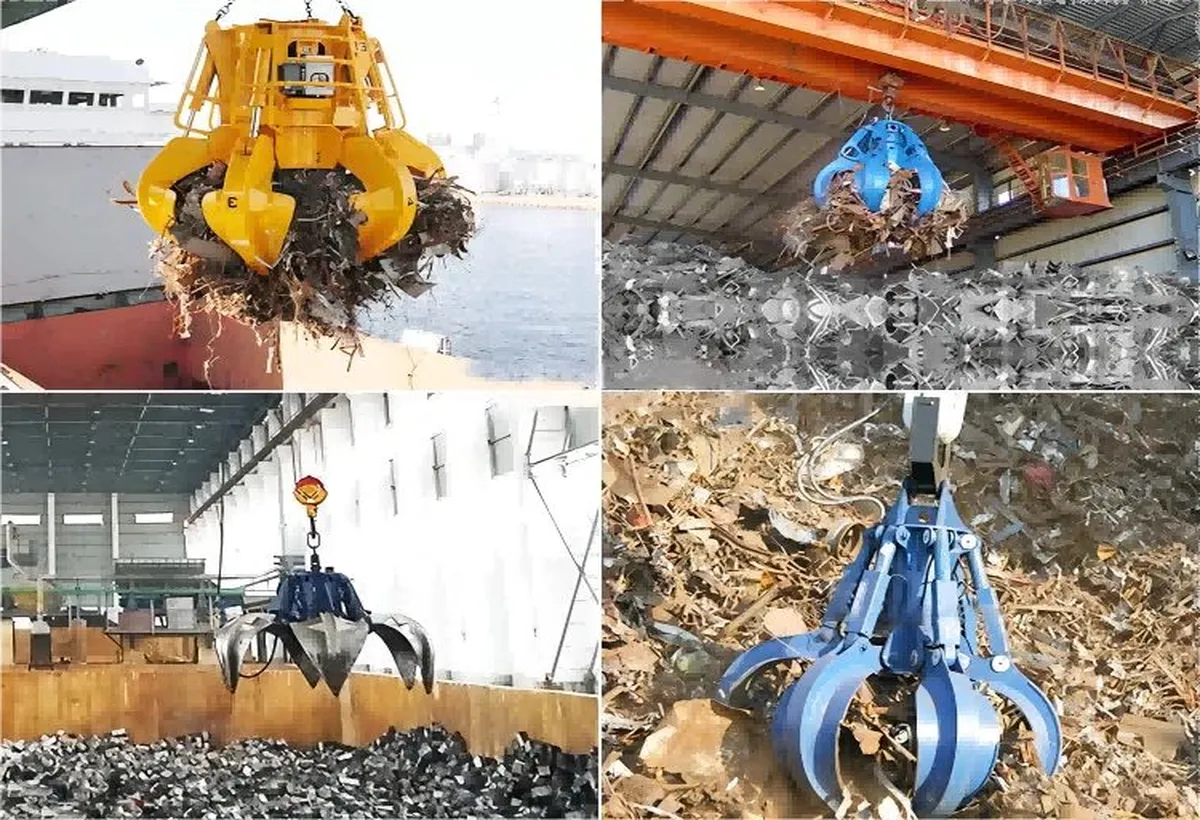
- Waste-to-energy (WtE) power plants, where overhead bridge cranes with grab buckets mix and feed refuse-derived fuel into combustion chambers continuously.
- Scrap metal recycling yards, where crane-mounted grabs sort and load ferrous and non-ferrous metals.
- Biomass and wood chip handling facilities that use grab cranes for bulk material storage and feed systems.
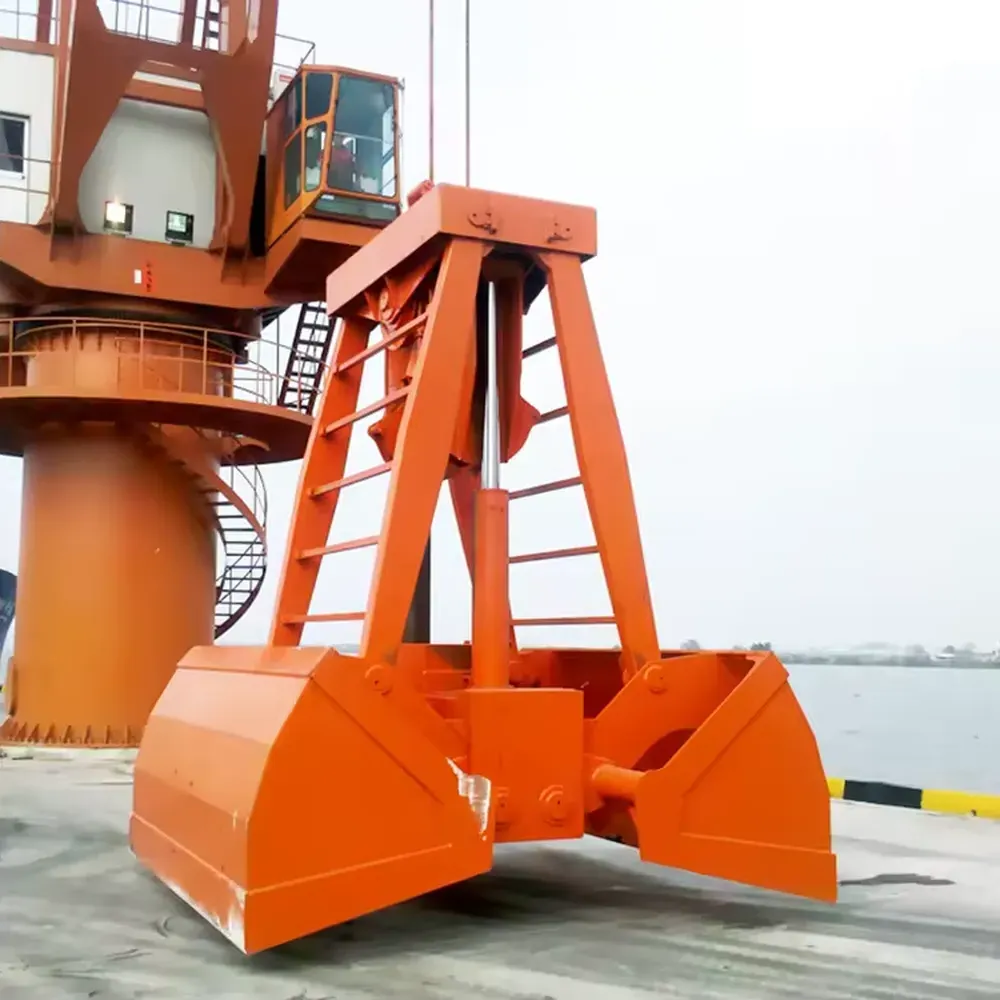
- Port and harbor bulk handling operations for loose cargo such as grain, coal, and aggregates using clamshell buckets.
- Construction and demolition waste sorting centers where grab cranes pick and separate mixed debris.
- Industrial foundry and smelter operations for handling slag, raw materials, and finished castings with crane grabs.

Comparison: Standard Hydraulic Cylinders vs. Our High-Performance Grab Bucket Cylinders
Not all hydraulic cylinders are built for the punishment that grab bucket service delivers. The following comparison highlights the critical differences between a generic cylinder and our purpose-engineered solution:
| Feature | Standard Hydraulic Cylinder | Our High-Performance Cylinder |
|---|---|---|
| Design Basis | General industrial use | Purpose-built for grab bucket duty cycles |
| Fatigue Rating | 200,000 – 500,000 cycles | 1,000,000+ cycles at rated pressure |
| Sealing System | Single lip seals, standard wiper | Multi-stage seals + metal scraper + backup rings |
| Rod Protection | Standard chrome (15-20 μm) | Heavy chrome (25-30 μm) or QPQ treatment |
| End Cushioning | None or fixed orifice | Adjustable cushioning both ends |
| Corrosion Resistance | Basic paint (100-200 hrs salt spray) | Multi-layer system (500+ hrs salt spray) |
| Side Load Tolerance | Limited, causes premature wear | Reinforced bearings and oversized gland |
| Testing | Batch sample testing | 100% individual proof and function test |
| Typical Service Life | 12 – 18 months in grab duty | 36 – 60 months in grab duty |
| Warranty | 6 – 12 months | 18 – 24 months |
Real-World Case Studies
Case 1: Municipal Waste Transfer Station, Monterrey, Mexico
Client: A municipal waste management authority operating three transfer stations across the Monterrey metropolitan area.
Application: Overhead bridge crane with a 5-jaw grab bucket for mixed municipal solid waste handling, processing approximately 800 tonnes per day.
How They Found Us: The facility maintenance manager discovered our website in March 2024 while searching for replacement grab bucket cylinders after their original European-supplied cylinders failed at 14 months. He submitted an inquiry through our online contact form with the OEM part number and cylinder dimensions.
Outcome: We delivered 6 replacement cylinders (bore 200 mm, stroke 650 mm, 25 MPa working pressure) within 35 days including sea freight to the port of Altamira. The first set has been running since June 2024, now over 22 months with zero seal leakage. The client has since placed two repeat orders for their other stations.
Client Feedback: “We were skeptical about switching from our European supplier, but the quality and price were impossible to ignore. After 22 months of trouble-free operation, we moved all three stations to your cylinders. The response time on technical questions has been excellent.”
Case 2: Waste-to-Energy Plant, Guadalajara, Mexico
Client: A privately operated WtE facility processing 1,200 tonnes of refuse-derived fuel per day.
Application: Two Konecranes overhead cranes with hydraulic orange peel grabs, cycling over 2,000 times daily to mix and feed waste into the furnace.
How They Found Us: The plant engineering director was referred by a colleague at a similar facility in Colombia who had used our cylinders. He contacted us via email in September 2023 with detailed drawings and requested both a quotation and a reference visit to our factory.
Outcome: After a successful factory audit in November 2023, we manufactured 8 cylinders (bore 250 mm, stroke 900 mm, 28 MPa) with QPQ rod treatment for the highly corrosive environment. Delivered in 45 days. The plant reported a 60 percent reduction in cylinder-related downtime compared to the previous supplier, with projected annual savings of over USD 38,000 in maintenance costs.
Client Feedback: “The QPQ rod finish has made a real difference in our environment. We used to re-chrome rods every 8 months. It has been over two years now and the rods still look new. The factory visit gave us the confidence to make the switch.”
Case 3: Scrap Metal Recycling Yard, Puebla, Mexico
Client: A family-owned scrap metal recycling operation handling approximately 200 tonnes of mixed ferrous and non-ferrous metals daily.
Application: Liebherr LH 40 material handler equipped with an electro-hydraulic clamshell grab for loading railcars and trucks.
How They Found Us: The owner found our product listing on a B2B trade platform in January 2025 and sent a WhatsApp message with photos of the leaking original cylinder, asking if we could make a replacement.
Outcome: Based on the photos and measurements the client provided, we reverse-engineered the cylinder and delivered 2 units within 28 days by air freight. The cylinders have been in service since February 2025 with the client reporting smoother grab operation and faster cycle times compared to the worn originals.
Client Feedback: “I did not expect this level of service from a manufacturer overseas. They worked from my cell phone photos and the cylinders fit perfectly. The grab closes faster and holds tighter now. Already planning to order spares.”
Case 4: Port Bulk Handling, Veracruz, Mexico
Client: A logistics company operating two Sennebogen 870 cranes for unloading bulk grain and coal from vessels at the Port of Veracruz.
Application: Clamshell grab bucket cylinders, 4 per grab, operating in a high-salinity coastal environment with constant wind-borne sand exposure.
How They Found Us: The operations manager attended a trade exhibition in Mexico City in mid-2024 where our regional sales partner displayed our products. He requested a technical meeting and sent us the OEM specifications the following week.
Outcome: We supplied 16 cylinders (bore 180 mm, stroke 580 mm) in two batches over 4 months, all with enhanced corrosion protection including stainless steel port adapters and double-wiper seal configurations. After 18 months of operation in this aggressive environment, not a single cylinder has required seal replacement or shown visible rod pitting.
Client Feedback: “Salt air and sand destroy everything at this port. Our previous cylinders lasted 10 months on average. These have gone 18 months and counting without any issues. The stainless port adapters were a smart recommendation from their engineering team.”
Case 5: Industrial Waste Processing, Queretaro, Mexico
Client: An industrial waste processing company managing hazardous and non-hazardous solid waste from automotive manufacturing plants in the Queretaro industrial corridor.
Application: Custom-built overhead grab crane used to sort and feed mixed industrial waste into a shredding and separation line.
How They Found Us: A process engineer recommended us after seeing our cylinders perform well on a biomass handling crane at a related facility. The client reached out via our contact page in August 2024.
Outcome: We designed 4 custom cylinders with FKM seals (to resist chemical exposure from industrial waste solvents), bore 160 mm, stroke 720 mm, 20 MPa rated pressure. Delivered within 40 days. The client integrated them with their existing hydraulic system without any modifications to the valve block or HPU.
Client Feedback: “The FKM seal option was critical for us because of solvent exposure. Their engineer asked the right questions about our fluid and waste composition before recommending the seal material. That kind of technical depth is rare in this price range.”
Common Fault Diagnosis and Troubleshooting
Even the best-built hydraulic grab bucket cylinder can develop issues if operating conditions, maintenance practices, or system parameters are not within design limits. Here are the most common faults and the practical steps to diagnose and resolve them:
1. External Oil Leakage at the Rod Gland
This is the most frequently reported issue. In most cases, it is caused by damaged or worn hydraulic cylinder seals at the rod end gland, scoring or pitting on the piston rod surface, or contamination (dirt, metal particles) embedded in the wiper seal. Start by inspecting the rod surface for visible scratches or corrosion. If the rod is damaged, it must be reground and re-chromed or replaced before installing new seals. If the rod is in good condition, replacing the seal kit with genuine hydraulic cylinder parts typically resolves the leak.
2. Loss of Gripping Force (Slow or Weak Grab Closure)
If the grab bucket closes slowly or cannot grip a full load, the cylinder may be experiencing internal bypass leakage past the piston seals. This is confirmed by checking the cylinder drift rate (how far the rod retracts under static load with the control valve closed). Excessive drift indicates piston seal failure. Other causes include a worn or sticking hydraulic control valve, low system pressure from pump wear, or air trapped in the cylinder. Bleed the cylinder first, check system pressure at the valve block, and then inspect the piston seals if the problem persists.
3. Jerky or Erratic Cylinder Movement
Stick-slip motion during grab bucket opening or closing usually points to air in the hydraulic system, worn guide rings or bearings inside the cylinder, or insufficient lubrication of the rod surface. Bleed all air from the circuit, inspect the guide rings for wear (replace if clearance exceeds 0.15 mm), and verify that the hydraulic oil viscosity is within the recommended range for your operating temperature.
4. Excessive Noise or Banging During Operation
Mechanical banging at the end of stroke is typically caused by failed or improperly adjusted end cushioning. Check the cushion adjustment screws and ensure they are not fully open. If the cushioning components are damaged, they must be replaced during the next overhaul. Cavitation noise (a high-pitched whine) usually indicates insufficient oil supply to the cylinder, often caused by undersized hoses, blocked filters, or low reservoir level.
5. Rod Corrosion or Pitting
If the chrome layer on the piston rod is compromised, moisture and corrosive agents attack the base steel rapidly. In coastal or waste-handling environments, this can happen faster than expected if the rod wiper seal is damaged or missing. Preventive measures include regular wiper seal inspection, applying a thin film of protective grease to the exposed rod during shutdown periods, and considering QPQ rod treatment for the replacement cylinder.
How to Choose the Right Hydraulic Cylinder for Your Grab Bucket
Selecting the correct hydraulic cylinder for grab bucket applications involves more than just matching bore, stroke, and pressure. Here is a systematic approach that experienced procurement teams and maintenance engineers use to specify the right product:
Step 1: Define the Duty Cycle. Count or estimate the number of full open-close cycles per hour and per day. A cylinder rated for 200,000 cycles will not survive in a facility running 2,000 cycles daily. You need a fatigue-rated design.
Step 2: Assess the Operating Environment. Indoor or outdoor? Coastal or inland? Exposure to chemicals, leachate, or extreme temperatures? This determines the rod treatment, seal material, and coating specification.
Step 3: Confirm Dimensional Requirements. Collect exact measurements for bore, rod diameter, stroke, retracted length, port size and orientation, and mounting geometry. If you have an OEM part number, provide it. If not, send physical measurements or a drawing.
Step 4: Verify Hydraulic System Parameters. Know your system operating pressure, maximum pressure (including transient spikes), flow rate, and oil type. These parameters directly influence seal selection and cushioning design.
Step 5: Consider Side Load Conditions. Grab bucket cylinders often experience significant side loads due to the bucket geometry and load distribution. Communicate this to your hydraulic cylinder manufacturer so that the bearing arrangement and rod diameter are properly sized.
Step 6: Plan for Serviceability. Choose a cylinder design that allows field-serviceable seal replacement without specialized tools. This reduces downtime and maintenance costs over the cylinder’s life. Ask whether the manufacturer stocks spare hydraulic cylinder parts and seal kits for your specific model.
If you need help specifying the right cylinder for your crane, our engineering team is available to review your requirements and provide a detailed technical proposal.
Frequently Asked Questions
What is the typical lead time for a custom hydraulic cylinder for garbage crane grab bucket?
Can you manufacture a hydraulic grab bucket cylinder without OEM drawings?
What seal materials do you use for hydraulic cylinders in corrosive waste environments?
How do I know if my garbage crane hydraulic cylinder needs repair or replacement?
What is the minimum order quantity for custom hydraulic cylinders?
Do you ship hydraulic cylinders to Mexico and offer customs support?
What warranty do you offer on garbage crane grab bucket hydraulic cylinders?
Can your hydraulic cylinders handle the side loads in a multi-jaw grab bucket?
How do I request a quotation for a hydraulic cylinder for my garbage crane?
What makes your company different from other hydraulic cylinder manufacturers?
Ready to Upgrade Your Grab Bucket Performance?
Custom Hydraulic Cylinders Built for Your Exact Requirements
Whether you need a single replacement cylinder or a full set for a fleet upgrade, our engineering team is ready to deliver a solution that fits your crane, your environment, and your budget. From bore sizes of 80 mm to 320 mm, pressures up to 35 MPa, and advanced corrosion protection for the toughest waste handling conditions, every cylinder is manufactured, tested, and guaranteed to perform.
Or explore our full range of hydraulic cylinder products to find exactly what your operation needs.