The Core Role of a Hydraulic Cylinder in Log Splitting
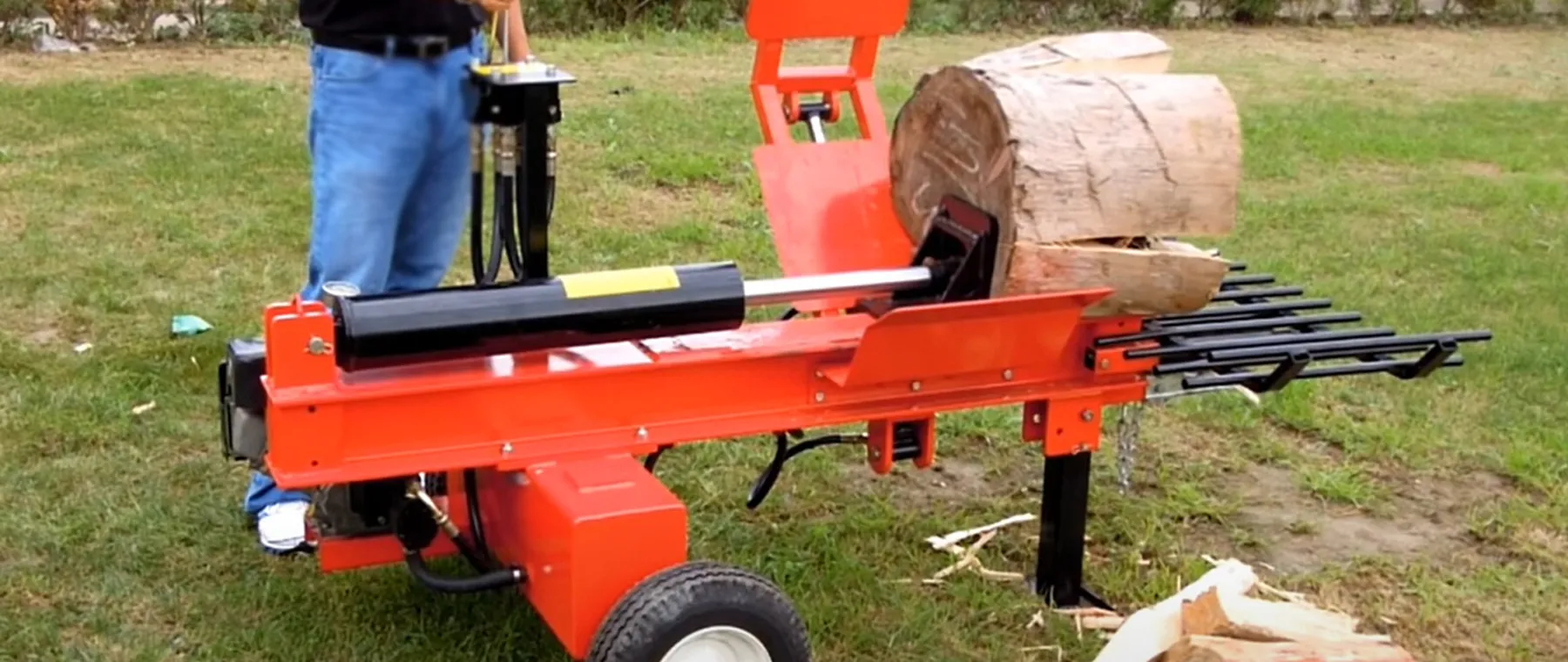
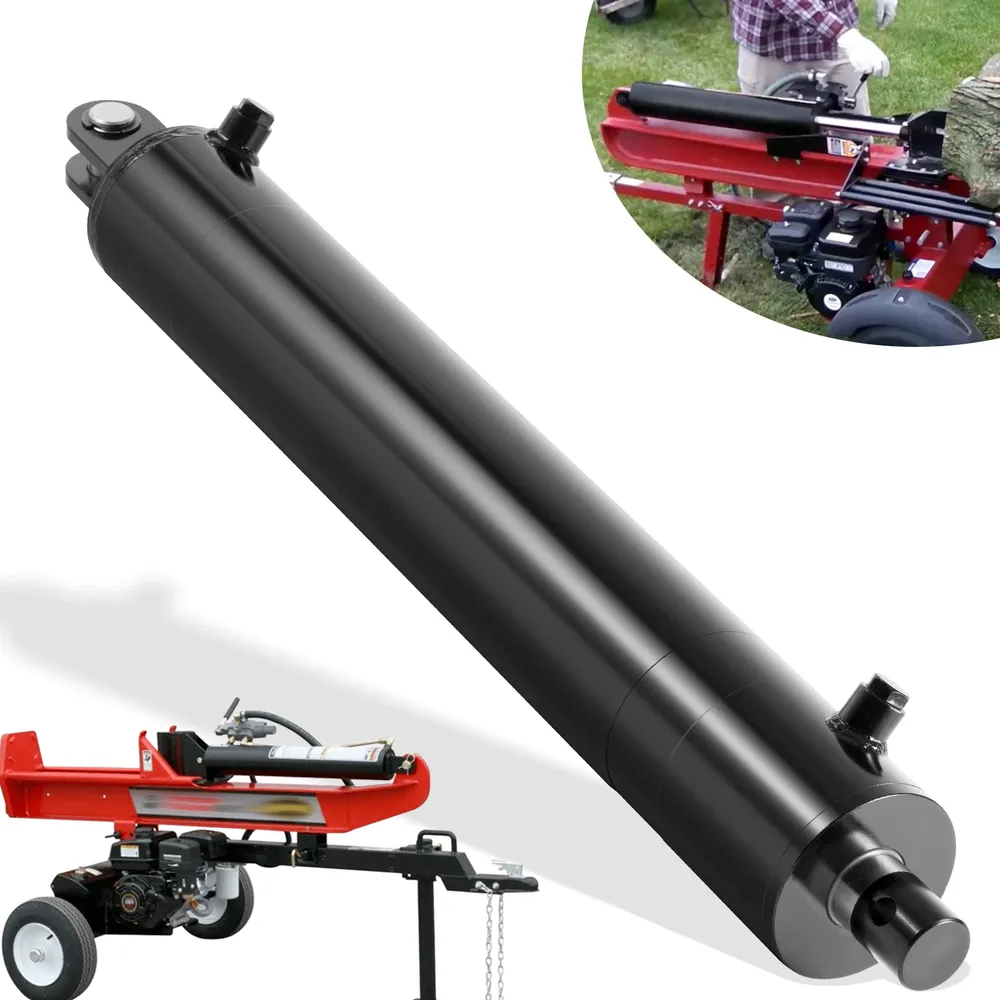
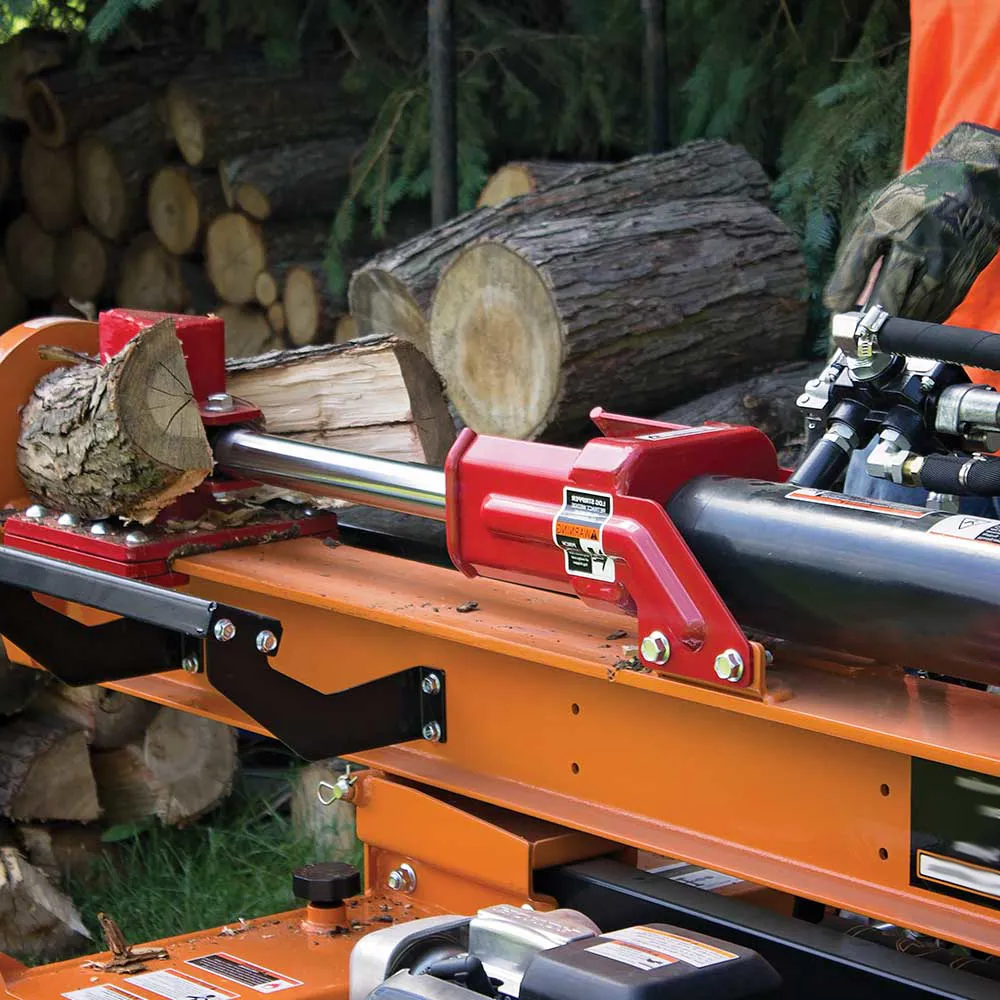
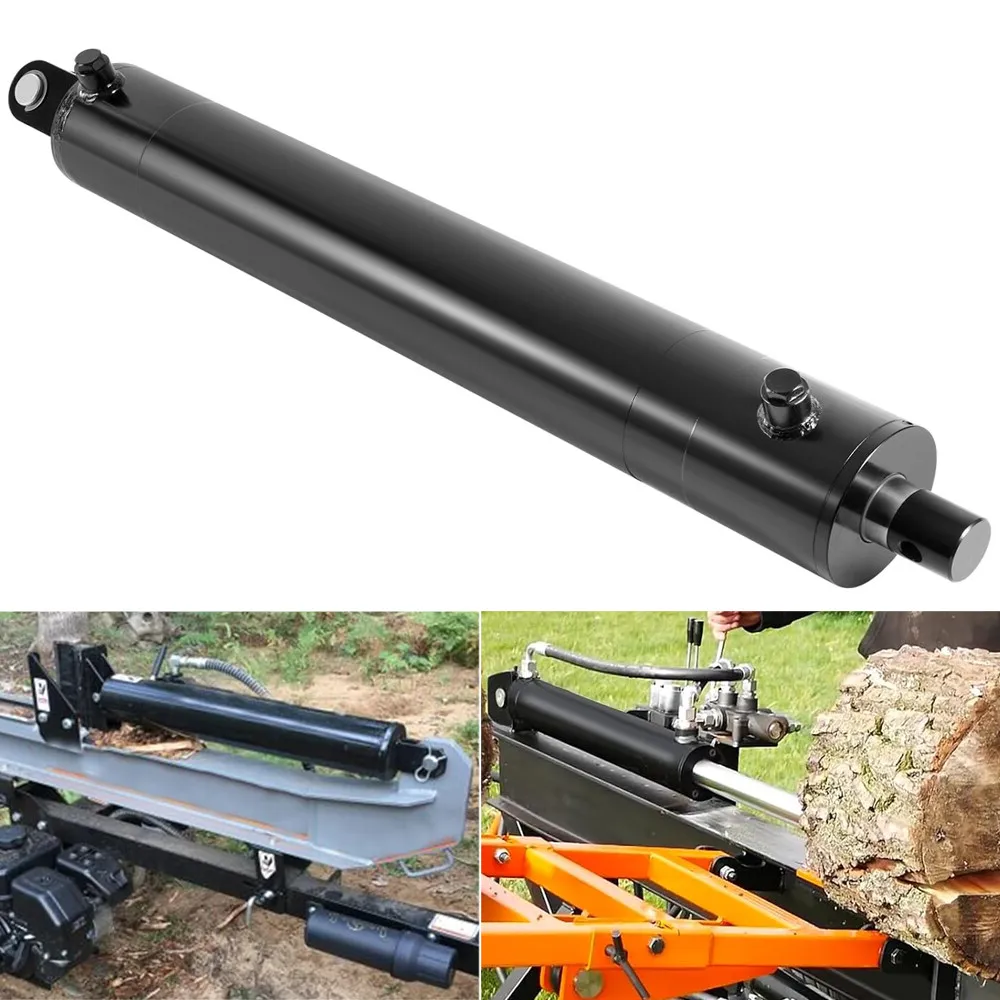
A hydraulic cylinder for log splitter machines is the component that converts pressurized fluid energy into the straight-line mechanical force needed to drive a wedge through hardwood, softwood, knotted rounds, and even green timber. Without a properly sized and manufactured log splitter hydraulic cylinder, the entire machine is ineffective regardless of engine power, pump flow, or frame construction.
In practical terms, the cylinder must generate consistent tonnage across the full stroke length, cycle after cycle, under widely varying ambient temperatures and load conditions. Whether you operate a 20 ton hydraulic cylinder for log splitter use around the homestead or a commercial-grade 50 ton hydraulic cylinder for log splitter application at a firewood processing yard, the cylinder determines splitting speed, reliability, and long-term cost of ownership.
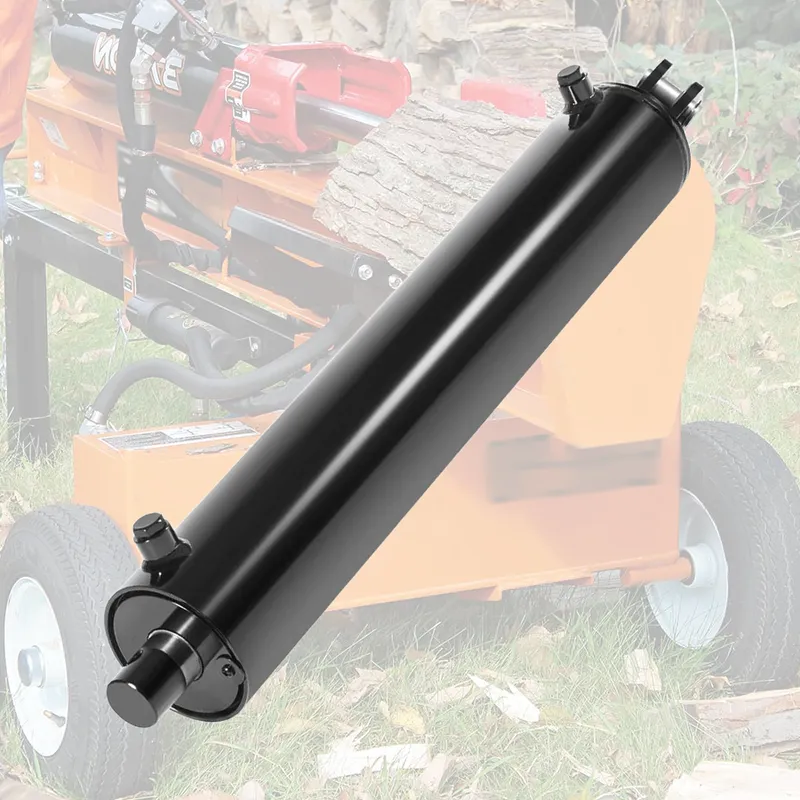
As a hydraulic cylinder manufacturer with two decades of field-tested designs, we build every hydraulic oil cylinder to sustain peak pressure without seal degradation, bore scoring, or rod deflection. That translates directly into fewer maintenance stops, longer service intervals, and more tonnage of split wood per season.
Our hydraulic cylinders for log splitters serve residential owners processing five cords a year and commercial operators stacking hundreds of cords for wholesale distribution. The cylinder is the heart of every log splitter, and getting it right is everything.
Technical Specifications and Customizable Ranges
Below is a summary of the key dimensions and options available across our range of log splitter hydraulic cylinders. Every parameter can be tailored to your specific machine design, tonnage rating, and operating environment.
Basic Specifications
| Parameter | Available Range / Options |
|---|---|
| Bore Diameter | 3.5 in / 4 in / 4.5 in / 5 in (custom bores on request) |
| Rod Diameter | 1.75 in / 2 in / 2.5 in / 3 in |
| Stroke Length | 20 in / 24 in / 30 in / 36 in |
| Working Pressure | 2,500 – 3,000 PSI standard; up to 3,500 PSI on request |
| Tonnage Rating | 20 ton / 25 ton / 27 ton / 30 ton / 35 ton / 40 ton / 50 ton |
| Port Size | SAE 8 / SAE 10 / 1/2 in NPT / 3/4 in NPT |
| Pin Hole Diameter | 1 in / 1.25 in / 1.5 in (custom available) |
| Action Type | Double Acting (standard) / Single Acting |
Mounting Options
| Mount Style | Notes |
|---|---|
| Cross Tube (Pin Eye) Both Ends | Most common for log splitters; allows pivoting alignment |
| Tang Mount (Cap End) | Bolt-on mounting for welded frames |
| Clevis Mount | Used in heavy-duty commercial builds |
| Custom Flange | Engineered to OEM drawings |
Materials and Surface Treatment
| Component | Material / Finish |
|---|---|
| Cylinder Tube | SAE 1026 / 1518 honed steel tube; ID finish Ra 0.2 – 0.4 um |
| Piston Rod | C1045 / CK45 induction-hardened, hard chrome plated (0.001 in min) |
| Piston | Ductile iron or forged steel, precision machined |
| Seals | Parker / NOK polyurethane and nitrile; Viton for high-temperature |
| End Caps | CNC-machined 1045 steel, zinc-plated or powder-coated |
| Exterior Finish | Black paint / powder coat / zinc plating (salt spray 500+ hrs) |
Environmental Adaptability
| Condition | Rating |
|---|---|
| Operating Temperature | -22 F to +200 F (-30 C to +93 C) |
| Humidity / Moisture | Sealed for outdoor and wet-environment use |
| Dust and Debris Protection | Integrated wiper seals; optional rod boot available |
| Corrosion Resistance | Chrome rod + zinc/powder-coat exterior; suitable for coastal environments |
Need a size not listed here? Contact our engineering team with your machine specifications and we will deliver a fully customized hydraulic cylinder for a log splitter matched to your exact requirements.
Compatible Replacement for Major Log Splitter Brands
Disclaimer: All brand names mentioned below are the property of their respective owners. They are referenced solely for the purpose of helping buyers identify compatible replacement cylinders. We are not affiliated with or endorsed by any of these manufacturers.
Our high-quality log splitter hydraulic cylinders are designed as direct-fit or close-fit replacements for the cylinders found in many popular machines. If your existing cylinder has failed or is losing pressure, you can likely replace it with one of ours at a fraction of OEM cost while gaining improved seal life and corrosion resistance. Compatible brands include:
- SpeeCo and County Line (commonly sold through Tractor Supply)
- Huskee and Rugged Made
- NorthStar, Champion, Boss Industrial
- Iron and Oak, YardMax
- Troy-Bilt and Swisher
- WEN and PowerKing
- Custom-built and homebuilt log splitters using standard bore and stroke dimensions
Simply match your bore diameter, stroke length, rod size, pin hole diameter, and mounting style. If you are unsure, send us a photo and the old cylinder measurements through our contact page and we will confirm fitment within 24 hours.
Core Technical Advantages
1. Ultra-Low Friction Seal System
Every cylinder ships with a multi-lip polyurethane piston seal and a precision rod seal assembly that reduce internal friction by up to 18% compared to standard NBR configurations. Lower friction means faster cycle times, less heat generation, and significantly longer seal life. For customers running 30 ton log splitter hydraulic cylinder machines at high duty cycles, this single improvement often extends seal replacement intervals from one season to three or more.
2. High-Rigidity Cylinder Tube and Piston Rod
We hone our cylinder tubes in-house to an internal surface finish of Ra 0.2 um, resulting in near-mirror-smooth bore walls. The piston rod is induction-hardened to HRC 55-62 and then hard chrome plated to a minimum thickness of 0.001 inches. This combination resists scoring, pitting, and corrosion far beyond what mill-finish rods deliver. For a 4 x 24 hydraulic cylinder for log splitter machines, this means no rod re-chroming or replacement across tens of thousands of cycles.
3. Thermal Stability Under Continuous Duty
Log splitting is a repetitive, high-load application. Oil temperature climbs quickly in warm weather or when processing large volumes. Our cylinders are designed with generous internal clearances and seal compounds that maintain elasticity from -22 F through +200 F. Even in the hot climates of Mexico and the southern United States, our hydraulic log splitter cylinder products maintain consistent stroke force with no seal extrusion or blow-by.
4. Fatigue Life Optimization
Welded joints on the cross tubes and end caps are stress-relieved after fabrication. Finite element analysis guides wall thickness selection to eliminate stress concentrations. Field data collected over 15 years confirms our cylinders routinely exceed 500,000 full-load cycles before any measurable internal wear, placing them well above the industry baseline for hydraulic cylinders for log splitters.
5. Contamination-Resistant Wiper Design
Log splitting generates bark chips, sawdust, sap, and dirt that can infiltrate the rod seal area. Our double-lip wiper with a hardened steel scraper ring physically removes debris before it contacts the primary rod seal. This is especially valuable for wood splitter hydraulic cylinder installations that operate outdoors without guarding, which covers most real-world use cases.
6. Precision Bore-to-Piston Fit
CNC machining of both the piston and gland ensures bore-to-piston clearances stay within 0.002 inches, limiting blow-by and delivering full rated tonnage right to the end of the stroke. When a 35 ton hydraulic cylinder for log splitter setup is specified at 3,000 PSI, that rating holds throughout the entire 24-inch or 30-inch travel without pressure drop.

Manufacturing Process and Quality Control
Vertically Integrated Production
From raw steel tube to finished, tested hydraulic cylinder, every step takes place under one roof. Tube cutting, honing, rod machining, chrome plating, welding, seal assembly, painting, and final inspection are all performed by our own teams on our own equipment. This eliminates the quality variability that creeps in when sub-assemblies are outsourced to third-party shops.
100% Pressure and Leak Testing
Every single cylinder is hydrostatically tested at 1.5 times its rated working pressure before leaving the factory. We hold the test pressure for a minimum of two minutes while checking for external leaks at every port, weld, and seal interface. Internal leakage is measured and must fall below 1 drop per minute across the piston at rated pressure. No cylinder ships without a signed test certificate.
Dimensional Verification and SPC
Critical dimensions, including bore ID, rod OD, chrome thickness, and pin hole concentricity, are verified on CMM equipment and tracked using statistical process control charts. Drift is caught early, and tooling is adjusted before a single out-of-spec part reaches the assembly line.
Certifications and Traceability
Our production facility holds ISO 9001:2015 certification. Raw material heat numbers are recorded and tied to each finished cylinder serial number, giving full traceability from steel mill to end user. For B2B customers who need compliance documentation for their own ISO or CE programs, we provide material certificates, test reports, and dimensional inspection records on request.
Typical Applications
While the primary application is the hydraulic cylinder log splitter, the same cylinder designs serve a surprising range of related equipment and tasks:
- Residential and homeowner log splitters rated from 20 to 30 tons, typically using a 25 ton hydraulic cylinder for log splitter or 27 ton hydraulic cylinder for log splitter configuration with a 4-inch bore and 24-inch stroke.
- Commercial firewood processors and wood splitter systems rated 35 to 50 tons, where a 5-inch bore cylinder with a 24- or 30-inch stroke is standard.
- PTO-driven log splitters attached to farm tractors for agricultural land clearing and fence post wood preparation.
- Portable trailer-mounted splitters used by tree service companies and municipal public works departments for storm cleanup and roadside debris processing.
- Vertical and horizontal combination splitters used in high-volume firewood yards across North America, Mexico, and South America.
- Custom-built kinetic and hydraulic hybrid splitters where the hydraulic cylinder provides the final splitting force after a flywheel initiates acceleration.
Our cylinders are also used in related forestry and agricultural equipment such as stump splitters, fence post drivers, and small hydraulic presses adapted from log splitter frames. Explore our full log splitter hydraulic cylinder product page for detailed specifications by bore and stroke size.

Standard Cylinders vs. Our High-Performance Cylinders
| Feature | Generic Cylinder | Our Cylinder |
|---|---|---|
| Bore Finish | Ra 0.6 – 0.8 um (skived tube) | Ra 0.2 – 0.4 um (precision honed) |
| Rod Chrome Thickness | 0.0005 in typical | 0.001 in minimum |
| Seal Type | Single-lip NBR | Multi-lip polyurethane + backup ring |
| Wiper | Rubber lip only | Double-lip + steel scraper ring |
| Pressure Test | Sample-based or none | 100% at 1.5x rated pressure |
| Cycle Life (Full Load) | 150,000 – 250,000 cycles | 500,000+ cycles |
| Corrosion Protection | Basic paint | Zinc + powder coat; 500+ hr salt spray |
| Traceability | Batch-level | Individual serial number with heat cert |
| Lead Time (Custom) | 6 – 10 weeks | 3 – 5 weeks |
Real-World Case Studies
Case 1: Commercial Firewood Producer, Monterrey, Mexico
Customer: Lena Madera S.A. de C.V., a family-run firewood supplier serving restaurants and residential customers across Nuevo Leon state.
Situation: In March 2024, their 30-ton trailer-mounted splitter suffered a rod seal failure mid-season, costing two weeks of downtime while waiting for an OEM cylinder from the United States. They found us through a Google search for hydraulic cylinder for wood splitter replacement options with faster delivery to Mexico.
Solution: We shipped a 4.5-inch bore x 24-inch stroke double-acting cylinder with cross-tube mounts, matching their existing pin spacing within 48 hours of order confirmation. Pre-installed seals and filled ports eliminated on-site fitting delays.
Result: Machine was back in production within five days of initial contact. As of January 2026, the replacement cylinder has completed an estimated 80,000 cycles with zero leaks.
“We lost two weeks and a lot of money waiting for the original part. This cylinder dropped right in and has been flawless. Next time we will order a spare to keep on the shelf.” – Carlos R., Operations Manager
Case 2: Municipal Public Works, Guadalajara, Mexico
Customer: City of Zapopan Public Works Division, responsible for processing storm debris and fallen trees from urban parks and roadways.
Situation: After the 2024 hurricane season, three of their five log splitter machines needed cylinder replacement. Budget constraints required competitive pricing and a single supplier. Their procurement officer contacted us through our website contact form in October 2024.
Solution: We provided three 40 ton hydraulic cylinder for log splitter units with 5-inch bore and 30-inch stroke, all built to their existing mount dimensions. Pricing was 35% below the previous OEM supplier, and all three cylinders shipped together with individual test certificates and material traceability packs.
Result: All machines returned to service before the December holiday cleanup season. The department has since standardized on our cylinders for future replacements.
“The documentation was complete, the fit was exact, and the price fit our municipal budget. This is now our go-to supplier.” – Ing. Patricia M., Procurement Lead
Case 3: Custom Splitter Builder, Texas, USA
Customer: J. Hardin Fabrication, a small shop in East Texas that builds custom log splitters for ranch and homestead customers.
Situation: J. Hardin was sourcing cylinders from three different vendors, leading to inconsistent quality and varying lead times. They reached out via email in June 2023 looking for a single hydraulic cylinder manufacturer that could supply multiple bore and stroke combinations with consistent quality.
Solution: We set up a standing order program covering their three most popular configurations: 4×24, 4×30, and 5×24 hydraulic cylinders, shipped in batches of 10 per month with volume pricing.
Result: Warranty claims on J. Hardin machines dropped to zero in the first 12 months. They have since added a 5×30 configuration for their heavy-duty line.
“I used to spend half my time dealing with cylinder problems from cheap suppliers. That headache is gone. The quality is right every time.” – Jeff H., Owner
Case 4: Firewood Co-op, British Columbia, Canada
Customer: Cariboo Firewood Cooperative, a group of six independent operators sharing equipment and bulk purchasing to serve communities in central British Columbia.
Situation: Cold-weather seal failures were a recurring problem. Temperatures regularly drop below -15 F during the winter splitting season, and their previous cylinders leaked within weeks of cold-weather use. A cooperative member found our website while searching for best hydraulic cylinder for log splitter cold-climate applications in November 2023.
Solution: We supplied six hydraulic cylinder for log splitter units with Viton rod seals and low-temperature polyurethane piston seals rated to -40 F. Rod boots were included to protect against ice and snow packing.
Result: Two full winter seasons completed without a single seal-related failure across all six machines.
“First winter in five years with no cylinder downtime. That pays for itself before Christmas.” – Dale W., Co-op Coordinator
Case 5: Equipment Rental Company, Queretaro, Mexico
Customer: RentaEquipo MX, a regional equipment rental firm that adds log splitters to its fleet each autumn.
Situation: Rental equipment takes abuse. Their cylinders were failing after only one rental season due to seal damage from contaminated hydraulic fluid and lack of customer maintenance. They called us in August 2024 after reading one of our technical articles on log splitter hydraulic cylinder seals and contamination management.
Solution: We built a batch of 4-inch bore x 24-inch stroke cylinders with heavy-duty double wipers, external rod boots, and SAE-rated quick-disconnect ports that reduce the chance of contamination during hookup.
Result: Cylinder failure rate dropped from roughly 40% per season to under 5%. The company now orders replacement cylinders exclusively from us.
“Rental customers do not treat equipment gently. These cylinders survive what our old ones could not.” – Miguel A., Fleet Manager
Common Faults and Troubleshooting
1. Slow or Weak Splitting Force
If your splitter is not reaching full tonnage or the cycle speed has dropped noticeably, the most likely cause is internal piston seal bypass. Oil is leaking past the piston instead of pushing it forward. Check hydraulic fluid level first, as low fluid starves the pump and reduces pressure. If fluid is adequate, the piston seals or the cylinder bore surface may be worn. Replacement log splitter hydraulic cylinder seals are available as kits, but if the bore is scored, a complete cylinder replacement is more cost-effective than re-honing in the field.
2. External Oil Leak at the Rod End
A visible oil film or drip where the piston rod exits the gland indicates rod seal failure. Causes include a scored or pitted rod surface, dried-out seals from extended storage, or contamination ingress past a damaged wiper. Inspect the rod surface for scratches running along its length. Minor scratches can be polished, but deep scoring requires rod re-chroming or cylinder replacement.
3. Cylinder Drifts Under Load
If the wedge creeps backward when held against a log under pressure without cycling, the control valve may be leaking internally, or the cylinder piston seal has a cut. Test by disconnecting the return line at the cylinder and capping the port. If drifting stops, the valve is the problem. If it continues, the cylinder needs to be rebuilt or replaced.
4. Jerky or Spongy Cylinder Movement
Air trapped in the cylinder or lines causes uneven, jerky motion. Learning how to bleed hydraulic cylinder for a log splitter is straightforward: extend the cylinder fully, crack open the fitting on the cap-end port, and let fluid weep out until no air bubbles appear. Retighten, then cycle the cylinder several times to purge any remaining air through the reservoir.
5. Excessive Heat
If the cylinder or hydraulic fluid runs hotter than normal, check for a restriction in the return line, an undersized relief valve setting, or continuous high-pressure holding. Prolonged high temperature degrades seals and accelerates fluid breakdown. Ensure the system relief is set no more than 10% above the cylinder’s rated working pressure.

How to Select the Right Log Splitter Hydraulic Cylinder
Choosing the correct hydraulic cylinder for a log splitter comes down to matching cylinder specifications to your machine frame, pump capacity, and intended use. Here is a step-by-step approach:
Bore Diameter
The bore determines the total force the cylinder can produce at a given pressure. A 4-inch bore operating at 3,000 PSI generates approximately 37,700 lbs of push force, suitable for a 20 ton hydraulic cylinder for log splitter use. Moving up to a 5-inch bore at the same pressure delivers approximately 58,900 lbs, enough for 30 ton or even 35 ton rated machines. Choose the bore that matches or slightly exceeds your target tonnage at your pump’s maximum pressure.
Rod Diameter
A thicker rod resists bending under off-center loads and provides faster retract speed due to the annular area difference. For most log splitters, a rod diameter between 1.75 inches and 2.5 inches is standard. If your splitter operates in a vertical orientation where gravity assists the load, a smaller rod is acceptable. Horizontal machines benefit from the added rigidity of a larger rod.
Pin Hole Diameter and Mounting
Measure your existing pin holes carefully. Even a 1/16-inch mismatch will cause binding and accelerated pin wear. We offer standard pin hole sizes of 1 inch, 1.25 inch, and 1.5 inch, with custom drilling available for non-standard frames.
Single Acting vs. Double Acting
Most modern log splitters use double-acting cylinders for powered extension and retraction, providing faster cycle times. Single-acting cylinders rely on a spring or gravity return and are found mainly on older or very basic machines. If speed matters, choose double acting.
Materials and Coatings
For outdoor and all-weather use, chrome-plated rods and powder-coated exteriors are the minimum standard. If you operate near salt water or in a coastal climate, request zinc plating on external hardware and Viton seals for added chemical resistance. For extremely cold environments, specify low-temperature seal compounds.
Match the Application
A homeowner splitting five cords a year does not need the same cylinder as a commercial operator splitting fifty. Over-specifying wastes money; under-specifying leads to early failure. Tell us your tonnage, cycle frequency, climate, and machine dimensions, and we will recommend the exact configuration. Visit our product page to review standard configurations or request a custom build.
Frequently Asked Questions
What size hydraulic cylinder do I need for a 25 ton log splitter?
A 25 ton hydraulic cylinder for log splitter applications typically requires a 4-inch bore with a 24-inch stroke operating at approximately 2,500 PSI. The exact specification depends on your pump output and valve configuration. Contact us with your pump GPM and max PSI and we will confirm the ideal bore and stroke combination.
Can I use a single-acting cylinder on my double-acting log splitter?
No. A single-acting cylinder only powers one direction of travel. If your log splitter control valve and plumbing are designed for double-acting operation, you need a double-acting cylinder. Using the wrong type will result in no retract force, slow cycling, or hydraulic system damage.
How long does a log splitter hydraulic cylinder last?
With clean hydraulic fluid and proper maintenance, our cylinders are engineered to exceed 500,000 full-load cycles. For a typical residential user splitting 5 to 10 cords per year, that translates to 15 to 25 years of service life. Commercial operators running higher volumes may reach seal replacement intervals sooner, but the cylinder body and rod are designed for decades of use.
Do you supply log splitter hydraulic cylinder parts separately?
Yes. We stock and ship log splitter hydraulic cylinder parts including complete seal kits, individual rod seals, piston seals, wiper rings, O-rings, piston assemblies, and replacement rods. If you provide the cylinder bore, rod diameter, and our serial number (if applicable), we can ship the correct parts within 24 to 48 hours.
What is the minimum order quantity for OEM or wholesale buyers?
We have no rigid minimum order quantity. Single-unit orders are welcome for replacement needs. For OEM and distributor accounts, volume pricing begins at 10 units per order and improves at 50 and 100 unit tiers. Contact our sales team for a formal volume quote.
Can you manufacture a custom hydraulic cylinder to fit my proprietary splitter design?
Absolutely. Custom bore sizes, stroke lengths, mounting styles, port locations, and seal materials are our specialty. Send us a drawing or sketch with key dimensions and pressure requirements. Our engineering team will return a detailed quote and lead time within two business days.
How do I bleed air from my log splitter hydraulic cylinder after installation?
After installing your new hydraulic cylinder for log splitter, extend the cylinder to full stroke, then slightly loosen the fitting at the cap-end port until fluid seeps out free of air bubbles. Re-tighten, cycle the cylinder 10 to 15 times, and check fluid level in the reservoir. Top off if needed. This process removes trapped air and restores smooth, consistent cylinder motion.
Do you ship hydraulic cylinders to Mexico and Latin America?
Yes. We regularly ship to Mexico, Central America, and South America. Cylinders are palletized and crated for international freight, and we handle all export documentation. Typical transit time to major Mexican cities is 7 to 14 business days depending on shipping method. We can also arrange DDP (Delivered Duty Paid) terms for customers who prefer hassle-free delivery.
What hydraulic oil should I use with your log splitter cylinders?
We recommend AW 32 or AW 46 hydraulic oil for most operating temperatures. In cold climates below 0 F, use AW 22 or a multi-viscosity hydraulic fluid to maintain proper flow at startup. Always use filtered, clean oil and change it according to your machine manufacturer’s recommended intervals, typically every 200 to 400 operating hours.
What warranty do you offer on your hydraulic cylinders for log splitters?
All log splitter hydraulic cylinders carry a 12-month warranty against defects in materials and workmanship from the date of shipment. Extended warranty options are available for OEM accounts with annual volume commitments. Our warranty covers cylinder body, rod, seals, and end fittings under normal operating conditions within rated pressure and temperature ranges.
Ready to Get the Right Cylinder for Your Log Splitter?
Whether you need a single replacement cylinder, a custom-engineered solution, or an ongoing OEM supply program, our team is ready to help. Share your specifications and we will deliver a precision-built hydraulic cylinder matched to your exact machine and application.