Hydraulic Cylinder for Mining Excavator
Heavy-duty hydraulic oil cylinders engineered for maximum breakout force, extended service life, and continuous operation in the toughest underground and open-pit mining conditions.
The Core Role of Hydraulic Cylinders in Mining Excavators
In large-scale mining operations, the hydraulic cylinder is the muscle behind every scoop, swing, and dump cycle. Whether you are running a 100-ton class shovel in an open-pit copper mine or a compact tunneling excavator underground, the boom, stick, bucket, and tightening cylinders translate hydraulic pressure into the raw linear force that moves earth, ore, and overburden.
A well-designed mining excavator hydraulic cylinder does far more than push and pull. It absorbs shock loads when the bucket strikes solid rock, maintains precise positional control during grading passes, and resists side-loading forces that would buckle lesser components. Over a 10,000-hour rebuild interval, the cylinder must hold consistent internal pressure, resist rod scoring from abrasive slurry, and keep oil clean enough to protect downstream valves and pumps.
When you choose a purpose-built hydraulic cylinder for excavator service in mining, you gain measurable payoffs: fewer unscheduled shutdowns, lower cost-per-ton of material moved, and a maintenance window that lines up with planned overhauls rather than emergency breakdowns. That is the value proposition we build every cylinder around.
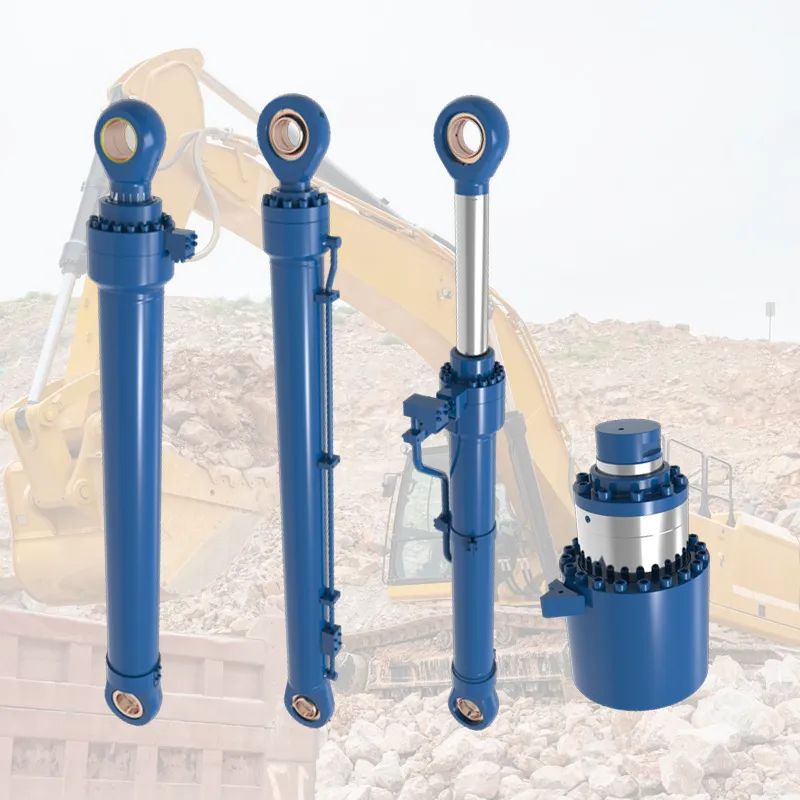
Technical Specifications — Customizable Range
Every mining site has unique geology, altitude, and duty cycles. That is why our mining excavator hydraulic cylinders are fully customizable across the parameters shown below. Use this table as a starting reference; our engineering team will fine-tune each dimension to your machine model and application.
Basic Specifications
| Parameter | Customizable Range |
|---|---|
| Cylinder Type | Boom / Stick / Bucket / Tightening (Double Acting) |
| Bore Diameter | 120 mm – 400 mm |
| Rod Diameter | 80 mm – 280 mm |
| Stroke Length | 800 mm – 3,500 mm |
| Operating Pressure | 25 MPa – 35 MPa (standard); up to 40 MPa on request |
| Test Pressure | 1.5 x rated working pressure |
| Retracted Length (Center to Center) | Custom — matched to OEM drawing |
Mounting Options
| Mounting Style | Details |
|---|---|
| Pin Eye (Clevis) | Standard for boom and stick cylinders; forged eye with hardened bushings |
| Trunnion Mount | Available for high-side-load applications |
| Foot / Flange Mount | Custom brackets per machine frame geometry |
Materials & Surface Treatment
| Component | Material / Treatment |
|---|---|
| Cylinder Tube | SAE 1045 / ST52 seamless honed tube; optional chrome plating on ID |
| Piston Rod | SAE 1045 / 42CrMo4 induction-hardened; hard chrome plated (min 25 microns, HRC 55-62) |
| Piston | Ductile iron or forged steel; bronze wear rings |
| End Caps / Gland | Forged steel, CNC machined; integrated wiper & buffer seal grooves |
| Seals | Hallite / Parker / NOK polyurethane & PTFE seal kits; optional FKM for high-temperature duty |
| External Finish | Shot-blasted + epoxy primer + polyurethane topcoat; custom RAL color available |
Environmental Adaptability
| Condition | Capability |
|---|---|
| Operating Temperature | -40 C to +80 C |
| Dust & Particle Ingress | Multi-lip wiper seal + metal scraper ring; optional bellows boot |
| Corrosion Resistance | Salt-spray tested (500+ hours); ceramic rod coating option for coastal or acidic environments |
| Altitude | Rated to 5,000 m above sea level (seal compounds adjusted for low atmospheric pressure) |
Compatible Replacement for Major Excavator Brands
Note: All brand names mentioned below are the property of their respective owners. They appear here solely to help buyers identify the correct hydraulic cylinder parts cross-reference and are not intended to imply endorsement or affiliation.
Our mining excavator hydraulic cylinders are manufactured to serve as direct dimensional and performance replacements for machines made by:
- Caterpillar (Cat 390F, 6015B, 6020B, 6040, 6060)
- Komatsu (PC1250, PC2000, PC3000, PC4000, PC5500, PC8000)
- Hitachi (EX1200, EX2600, EX3600, EX5600, EX8000)
- Liebherr (R 9100, R 9150, R 9200, R 9400, R 9800)
- Volvo (EC750E, EC950F)
- Doosan (DX800LC)
- Kobelco (SK850LC, SK1300DLC)
- Sany (SY750H, SY980H)
- XCMG (XE900D, XE1300C)
If your model is not listed, send us the OEM part number or a dimensional drawing and we will confirm fit within 24 hours. Explore our full catalog on the Mining Machinery Hydraulic Cylinders product page.

Core Technical Advantages
1. Ultra-Low-Friction Sealing System
We use a proprietary multi-stage seal pack that combines PTFE guide rings, step-cut wear bands, and a low-friction polyurethane rod seal. Internal breakaway pressure drops below 0.5 MPa, which means smoother feathering control for the operator and measurably less heat generated inside the cylinder barrel. Lower operating temperature directly extends seal life — and seal failure is the number-one reason hydraulic cylinders come in for repair.
2. High-Rigidity Barrel & Rod Manufacturing
Cylinder tubes are deep-hole bored from a single billet of ST52 or SAE 1045 steel, then roller-burnished to an Ra 0.2 surface finish. Piston rods are induction-hardened to HRC 58-62 across the full stroke zone before receiving a minimum 25-micron hard-chrome layer. The result is a hydraulic cylinder piston rod that resists scoring from silica dust and delivers a tighter rod-to-gland clearance, reducing oil bypass.
3. Thermal Stability & Fatigue Life Optimization
Mining duty cycles swing between ambient cold-start temperatures and sustained 80 C oil temperatures during peak digging. Our cylinder design accounts for differential thermal expansion between the chrome rod and steel barrel, preventing micro-seizure. Fatigue-critical welds on lug eyes and port bosses are stress-relieved and ultrasonic-tested to guarantee crack-free performance past 1,000,000 full-pressure cycles.
4. Contamination-Tolerant Cushioning
End-of-stroke cushioning valves are machined with generous clearances and self-cleaning geometry so they continue to function even when the oil carries elevated particle counts — a reality in every mine. This protects seals and end caps from the spike pressures that cause premature hydraulic cylinder seal failure.
5. Modular Rod-End & Cap-End Design
Field service crews need to swap seals and bushings without pulling the entire cylinder from the machine. Our gland design uses a threaded or bolted retainer that allows on-site seal replacement in under two hours, cutting downtime and the need for heavy lift equipment.
6. Intelligent Corrosion Protection
Every exterior surface receives multi-layer protection: zinc-rich primer, epoxy intermediate coat, and polyurethane topcoat rated for 500+ hours of salt-spray exposure. For highly acidic mine environments (pH below 4), we offer a ceramic-composite rod coating that outperforms traditional hard chrome in corrosion resistance by a factor of three.
Manufacturing Process & Quality Control
Full In-House Production
Raw material receiving, CNC machining, welding, chrome plating, seal assembly, painting, and testing — every step happens under one roof. This end-to-end control eliminates the quality gaps that appear when sub-assemblies are outsourced. As a dedicated hydraulic cylinder manufacturer, we own the complete production chain.
100% Factory Testing
Before a cylinder leaves our facility, it undergoes a full-stroke pressure test at 1.5 times rated working pressure, leakage measurement with calibrated flow meters, and a rod-drift test held for a minimum of five minutes. Every result is digitally recorded and linked to the cylinder serial number.
Certifications & Traceability
Our production system is ISO 9001:2015 certified. Material certificates (EN 10204 3.1) accompany every heat of steel. Weld procedures are qualified to AWS D1.1, and all NDT operators hold ASNT Level II certification. Customers receive a complete traceability dossier — material certs, test reports, dimensional inspection sheets — with every order.
Continuous Improvement Loop
Field failure data feeds back into design reviews every quarter. When a seal type underperforms in a specific mine chemistry, we update the bill of materials for that application before the next production run ships. This closed-loop approach keeps our hydraulic cylinders for sale evolving with real-world demands.

Typical Mining Applications
Our mining hydraulic cylinders serve a wide family of heavy equipment across surface and underground operations. Below are the primary machine categories and the specific cylinder functions within each.
Mining Excavator
The flagship application. Hydraulic boom cylinders, stick hydraulic cylinders, bucket hydraulic cylinders, and tightening hydraulic cylinders work in concert to deliver digging force, crowd motion, and clamping pressure on mass-excavation shovels and backhoe excavators.
Mining Dump Truck
Multi-stage telescopic hoist cylinders lift 150- to 400-ton payloads. Steering cylinders must respond quickly on narrow haul roads with steep grades.
Mining Grader
Blade-lift, blade-shift, and circle-rotation cylinders demand fine positional accuracy for haul-road maintenance. Our double acting hydraulic cylinders provide the precise control needed.
Mining Loader
Boom-lift and tilt cylinders on wheel loaders and LHD (load-haul-dump) units face constant high-frequency cycling and abrasive dust infiltration in underground draw points.
Mining Dozer
Blade-lift, blade-tilt, and ripper cylinders on track-type dozers operate under sustained high pressure during ripping and pushing operations in hard overburden.
Mining Drill Rig
Feed cylinders, mast-raise cylinders, and boom-positioning cylinders require tight tolerance bore finishes to maintain feed accuracy during blast-hole drilling.
Mining Scaling Machine
Articulated boom cylinders on scaling machines must absorb irregular impact loads while the breaker tip dislodges loose rock from tunnel ceilings.
Mining Underground Truck
Articulated-frame steering cylinders and ejector-body hoist cylinders function in confined headings with limited ventilation and aggressive dust.
Mining Drilling Jumbo
Multi-boom positioning cylinders on jumbos require simultaneous, independent motion. Seal systems must tolerate water-glycol and biodegradable fluids common in underground hard-rock mines.
Mining Crusher & Conveyor Systems
Tramp-release cylinders on jaw and gyratory crushers, tension cylinders on conveyor take-up frames, and gate cylinders on ore passes round out our mining machinery hydraulic cylinder portfolio.
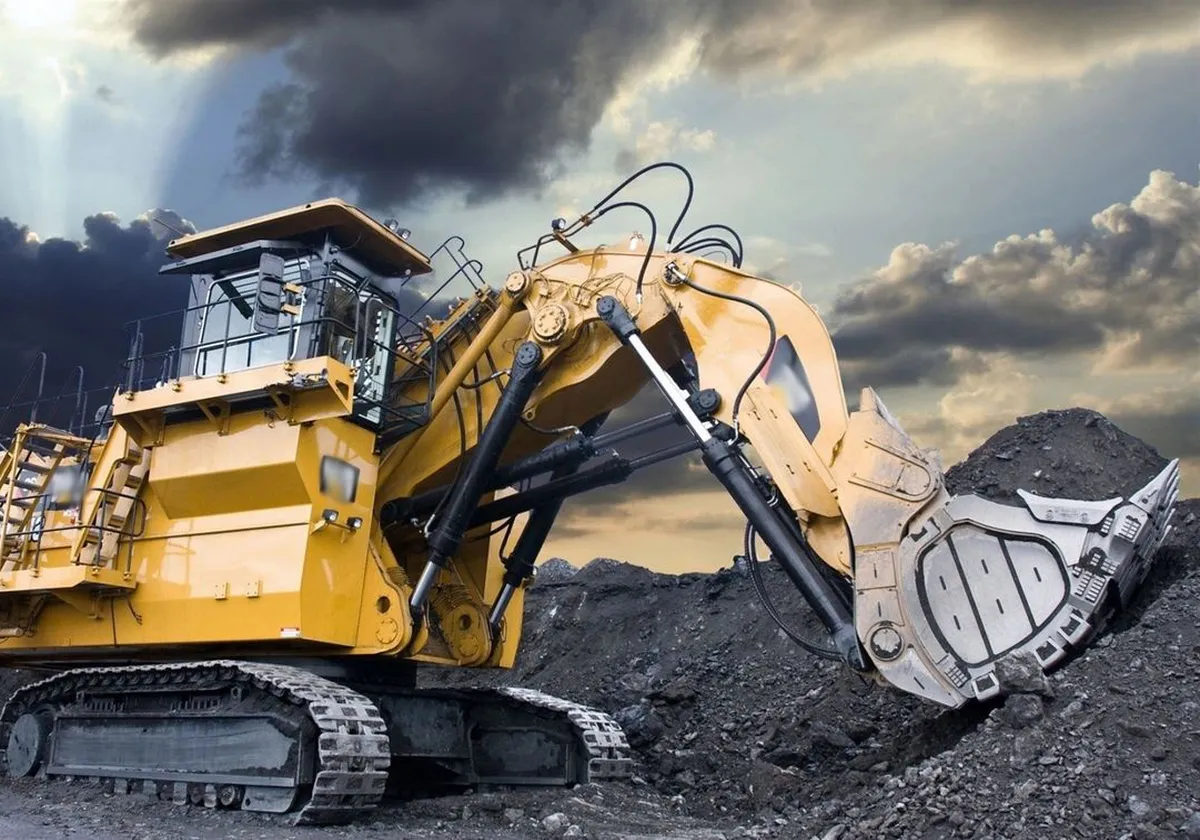
Performance Comparison: Standard vs. Our High-Performance Hydraulic Cylinders
| Feature | Standard Hydraulic Cylinder | Our High-Performance Cylinder |
|---|---|---|
| Rod Surface Hardness | HRC 45-50 | HRC 55-62 (induction + chrome) |
| Chrome Thickness | 15-20 microns | 25-50 microns; ceramic option |
| Bore Finish (Ra) | Ra 0.4 – 0.8 | Ra 0.1 – 0.2 |
| Seal Brand | Generic / unbranded | Hallite / Parker / NOK |
| Pressure Test | Visual leak check only | 1.5x rated pressure + 5-min drift test |
| Expected Service Life | 4,000 – 6,000 hours | 8,000 – 12,000+ hours |
| Traceability | Minimal paperwork | Full dossier: material certs, test data, serial tracking |
| Field Serviceability | Full disassembly required | Modular gland — seal swap in under 2 hours |
Real-World Case Studies
Case 1 — Open-Pit Copper Mine, Sonora, Mexico
Client: A mid-tier copper producer operating a fleet of eight Komatsu PC3000 shovels.
Challenge: OEM boom cylinders were failing at around 5,500 hours due to rod scoring from high silica-content dust. Each unplanned changeout cost roughly USD 18,000 in crane rental, labor, and lost production.
How they found us: The maintenance superintendent discovered our website through a Google search for “mining excavator hydraulic boom cylinder” in March 2024.
Solution: We supplied boom and stick cylinders with ceramic-coated rods and upgraded FKM seal kits.
Result: First set reached 11,200 hours before scheduled overhaul — a 104% improvement. The client reordered for the remaining seven machines.
Client feedback: “We cut our cylinder-related downtime in half during the 2024 rainy season. The ceramic rod coating made a visible difference in rod condition at the 6,000-hour inspection.”
Case 2 — Underground Gold Mine, Zacatecas, Mexico
Client: A contract miner running Sandvik LH621i LHDs underground.
Challenge: Tilt cylinders on the loaders were leaking internally after 3,000 hours due to water-glycol fluid attacking standard polyurethane seals.
How they found us: Referred by a local Caterpillar dealer who does not stock aftermarket hydraulic cylinder components for Sandvik equipment. The referral came in June 2024.
Solution: Custom tilt cylinders with HNBR seals rated for water-glycol service, plus a stainless-steel wiper ring to handle the mine’s high humidity.
Result: Zero internal leakage at the 5,000-hour mark; projected life now exceeds 8,000 hours.
Client feedback: “We tried three other aftermarket suppliers before. This is the first cylinder that actually survived the water-glycol without ballooning seals.”
Case 3 — Iron Ore Operation, Chihuahua, Mexico
Client: A state-owned iron ore operation with Cat 6040 and 6060 shovels.
Challenge: Bucket cylinders were experiencing premature eye-bushing wear and external oil leaks after only 4,000 hours in a highly abrasive magnetite environment.
How they found us: Their procurement team contacted us through our contact form after seeing our booth at a mining expo in Monterrey in September 2024.
Solution: Redesigned eye bushings in manganese bronze with grease-retention grooves; added triple-lip wiper seal to the gland.
Result: Bushing wear reduced by 60%; external leak rate dropped to zero across the first 7,000 hours of operation.
Client feedback: “The redesigned bushing alone justified the switch. We have not touched those bucket cylinders since installation.”
Case 4 — Aggregate Quarry, Estado de Mexico, Mexico
Client: A family-owned aggregate producer running a Hitachi EX1200 excavator.
Challenge: A cracked boom cylinder barrel forced an emergency shutdown during peak construction season in January 2025. No OEM replacement was available within 10 weeks.
How they found us: The owner called our sales line after finding hydraulic cylinders for mining excavator listings on our website.
Solution: We manufactured a replacement hydraulic boom cylinder in 18 working days, including material sourcing, production, full testing, and sea-air freight to Toluca.
Result: Machine was back in service 22 days after order confirmation — saving an estimated USD 35,000 in lost production compared to the OEM lead time.
Client feedback: “I did not think anyone could deliver a cylinder that size in under three weeks. They did, and the quality matched the original.”
Case 5 — Coal Surface Mine, Coahuila, Mexico
Client: A regional coal operator with a mixed fleet including Liebherr R 9200 and Komatsu PC2000 excavators.
Challenge: Inconsistent cylinder quality from multiple aftermarket vendors was causing fleet-wide tracking issues and unpredictable failure intervals.
How they found us: The fleet manager reached out through LinkedIn in November 2024 after reading one of our technical articles on hydraulic cylinder repair best practices.
Solution: We became the sole-source cylinder hydraulic supplier for all excavator positions — boom, stick, bucket, and tightening. Each cylinder ships with a QR-coded serial plate linked to its full test and material dossier.
Result: Cylinder-related unplanned downtime dropped 72% fleet-wide within the first year. Spare-part inventory simplified from four vendors to one.
Client feedback: “Having one supplier who owns the quality from raw steel to final test report changed our maintenance planning completely.”
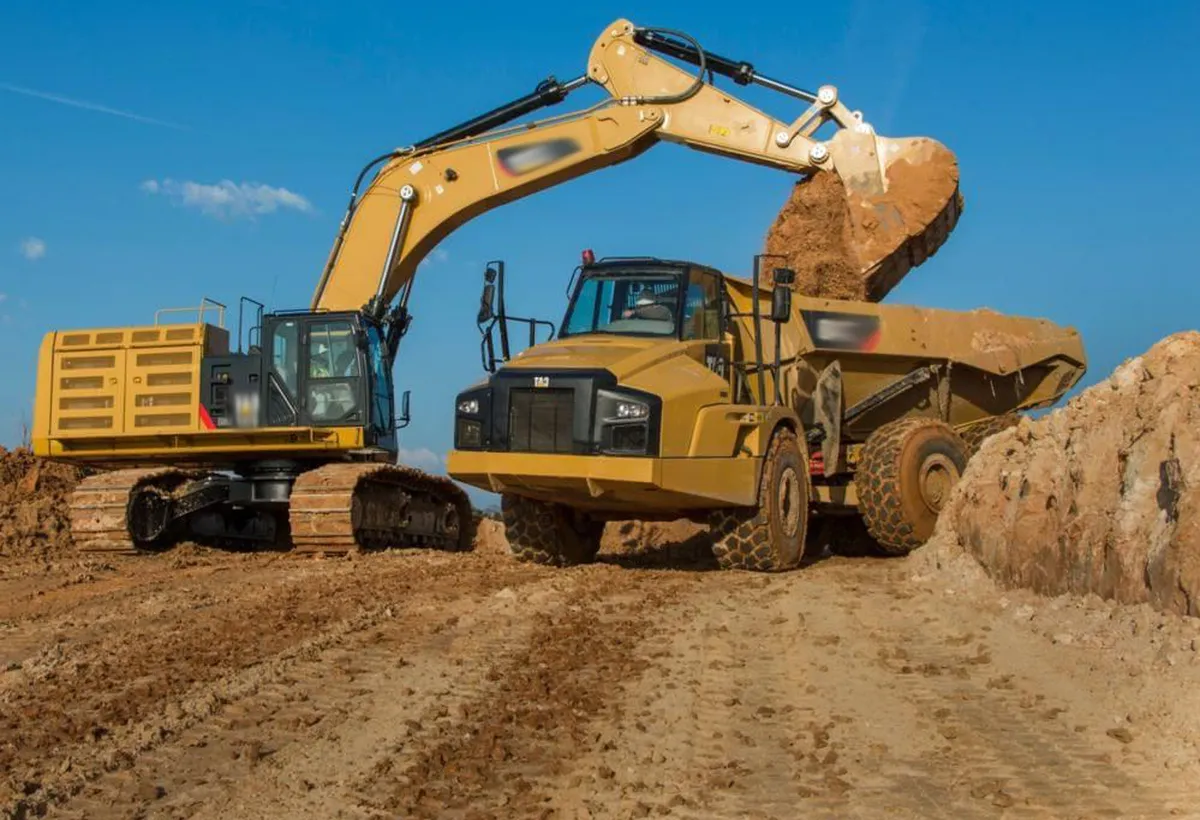
Common Fault Troubleshooting
Slow or Weak Cylinder Movement
Check system pressure at the cylinder port first. If pressure is within spec, internal bypass past the piston seals is the likely cause. Measure drift rate under load: anything above 5 mm per minute indicates seal replacement is needed. Inspect the bore surface for scoring before installing new hydraulic cylinder seals.
External Oil Leak at the Gland
Wiper and rod seals degrade from abrasive ingress or heat cycling. Remove the gland, inspect the rod for chrome damage, and replace the full seal kit. If the rod shows pitting deeper than 0.05 mm, the rod should be re-chromed or replaced.
Rod Scoring or Chrome Flaking
Usually caused by contaminated oil, a missing wiper seal, or side-loading from worn pivot bushings. Repair options include re-chroming, ceramic coating, or rod replacement depending on the extent of damage.
Cylinder Barrel Cracking
Fatigue cracks originate at weld toes on lug attachments and port bosses. Ultrasonic testing during planned overhauls catches cracks before they propagate. If a crack is found, the barrel should be retired and replaced — welding a structural repair on a high-pressure vessel is not recommended.
Excessive Heat Generation
Internal friction from worn or improperly sized seals raises oil temperature. Verify seal groove dimensions against original drawings, replace seals with the correct material compound, and ensure cushion valves are not fully closed.

How to Choose the Right Mining Excavator Hydraulic Cylinder
Selecting the correct hydraulic cylinder for excavator duty in a mine is more involved than matching bore and stroke to a catalog. Here is the process we recommend:
Step 1 — Identify the Machine Model and Position. Boom, stick, bucket, and tightening positions each have different bore-to-rod ratios, stroke lengths, and operating pressures. Confirm the OEM part number or provide a dimensional sketch.
Step 2 — Define the Operating Environment. Temperature extremes, altitude, dust composition, hydraulic fluid type, and wash-down chemicals all influence material and seal selection. A gold mine at 3,800 m elevation in the Sierra Madre needs different seal compounds than a coastal aggregate pit at sea level.
Step 3 — Review Duty Cycle and Target Life. A production shovel cycling 20 hours per day needs heavier chrome and harder rod material than a utility excavator used for cleanup work. Share your expected annual operating hours so we can tailor the design.
Step 4 — Check Mounting and Port Configuration. Pin-to-pin center distance, pin diameter, port size and thread type, and any integrated sensors or proximity switches must align with the host machine.
Step 5 — Request a Technical Proposal. Our engineering team returns a full specification sheet, 3D model, and pricing within 48 hours. We welcome site visits or video calls to review your specific installation.
Frequently Asked Questions
What is the typical lead time for a custom mining excavator hydraulic cylinder?
Can you supply hydraulic cylinder seal kits separately for field repair?
Do you offer hydraulic cylinder repair and remanufacturing services?
What is the minimum order quantity for mining hydraulic cylinders?
How do your hydraulic cylinders handle extreme cold or high-altitude mining conditions?
What warranty do you provide on mining excavator hydraulic cylinders?
Can you match an OEM hydraulic cylinder if I only have the old part number?
What shipping options are available for hydraulic cylinders to Mexico?
Is it more cost-effective to repair or replace a worn mining hydraulic cylinder?
Do you provide technical support after purchase for hydraulic cylinder installation?
Ready to Upgrade Your Mining Excavator Hydraulic Cylinders?
Whether you need a single emergency replacement or a fleet-wide supply agreement, our team is ready to engineer the right hydraulic cylinder solution for your operation. Share your machine model, OEM part number, or dimensional drawing, and receive a detailed technical proposal within 48 hours.
We design. We build. We test. We deliver — on time, to spec, and built to outlast.