Hydraulic Cylinder for Rotary Drilling Rig
Heavy-duty luffing, pressurized, and mast hydraulic cylinders engineered for extreme drilling conditions. Built to outperform OEM specs with full customization available.
The Core Role of Hydraulic Cylinders in Rotary Drilling Rigs
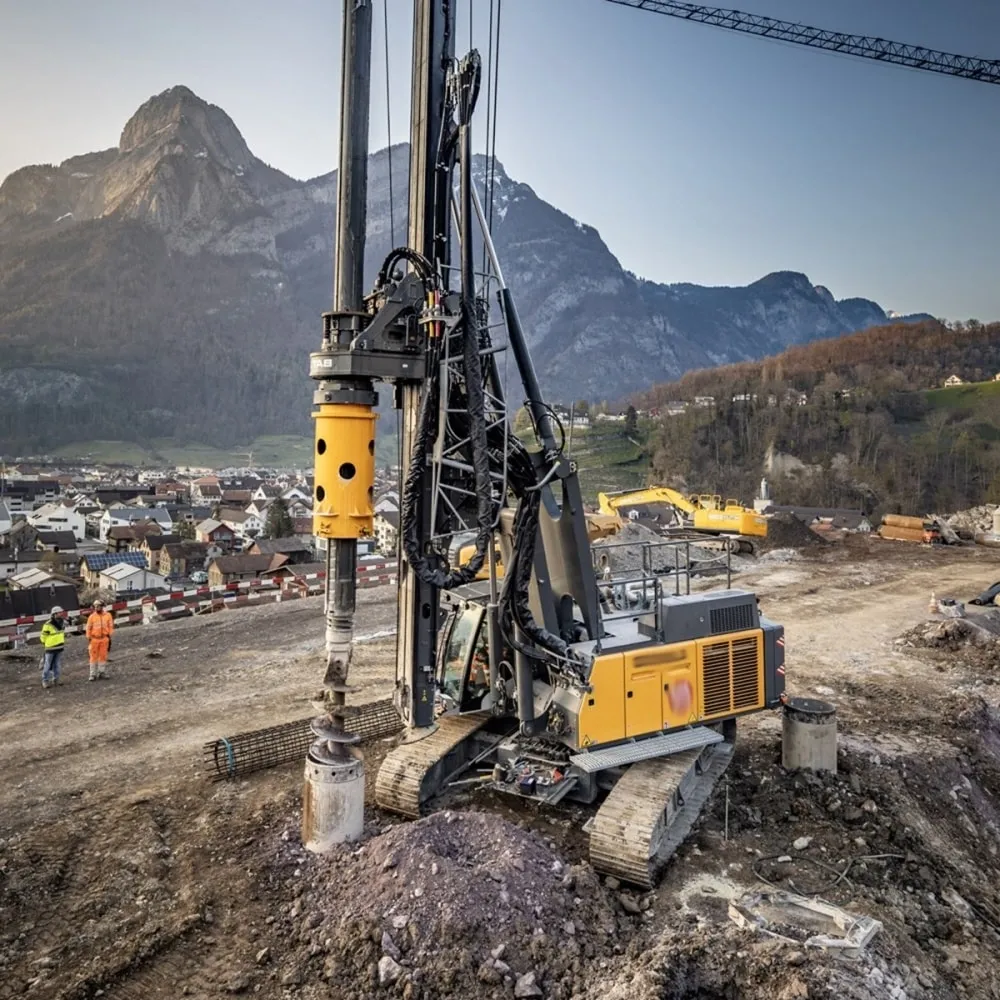
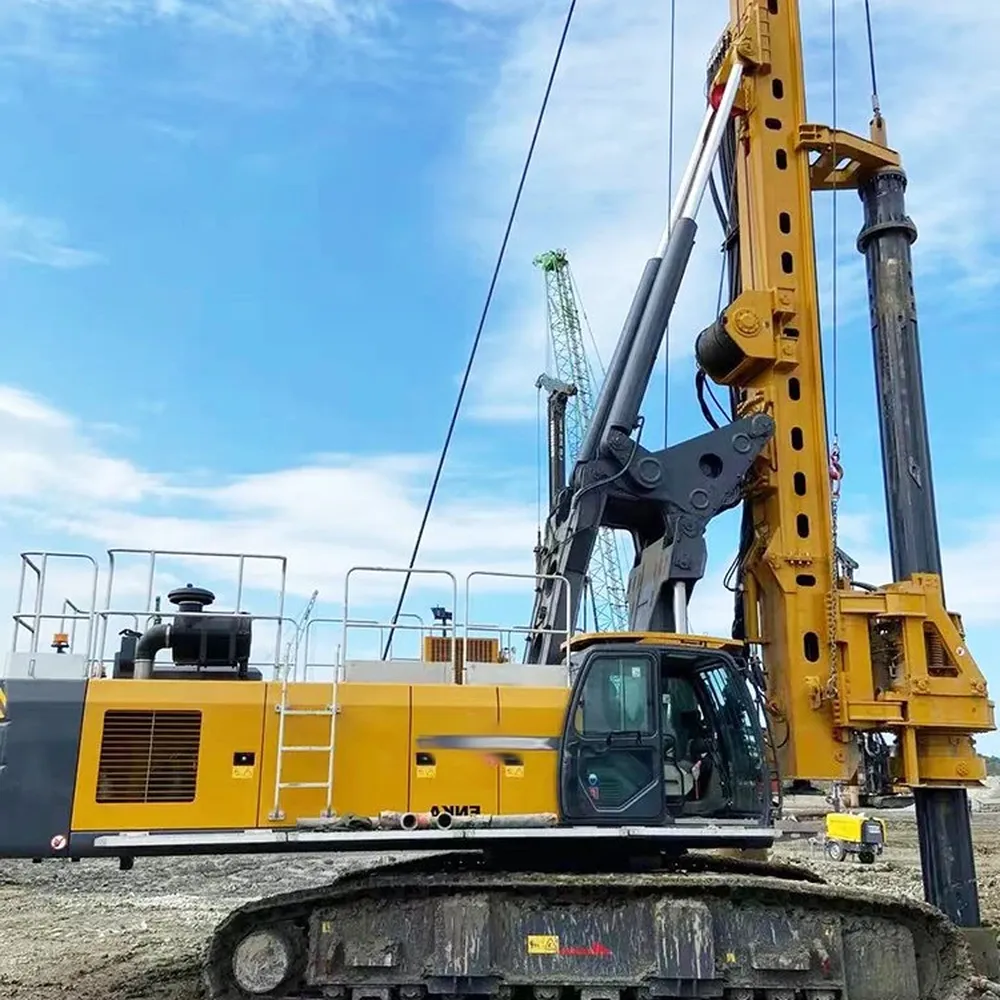
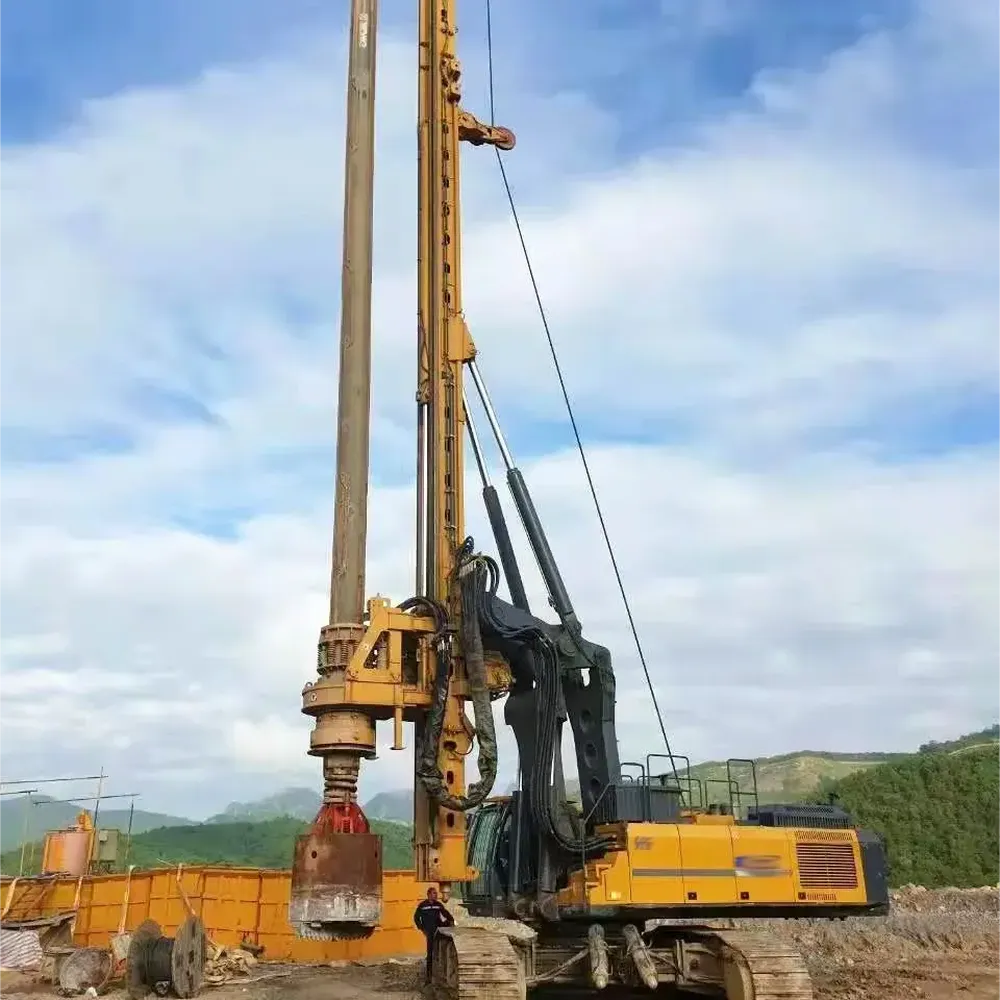
Rotary drilling rigs operate under some of the harshest conditions in heavy construction and foundation engineering. Whether boring through bedrock in Mexico City or driving piles along the Gulf Coast, the hydraulic cylinder is the component that converts fluid pressure into the precise mechanical force required for mast raising, crowd pressure, and boom luffing. Without a reliable rotary drilling rig hydraulic cylinder, even a multi-million-dollar rig becomes an expensive piece of idle steel.
In a typical rotary drilling rig, you will find three primary cylinder types working together. The hydraulic luffing cylinder controls the angle of the mast or boom, allowing operators to position the drill string accurately over each borehole. The hydraulic pressurized cylinder (sometimes called the crowd cylinder) delivers the downward thrust needed to advance the drilling tool through soil, clay, and rock. Finally, the hydraulic mast cylinder raises and lowers the entire mast assembly, a task that demands enormous force and pinpoint control.
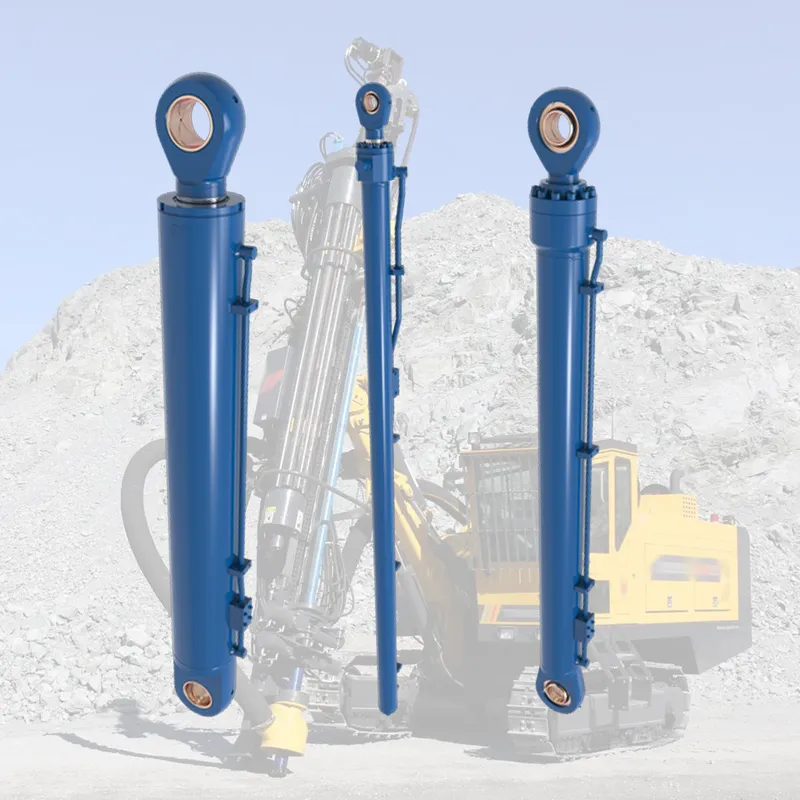
Each of these hydraulic cylinders must deliver repeatable force output, resist side loading, and survive millions of pressure cycles without seal failure or rod scoring. That is exactly why choosing a qualified hydraulic cylinder manufacturer matters far more than finding the lowest price. A poorly made cylinder can halt drilling operations for days, costing contractors tens of thousands of dollars in downtime, crew wages, and project penalties.
Our high-quality mining machinery hydraulic cylinders are purpose-built for rotary drilling applications. Every bore diameter, rod finish, seal kit, and mounting bracket is selected specifically for the load profiles and duty cycles that rotary rigs demand. We offer both single acting hydraulic cylinder and double acting hydraulic cylinder configurations depending on the rig model and function.
Technical Specifications and Customization Range
Every rotary drilling rig has unique requirements based on torque capacity, mast height, and crowd force rating. Below are the customizable parameter ranges we offer across our luffing, pressurized, and mast cylinder lines. All dimensions and ratings can be tailored to match your specific rig model.
Basic Specification Range
| Parameter | Luffing Cylinder | Pressurized Cylinder | Mast Cylinder |
|---|---|---|---|
| Bore Diameter | 140 – 280 mm | 160 – 320 mm | 180 – 360 mm |
| Rod Diameter | 80 – 200 mm | 100 – 220 mm | 120 – 250 mm |
| Stroke Length | 800 – 3,500 mm | 1,000 – 6,000 mm | 2,000 – 10,000 mm |
| Working Pressure | 25 – 35 MPa | 28 – 38 MPa | 25 – 35 MPa |
| Test Pressure | 1.5x Working Pressure | 1.5x Working Pressure | 1.5x Working Pressure |
| Retracted Length | Custom per rig model | Custom per rig model | Custom per rig model |
Mounting Options
| Mounting Type | Applicable Cylinder | Notes |
|---|---|---|
| Trunnion Mount | Luffing, Mast | Allows angular movement, ideal for boom applications |
| Clevis / Eye Mount | All Types | Standard pivot connection for general use |
| Flange Mount | Pressurized | Direct bolt-on for linear crowd force transfer |
| Custom Bracket | All Types | Designed to match OEM mounting footprint exactly |
Materials and Surface Treatment
| Component | Material | Surface Treatment |
|---|---|---|
| Cylinder Barrel | 27SiMn / ST52 Honed Tube | Internal honing Ra 0.2 – 0.4 um |
| Piston Rod | 42CrMo / CK45 Quenched & Tempered | Hard Chrome Plating 20 – 50 um |
| Piston | Ductile Iron / Forged Steel | Precision machined, bronze wear rings |
| Seals | Hallite / Parker / NOK (FKM / NBR) | High-pressure rated, anti-extrusion backup rings |
| End Caps / Gland | Forged Steel / Cast Steel | Zinc plating or paint per environment |
Environmental Adaptability
| Condition | Rating |
|---|---|
| Operating Temperature Range | -40 C to +80 C |
| Dust and Particle Protection | Heavy-duty rod scraper + multi-lip wiper seal |
| Corrosion Resistance | Salt spray tested 500+ hours (optional ceramic rod coating) |
| UV and Weather Exposure | Marine-grade exterior paint system |
| Vibration and Shock | Designed for continuous impact drilling cycles |
Compatible Replacement for Major Rotary Drilling Rig Brands
Note: Brand names listed below are referenced solely to assist buyers with cross-referencing and equipment identification. All trademarks belong to their respective owners. We are an independent hydraulic cylinder manufacturer and are not affiliated with or endorsed by these companies.
Our rotary drill rig hydraulic cylinders are engineered as direct-fit replacements for cylinders used on the following rig brands. We reverse-engineer each cylinder to match or exceed the original OEM dimensions, pressure ratings, and performance characteristics:
- Bauer (BG series rotary drilling rigs)
- SANY (SR series, including SR150, SR235, SR285, SR405)
- XCMG (XR series foundation drilling rigs)
- Liebherr (LB series piling and drilling rigs)
- Casagrande (B series large-diameter drilling rigs)
- Soilmec (SR and SF series)
- Zoomlion (ZR series rotary drilling rigs)
- Mait (HR series)
- IMT (AF series foundation rigs)
- JINTAI / Sunward (SWDM series)
If your rig brand is not listed here, send us your cylinder drawing or part number. We can produce a compatible hydraulic cylinder for rotary drilling rig models from virtually any manufacturer worldwide.

Core Technical Advantages
1. Ultra-Low Friction Seal System
Standard hydraulic cylinder seals generate significant friction during extension and retraction, leading to heat buildup and accelerated wear. Our cylinders use a proprietary multi-stage seal arrangement combining PTFE-based piston seals with low-friction wiper/rod seals. This configuration reduces internal friction by up to 30% compared to conventional seal stacks, resulting in smoother operation, lower hydraulic oil temperatures, and significantly longer seal service life.
2. High-Rigidity Barrel and Piston Rod Construction
The hydraulic cylinder piston and barrel undergo a strict manufacturing sequence: hot forging, normalizing, CNC deep-hole boring, and precision honing to an internal surface roughness of Ra 0.2 um. Piston rods are induction-hardened to HRC 55-62 across the surface layer before receiving industrial hard chrome plating (minimum 20 um thickness). This combination gives the rod exceptional scratch resistance and bending stiffness, critical for long-stroke mast cylinders where rod deflection under load must be kept below 0.1 mm per meter.
3. Thermal Stability Under Sustained Load
Rotary drilling rigs run long shifts, often 12 to 16 hours continuously in markets like Mexico and South America. Sustained operation causes hydraulic fluid temperatures to climb well above 60 C. Our cylinder design uses precision-fit piston wear rings with controlled thermal expansion coefficients, along with optimized internal clearances that prevent metal-to-metal contact even at elevated temperatures. The result is a hydraulic oil cylinder that maintains full sealing performance and dimensional stability across the entire operating temperature range.
4. Fatigue Life Optimization
Every weld zone and thread root on our cylinders is designed using finite element analysis (FEA) to minimize stress concentration. Cylinder barrels receive autofrettage treatment where applicable, which introduces compressive residual stresses into the bore wall and dramatically increases pressure-cycle fatigue life. Independent lab testing confirms our cylinders exceed 1.2 million full-stroke pressure cycles at rated working pressure before any measurable degradation.
5. Contamination-Resistant Rod Protection
Drilling environments are saturated with abrasive mud, cement slurry, rock dust, and water. Our rod seal assembly includes a heavy-duty scraper ring, polyurethane buffer seal, and a tandem wiper designed to strip particles down to 5 microns before they reach the primary seal. An optional ceramic rod coating (HVOF-applied tungsten carbide) provides the ultimate protection for rigs working in extreme slurry conditions.
6. Precision Cushioning and End-of-Stroke Control
Uncontrolled deceleration at end-of-stroke generates shock loads that damage mounting pins, structural brackets, and the cylinder itself. Each cylinder features adjustable cushioning valves at both ends, engineered to match the deceleration profile of the specific load. This controlled stop reduces peak impact forces by up to 60%, protecting both the cylinder and the rig frame from premature fatigue cracking.
Manufacturing Process and Quality Control
Fully Self-Contained Production
Unlike trading companies that outsource machining and assembly, we control every step in-house. Raw steel arrives at our facility, and a finished, tested cylinder hydraulic assembly leaves it. This includes CNC turning and boring, deep-hole honing, welding (MIG/TIG/submerged arc), heat treatment, chrome plating, painting, assembly, and testing. Full vertical integration means we can guarantee tolerances, material traceability, and delivery schedules that resellers simply cannot.
100% Factory Testing Protocol
Every single cylinder undergoes a comprehensive testing sequence before shipment. This includes a hydrostatic proof test at 1.5 times the rated working pressure, a leakage test holding at working pressure for a minimum of 10 minutes with zero external leakage permitted, a stroke function test to verify full extension and retraction at rated flow, and a dimensional verification against the approved drawing using calibrated instruments. Test reports are provided with every order.
Certifications and Material Traceability
Our manufacturing facility holds ISO 9001:2015 certification for quality management. All critical raw materials (steel tubes, rod bar, forgings) are sourced with mill certificates (EN 10204 3.1). Each cylinder is assigned a unique serial number linked to a full production record, including material heat numbers, operator IDs, test results, and inspection dates. For customers in Mexico and Latin America, we can also provide certificates of origin and documentation required for customs clearance.
Continuous Improvement and Feedback Loop
We actively collect field performance data from our customers to feed into design improvements. If a specific seal configuration shows premature wear in a particular drilling environment, our engineering team revises the design for the next production batch. This iterative approach is how we have progressively improved mean time between failures (MTBF) across all our rotary drilling rig cylinder models over the past decade.
Typical Mining and Heavy Equipment Applications
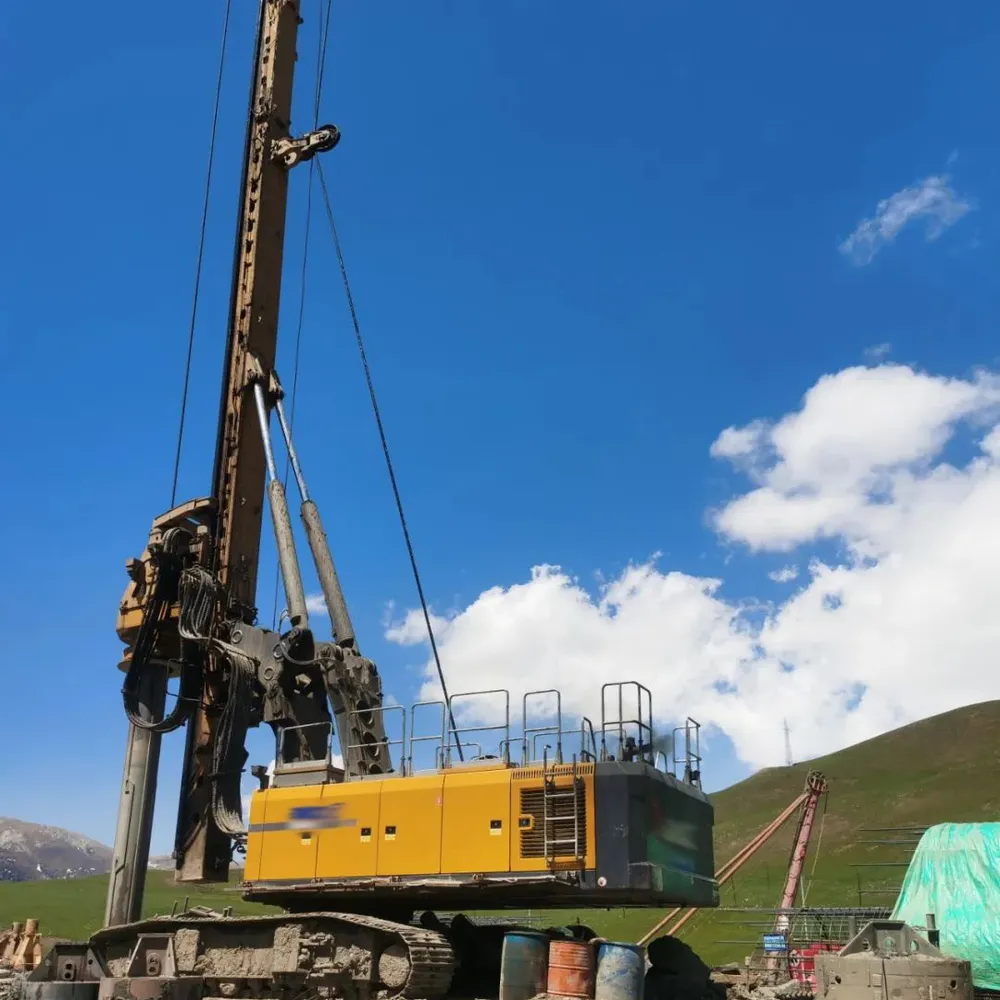
While this page focuses on rotary drilling rig hydraulic cylinders, the same engineering principles and manufacturing standards apply to our full range of mining hydraulic cylinders. Here are the primary equipment categories we serve:
1. Mining Dump Truck
Hoist cylinders for rear-dump and bottom-dump bodies, including multi-stage telescopic cylinders rated up to 350 tonnes payload capacity. Suspension cylinders and steering cylinders are also available.
2. Mining Grader
Blade lift, blade shift, articulation, and circle turn cylinders. Designed for abrasive road maintenance conditions common in open-pit mines across Mexico and Central America.
3. Mining Loader
Boom, bucket, and steering cylinders for both surface and underground loaders (LHDs). Available with burst-disc safety features for underground safety compliance.
4. Mining Dozer
Blade lift, blade tilt, and ripper cylinders for large mining dozers. Built to handle constant high-impact shock loads from ripping hard rock formations.
5. Mining Excavator
Boom, stick, and bucket hydraulic cylinders for sale to fit excavators from 30-tonne class through 800-tonne ultra-class machines used in copper and iron ore operations.
6. Mining Scaling Machine
Telescopic boom and hammer positioning cylinders for underground roof scaling equipment, where reliability directly affects crew safety.
7. Mining Underground Truck
Dump body, steering, and suspension cylinders for low-profile underground haul trucks. Compact cylinder designs that fit within the tight envelope constraints of underground tunnels.
8. Mining Drilling Jumbo
Boom articulation, feed, and percussion damper cylinders for development and production drilling jumbos. Precision position control is critical for accurate blast-hole drilling patterns.
Standard Hydraulic Cylinders vs. Our High-Performance Cylinders
Not all hydraulic cylinders are created equal. The table below highlights the concrete differences between a generic aftermarket cylinder and our application-engineered solution for rotary drilling rigs.
| Feature | Generic Aftermarket Cylinder | Our High-Performance Cylinder |
|---|---|---|
| Rod Material | CK45, standard chrome | 42CrMo induction-hardened + thick chrome or ceramic coating |
| Seal System | Standard NBR seals | Multi-stage PTFE/FKM with anti-extrusion backup rings |
| Bore Finish | Ra 0.4 – 0.8 um | Ra 0.2 – 0.4 um (mirror finish) |
| Pressure Cycle Life | ~400,000 cycles | 1,200,000+ cycles (autofrettage treated) |
| Dust Protection | Single wiper seal | Heavy-duty scraper + tandem wiper + buffer seal |
| End Cushioning | Fixed or none | Adjustable dual-end cushioning |
| Testing | Spot-check sampling | 100% individual proof and leakage testing |
| Traceability | Limited or none | Full serial number tracking, mill certs, test reports |
| Warranty | 6 – 12 months | 18 months or 3,000 operating hours |
Real-World Project Case Studies
Case 1: Foundation Contractor in Monterrey, Mexico
Client: A mid-size foundation engineering company operating five SANY SR235 rotary drilling rigs across Nuevo Leon state.
Challenge: The OEM mast cylinders were experiencing chronic seal failures every 800 operating hours. Each failure required a 3-day rig shutdown and the OEM replacement lead time from China was 8 to 10 weeks.
How They Found Us: The fleet manager searched online for aftermarket hydraulic cylinder repair options and discovered our website in March 2024. After an initial phone consultation, they sent us the OEM cylinder drawing.
Solution: We manufactured five replacement mast hydraulic cylinders with upgraded FKM seal kits and ceramic-coated piston rods. Delivery to Monterrey took 5 weeks including sea freight and customs.
Result: After 14 months and over 2,400 operating hours, zero seal failures have been reported. The client estimated savings of over USD 47,000 in avoided downtime costs during that period.
“We expected equal quality to the original. What we got was significantly better. The rod coating alone made a visible difference in slurry resistance.” — Fleet Maintenance Supervisor
Case 2: Piling Company in Guadalajara, Mexico
Client: A large infrastructure contractor supporting highway bridge foundation projects in Jalisco.
Challenge: They needed hydraulic luffing cylinders for two Bauer BG 28 rigs, but the OEM quote was nearly double their budget and the delivery window was 14 weeks.
How They Found Us: Their purchasing department was referred to us by an equipment dealer in Mexico City who had previously ordered boom cylinders from our factory.
Solution: We produced four luffing cylinders (two per rig) matching the exact Bauer part number specifications. Pricing was 42% below the OEM quote, delivered CIF Manzanillo in 6 weeks.
Result: Both rigs returned to full service on schedule. The contractor has since ordered pressurized cylinders for the same rigs and is evaluating our products for their Soilmec fleet as well.
“The build quality was immediately obvious when we unpacked them. Welds were clean, chrome was flawless, and they bolted in without any modification.” — Project Equipment Manager
Case 3: Geotechnical Firm in Bogota, Colombia
Client: A geotechnical investigation company with a mixed fleet of XCMG and Zoomlion rigs.
Challenge: Operating in the Andes at elevations above 2,600 meters, they experienced persistent hydraulic cylinder leakage caused by low ambient temperatures affecting seal flexibility.
How They Found Us: The company’s chief engineer contacted us through our website inquiry form in July 2023 after reading a technical article we published about cold-weather seal solutions.
Solution: We supplied crowd and mast cylinders with specially formulated FKM seals rated to -40 C, paired with synthetic-compatible internal coatings to reduce cold-start friction.
Result: No leakage incidents reported through two full working seasons at altitude. Cylinder warm-up time reduced from 15 minutes to under 4 minutes, directly increasing daily productivity.
“These cylinders perform perfectly even on mornings when the temperature drops close to freezing. Night-shift crews no longer have to deal with slow, sluggish cylinder response during startup.” — Chief Engineer
Case 4: Mining Contractor in Sonora, Mexico
Client: A copper mining operation using rotary drilling rigs for blast-hole pre-drilling on an open-pit expansion project.
Challenge: Extremely abrasive copper ore dust was destroying piston rods on their pressurized hydraulic cylinders, requiring rod replacement every 1,200 hours. Each rod change took their shop crew a full day.
How They Found Us: The mine maintenance manager attended a mining equipment expo in Mexico City in November 2023, where a colleague recommended our company.
Solution: We supplied replacement hydraulic cylinder parts including HVOF ceramic-coated piston rods and redesigned scraper assemblies with dual-lip wiper seals.
Result: Rod service interval extended from 1,200 hours to over 4,000 hours. Annual rod replacement cost dropped by approximately 70%. The mine has since placed a standing order for all rotary rig cylinder replacements.
“We had been through three different aftermarket suppliers before finding these guys. The ceramic rod coating was a game changer for us. Nobody else offered it at this price point.” — Maintenance Superintendent
Case 5: Infrastructure Developer in Queretaro, Mexico
Client: A publicly listed construction group expanding its deep foundation division with new Liebherr LB 28 rigs.
Challenge: Their new rigs arrived without spare cylinders. The project timeline required immediate spare availability because any rig downtime during the rainy season would result in contract penalties.
How They Found Us: Found our website through a Google search for “rotary drilling rig hydraulic cylinder manufacturer” in January 2024.
Solution: We manufactured a complete set of spare luffing, crowd, and mast cylinders for two rigs, delivered to their Queretaro warehouse in 7 weeks.
Result: When a luffing cylinder on Rig #2 developed a crack in the OEM weld zone after just 900 hours, our spare was installed the same day. Total downtime: 4 hours instead of the estimated 6 weeks for an OEM replacement.
“Having those spares on the shelf saved our entire wet-season drilling schedule. The quality matched our expectations for a Tier-1 cylinder.” — VP of Equipment, September 2024
Common Hydraulic Cylinder Faults and Troubleshooting
Even the best rotary drilling rig hydraulic cylinders can experience issues during their service life. Here are the most common faults our technical support team helps customers resolve:
External Oil Leakage at the Gland Seal
The most frequent complaint. Usually caused by worn rod seals, a scored piston rod, or contaminated hydraulic oil. Inspect the rod surface for scratches or pitting. If the rod is damaged, it should be reground and rechromed or replaced. If the rod is clean, replace the seal kit with genuine high-quality hydraulic cylinder seals rated for your operating pressure and temperature.
Cylinder Drift Under Load
When a cylinder slowly retracts or extends under static load, the cause is usually internal bypass leakage past the piston seals. Check the piston seal condition and measure the internal leakage rate. Excessive leakage indicates worn piston seals, a scored bore, or both. On older cylinders, bore re-honing and a complete seal replacement often restores full performance.
Jerky or Inconsistent Cylinder Movement
Often called “stick-slip,” this is typically caused by air trapped in the cylinder, insufficient lubrication, or seal friction. Bleed the system thoroughly, check that the oil viscosity is correct for the ambient temperature, and verify that the seal material is compatible with the hydraulic fluid in use.
Abnormal Noise or Vibration
Banging sounds during extension or retraction usually indicate inadequate cushioning adjustment or a loose mounting pin. Inspect the cushioning valves and adjust as needed. Check all mounting hardware for wear and tighten or replace worn pins and bushings promptly to prevent secondary damage.
Reduced Force Output
If the cylinder is no longer producing its rated force, first verify system pressure at the cylinder ports with a calibrated gauge. If pressure is correct but force is low, internal bypass leakage is the likely cause. If system pressure is low, the issue is upstream in the pump, relief valve, or directional valve.
How to Select the Right Hydraulic Cylinder for Your Rotary Drilling Rig
Choosing the correct replacement hydraulic cylinder for rotary drilling rig applications requires more than just matching bore and stroke dimensions. Here is a step-by-step approach based on two decades of field experience:
Step 1: Identify the Cylinder Function. Is it a luffing cylinder, crowd/pressurized cylinder, or mast cylinder? Each has different load profiles, speed requirements, and mounting configurations.
Step 2: Gather the OEM Part Number or Drawing. The fastest way to get an accurate quote is to provide the original part number or a dimensioned drawing. If neither is available, measure the bore diameter, rod diameter, stroke length, retracted length, and mounting centers. Photograph both end fittings and any port connections.
Step 3: Confirm Operating Pressure. Check the rig’s hydraulic schematic for the maximum working pressure at the cylinder circuit. This determines wall thickness, seal rating, and port size.
Step 4: Evaluate Environmental Conditions. Temperature extremes, dust exposure, humidity, and chemical contact all influence material and seal selection. A cylinder that performs well in temperate conditions may fail rapidly in a high-altitude, dusty mine site in Sonora or Zacatecas.
Step 5: Consider Upgrade Options. If the OEM cylinder is experiencing repeated failures, ask about ceramic rod coatings, upgraded seal materials, or enhanced dust protection. Sometimes a modest design improvement eliminates a chronic maintenance problem.
Step 6: Request a Technical Review. Our engineering team will review your specifications, confirm compatibility, and recommend any design optimizations before production begins. There is no charge for this technical consultation.
Frequently Asked Questions
What is the typical lead time for a custom rotary drilling rig hydraulic cylinder?
Standard production lead time is 4 to 6 weeks from order confirmation, depending on bore size, stroke length, and surface treatment requirements. For urgent orders, we offer an expedited 3-week production service. Shipping to Mexico typically adds 2 to 3 weeks by sea freight, or 5 to 7 days by air.
Can you supply hydraulic cylinder seal kits separately for field repair?
Yes. We stock complete hydraulic cylinder seals kits for all cylinder models we manufacture. Each kit includes rod seals, piston seals, wiper rings, backup rings, and O-rings specific to the cylinder bore and rod diameter. Seal kits are normally shipped within 3 to 5 business days.
Do you offer hydraulic cylinder repair and remanufacturing services?
We primarily manufacture new cylinders. However, for large-volume customers, we offer rod rechroming, bore re-honing, and complete remanufacturing of returned cores. Contact us with details of the cylinder condition and quantity for a hydraulic cylinder repair quotation.
What is the minimum order quantity for mining hydraulic cylinders?
We accept orders starting from a single piece. There is no minimum order quantity. Whether you need one replacement mast hydraulic cylinder or fifty units for a fleet overhaul program, we provide the same engineering attention and quality standard for every order.
How do your prices compare to OEM rotary drilling rig hydraulic cylinders?
Our pricing is typically 30% to 50% below OEM list prices, depending on the rig brand and cylinder type. This cost advantage comes from direct factory manufacturing without intermediary distribution layers. The quality of hydraulic cylinder components we use meets or exceeds OEM specifications.
Can I get a double acting hydraulic cylinder converted to single acting, or vice versa?
Yes. We can design and produce either single acting hydraulic cylinder or double acting hydraulic cylinder configurations for any application. If your rig circuit has been modified or you are repurposing a cylinder for a different function, our engineers can adapt the design accordingly.
What warranty do you provide on rotary drilling rig hydraulic cylinders?
All our rotary drilling rig hydraulic cylinders carry an 18-month or 3,000-operating-hour warranty (whichever occurs first) from the date of shipment. Warranty coverage includes manufacturing defects in materials and workmanship. Seal kits are warranted for 12 months.
Do you ship hydraulic cylinders to Mexico and Latin America?
Absolutely. Mexico is one of our major export markets. We ship regularly to ports including Manzanillo, Veracruz, Lazaro Cardenas, and Altamira. We also serve customers throughout Colombia, Chile, Peru, Brazil, and Argentina. Our logistics team handles export documentation, certificates of origin, and can arrange DDP delivery if requested.
What information do I need to provide to request a quote for a custom hydraulic cylinder?
At minimum, we need the rig brand and model, the cylinder function (luffing, crowd, or mast), and either an OEM part number or the following dimensions: bore diameter, rod diameter, stroke, retracted center-to-center length, and mounting type. Photographs of the existing cylinder and any available hydraulic schematics will help us provide the most accurate quotation.
How do I know if my hydraulic cylinder needs repair or full replacement?
If the cylinder barrel bore is scored deeper than 0.05 mm, if there is visible corrosion pitting inside the bore, or if the rod has deep scratches that cannot be polished out, full replacement is usually more cost-effective than repair. For minor seal failures on an otherwise sound cylinder body, a seal kit replacement and rod rechroming can extend service life significantly. Our team can help you evaluate the most economical option based on photos and measurements of the existing cylinder.
Ready to Upgrade Your Rotary Drilling Rig Cylinders?
We manufacture custom hydraulic cylinders for rotary drilling rigs to meet your exact specifications.
Send us your drawing, part number, or rig model details. Our engineering team will respond within 24 hours with a technical review and competitive quotation. No middlemen, no markups, direct from the factory.