Hydraulic Cylinder for Medium Excavator
Engineered for reliable digging force, precise arm control, and long service life across every jobsite condition your medium excavator will face.
The Core Role of Hydraulic Cylinders in Medium Excavators
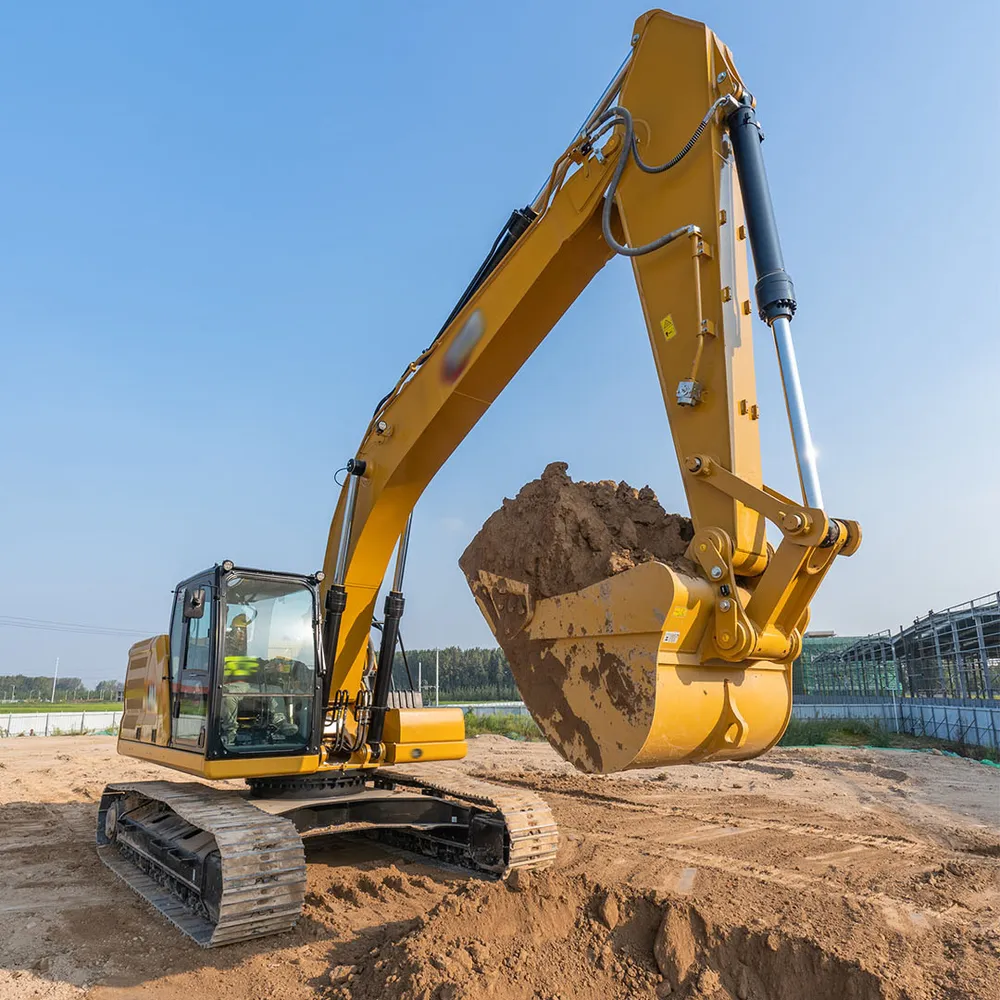
Every time a medium excavator breaks ground, lifts a loaded bucket, or positions its arm with surgical accuracy, the real work happens inside its hydraulic cylinders. These are not passive components. They are the muscles of the machine, converting pressurized hydraulic fluid into the linear force that drives the boom, stick, and bucket through soil, rock, aggregate, and debris. Without properly matched medium excavator hydraulic cylinders, even the most advanced excavator platform will underperform, overheat, and wear out prematurely.
A well-designed hydraulic cylinder for medium excavator applications delivers three things simultaneously: high push-pull force at controlled speed, repeatable positioning accuracy, and the durability to maintain those qualities across thousands of operating hours. In the 12-to-30-ton class, the demands are intense. Medium excavators are expected to dig trenches, load haul trucks, demolish structures, grade slopes, and handle attachments ranging from hydraulic breakers to compactors. The cylinders powering those tasks need to be purpose-built for that workload range, not undersized units borrowed from a lighter platform or oversized leftovers from a mining-class machine.
From a cost-of-ownership perspective, choosing the right hydraulic cylinder excavator components has a direct impact on fuel efficiency, maintenance intervals, and machine uptime. A cylinder that seals properly at operating temperature, resists rod scoring, and tolerates the side loading inherent in excavator kinematics will save its owner far more than its purchase price over a five-year service window. That is the practical value behind every specification we discuss in this guide.
Technical Specifications: Customizable Parameter Ranges
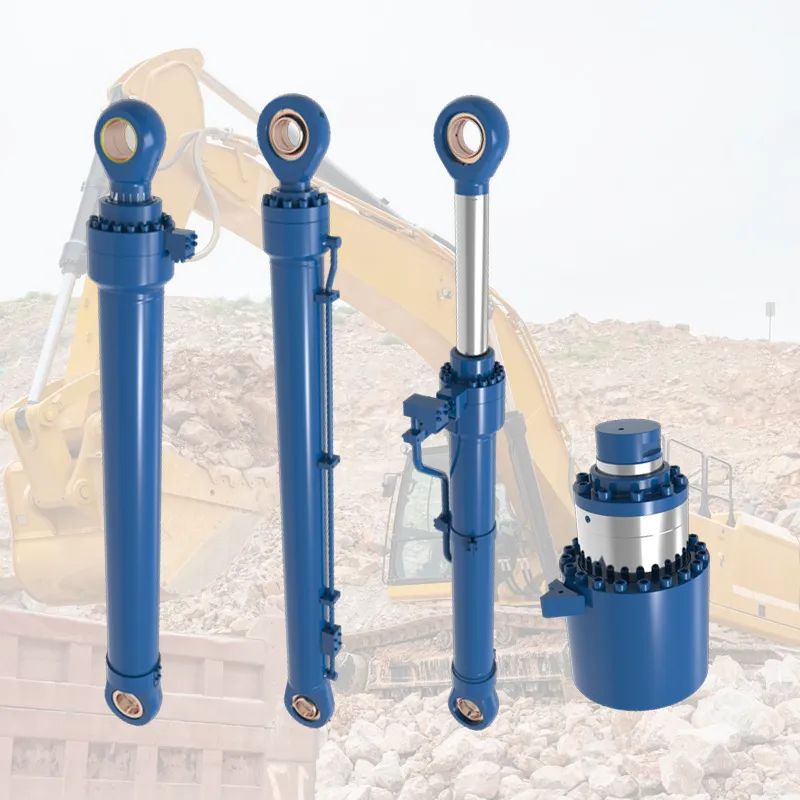
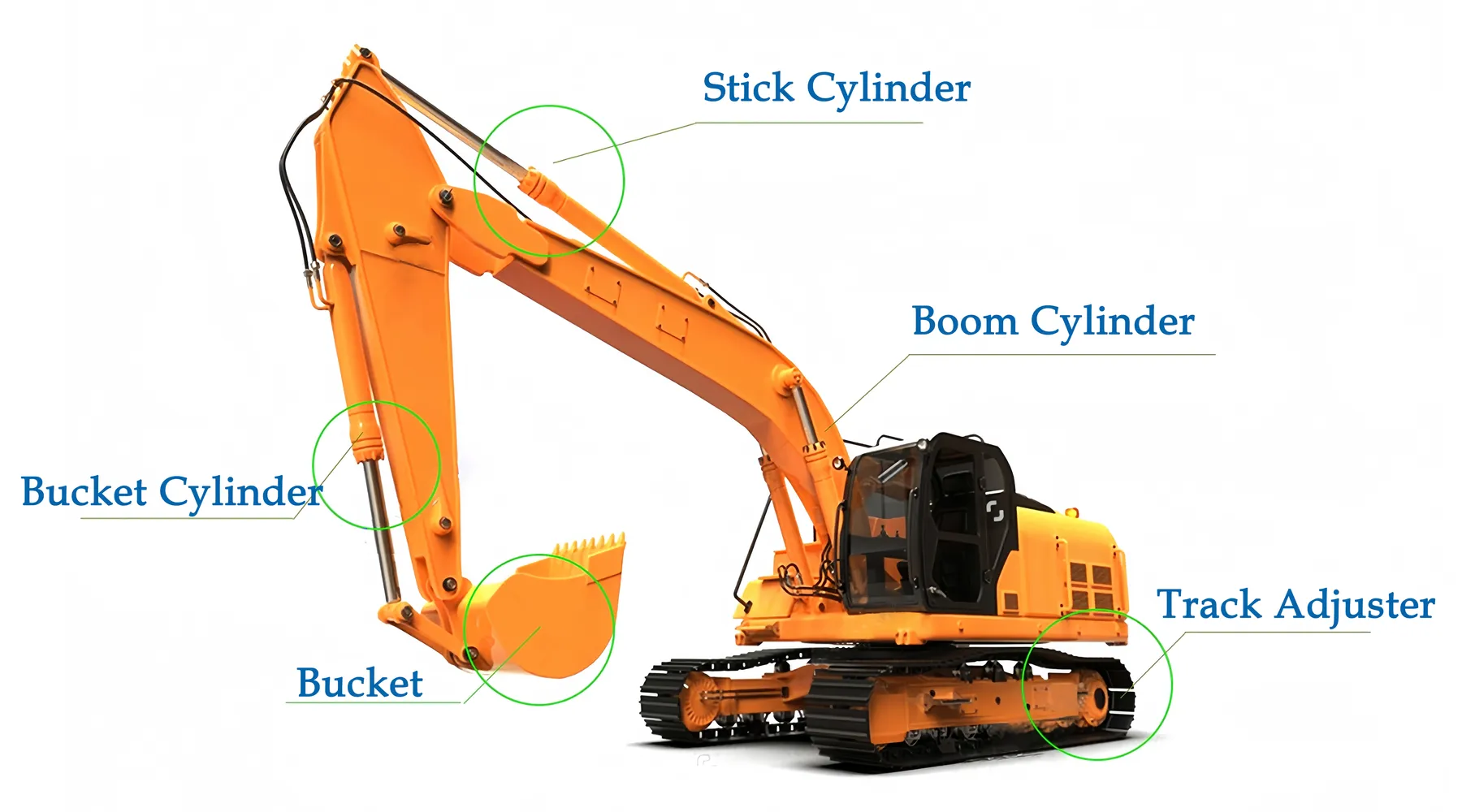
Below are the primary specification ranges we offer for medium excavator hydraulic cylinder products. Each parameter can be tailored to your exact machine model, operating pressure, and environmental requirements. Whether you need a hydraulic boom cylinder, stick hydraulic cylinder, bucket hydraulic cylinder, or tightening hydraulic cylinder, these ranges serve as a starting point for your custom configuration.
Basic Specification Ranges
| Parameter | Boom Cylinder | Stick Cylinder | Bucket Cylinder | Tightening Cylinder |
|---|---|---|---|---|
| Bore Diameter | 100 – 140 mm | 90 – 130 mm | 80 – 120 mm | 70 – 100 mm |
| Rod Diameter | 70 – 100 mm | 65 – 90 mm | 55 – 85 mm | 50 – 70 mm |
| Stroke Length | 900 – 1450 mm | 1000 – 1600 mm | 650 – 1050 mm | 400 – 700 mm |
| Operating Pressure | 25 – 35 MPa | 25 – 35 MPa | 25 – 35 MPa | 20 – 30 MPa |
| Test Pressure | 38 – 52.5 MPa | 38 – 52.5 MPa | 38 – 52.5 MPa | 30 – 45 MPa |
| Closed Length | 1350 – 2100 mm | 1400 – 2250 mm | 1000 – 1650 mm | 750 – 1150 mm |
Mounting Options
| Mounting Type | Description |
|---|---|
| Pin-Eye (Top & Bottom) | Standard mounting for boom, stick, and bucket cylinders; accommodates angular articulation |
| Trunnion Mount | Side-mounted pivot for heavy-duty boom applications with lateral load absorption |
| Clevis Mount | Fork-and-pin connection suitable for tightening cylinders and auxiliary functions |
| Custom OEM Configuration | Tailored geometry to match specific excavator chassis and linkage dimensions |
Materials and Surface Treatment
| Component | Material / Treatment |
|---|---|
| Cylinder Tube | SAE 1020 / SAE 1045 honed steel tube, Ra 0.2 – 0.4 um internal finish |
| Piston Rod | SAE 1045 / 42CrMo4 induction-hardened, hard chrome plated (20 – 30 um) |
| Piston | Ductile cast iron or forged steel, bronze wear rings |
| Gland / Head | Forged or cast steel, precision-machined bore and rod bearing surface |
| Seals | Hallite, NOK, or Parker profile seals; NBR / FKM / PTFE compounds |
| External Finish | Shot blasted, zinc primer + polyurethane topcoat (80 – 120 um DFT) |
Environmental Adaptability
| Condition | Range / Rating |
|---|---|
| Operating Temperature | -30 C to +80 C |
| Dust / Debris Protection | Heavy-duty wiper seals, optional rod boot |
| Corrosion Resistance | Salt spray tested to 500+ hours (ISO 9227) |
| Hydraulic Fluid Compatibility | Mineral oil (ISO VG 32 – 68), biodegradable fluids on request |
Key Features and Advantages
1. Full-Bore Design for Maximum Thrust Output
Our medium excavator hydraulic cylinders are engineered with optimized bore-to-rod ratios that deliver the highest push force available within the envelope constraints of a medium excavator frame. This means the machine spends less time struggling through compacted material and more time completing dig cycles, which directly translates to higher productivity per shift and lower fuel consumption per cubic meter moved.
2. Precision-Honed Cylinder Bore for Consistent Sealing
Each cylinder tube undergoes deep-hole honing to achieve a surface roughness between Ra 0.2 and Ra 0.4 micrometers. This mirror-like finish reduces friction between the piston seal and the bore wall, extends seal life by minimizing abrasive wear, and maintains a stable hydraulic seal even after thousands of hours of high-frequency cycling common in excavator boom and stick operations.
3. Heavy-Duty Rod Surface Treatment for Harsh Environments
The hydraulic cylinder piston rod receives induction hardening followed by industrial hard chrome plating, giving it a surface hardness exceeding 55 HRC and outstanding resistance to scoring, pitting, and corrosion. In dusty quarry sites or wet coastal environments common in Mexico, this surface treatment keeps the rod functional and leak-free far longer than untreated or lightly plated alternatives.
4. High-Performance Seal Package
We use multi-lip hydraulic cylinder seals from globally recognized brands like Hallite and NOK, selected specifically for the pressure spikes and temperature fluctuations common in excavator duty cycles. The seal arrangement includes a primary piston seal, backup ring, rod seal, buffer seal, and heavy-duty wiper to prevent contaminant ingress, even in the muddiest, most abrasive digging conditions.
5. Cushioning System for Smooth End-of-Stroke Deceleration
Internal cushioning valves at both ends of the stroke decelerate the piston before it contacts the end cap, reducing impact shock, mechanical noise, and the fatigue loading that gradually weakens cylinder mounting points. This is especially valuable for medium excavators working in demolition or rock-breaking applications where repeated full-stroke impacts are routine.
6. Direct-Fit OEM Replacement Geometry
Every cylinder is manufactured to match original equipment pin-to-pin dimensions, port locations, and mounting configurations, allowing drop-in installation without modifications to the excavator frame or hydraulic lines. This saves installation time and eliminates the risk of alignment errors that can lead to premature bushing wear or uneven loading on the hydraulic cylinder components.

Compatible Brand Replacements
Note: All brand names mentioned below are the property of their respective owners. We reference them solely to assist equipment owners in identifying the correct replacement cylinder for their machine. No affiliation or endorsement is implied.
Our hydraulic cylinders for excavators in the medium class are engineered as direct replacements for machines manufactured by:
- Caterpillar (CAT 315, 320, 323, 325 series)
- Komatsu (PC200, PC210, PC220, PC240 series)
- Hitachi (ZX200, ZX210, ZX225 series)
- Volvo (EC200, EC220, EC250 series)
- Doosan / Develon (DX225, DX255 series)
- Kobelco (SK200, SK210, SK250 series)
- Hyundai (HX220, HX235, HX260 series)
- SANY (SY215, SY235 series)
- XCMG (XE215, XE245 series)
- John Deere (200G, 210G, 250G series)
- Case / New Holland (CX210, CX250 series)
If your specific model is not listed, contact our engineering team with your machine serial number and we will confirm compatibility or develop a custom solution.
Core Technical Advantages
Ultra-Low Friction Seal Technology
Conventional seals generate significant drag force inside the cylinder, wasting hydraulic energy as heat and reducing system responsiveness. Our proprietary seal profile features a stepped-lip geometry that minimizes contact area at low pressures while maintaining full sealing integrity at peak operating pressures. The result is a measurable reduction in breakaway pressure, smoother cylinder motion at creep speeds, and lower hydraulic oil temperature during sustained operation. For operators running medium excavators in warm climates like central and northern Mexico, this means fewer thermal shutdowns and longer daily operating windows.
High-Rigidity Barrel and Piston Rod Manufacturing Process
The cylinder barrel is produced from seamless steel tube that is stress-relieved, deep-hole bored, and precision-honed in a single clamping setup to guarantee concentricity within 0.02 mm. The piston rod is turned from solid bar stock, induction-hardened to a case depth of 2 mm minimum, ground to h7 tolerance, and chrome-plated in-house. This level of geometric accuracy prevents localized pressure peaks on the seals, reduces lateral rod deflection under side loading, and extends the working life of every internal component.
Thermal Stability and Fatigue Life Optimization
Every weld on our cylinders is performed by certified welders following WPS-qualified procedures, and critical joints undergo post-weld heat treatment to relieve residual stress. The piston rod eye and barrel trunnion areas, which are the primary fatigue failure zones in excavator cylinders, receive additional reinforcement through finite-element-optimized wall thickness distribution. This engineering approach ensures that our hydraulic cylinder for excavator applications can withstand at least 1,000,000 pressure cycles at rated load without structural degradation.
Contamination-Resistant Rod Sealing System
In dusty or sandy environments, the number one cause of cylinder failure is contamination entering past the rod seal. Our multi-stage wiper and scraper configuration uses a hardened metal scraper ring backed by a polyurethane wiper, followed by a pressure-energized buffer seal before the primary rod seal. This four-barrier system keeps abrasive particles out of the oil volume and is particularly effective in the arid mining and construction regions found throughout Mexico.
Intelligent Cushioning Geometry
End-of-stroke cushioning is not just about slowing the piston down. Our tapered cushion plunger geometry progressively restricts oil flow as the piston approaches the end cap, creating a smooth deceleration curve that eliminates the impact spike seen in simple step-type cushion designs. This reduces structural shock loading on the pin joints and mounting brackets, extends bushing life, and noticeably reduces operator fatigue during repetitive digging cycles.
Corrosion Protection for Coastal and Tropical Conditions
External surfaces are shot blasted to SA 2.5 cleanliness, coated with a zinc-rich primer, and finished with a two-pack polyurethane topcoat rated for 500+ hours of salt spray resistance. For customers operating near the Gulf of Mexico coast or in tropical humidity zones, we offer optional nickel-chrome rod plating and stainless-steel port fittings for additional protection against pitting corrosion and galvanic attack.

Manufacturing Process and Quality Control
Fully Integrated In-House Production
We control every step from raw material inspection to finished product shipping. Steel tube is cut, bored, honed, and welded in our own facility. Piston rods are turned, hardened, ground, and plated on our production line. Pistons, glands, and end caps are machined on CNC centers with real-time tool compensation. This vertical integration eliminates the quality variability that comes with outsourcing, and allows us to hold tolerances that multi-vendor supply chains simply cannot guarantee. Our hydraulic cylinder manufacturer capability covers every critical process under one roof.
100% Factory Testing Before Shipment
Every hydraulic cylinder leaving our facility undergoes a complete pressure test at 1.5 times rated operating pressure, a leak-down test to verify seal integrity, a stroke function test at working pressure, and a dimensional verification of all mounting and port features. Test data is recorded digitally and linked to the cylinder serial number. We do not sample test. Every single unit is proven before it reaches your warehouse or jobsite.
Certifications and Full Traceability
Our manufacturing system holds ISO 9001:2015 certification, and our welding procedures are qualified to ISO 15614 / AWS D1.1 standards. Each cylinder ships with a material test report covering barrel, rod, and seal lot traceability. If a question arises five years from now about the steel grade in a particular unit, we can retrieve that data within minutes. This level of hydraulic oil cylinder documentation is standard for us, not a premium add-on.
Continuous Improvement Through Failure Analysis
When a cylinder comes back for service, we do not just replace the seals and send it out. We perform a full root-cause analysis, photograph wear patterns, measure component dimensions, and feed that data back into our design and manufacturing process. This closed-loop approach has driven measurable improvements in seal life, chrome adhesion, and weld durability over successive product generations.

Typical Applications for Medium Excavator Hydraulic Cylinders
The versatility of medium excavators, and by extension the hydraulic cylinders that power them, spans a remarkably wide range of industries. Here are the primary sectors where our cylinders deliver proven performance.
Construction Industry
Foundation excavation, basement dig-outs, utility trenching, site grading, and demolition are daily tasks for medium excavators on construction sites. The boom hydraulic cylinder handles the heaviest lifting, the hydraulic stick cylinder controls reach and depth, and the hydraulic bucket cylinder manages breakout force during digging. In residential and commercial construction across Mexico, medium excavators equipped with our cylinders routinely work 10-hour shifts in mixed soil and rock conditions.
Mining Industry
While large excavators handle primary ore loading, medium machines serve critical support roles in mining: haul road maintenance, drainage ditch construction, bench cleanup, and secondary breaking. The abrasive dust and heavy shock loading in mining environments demand cylinders with robust sealing, hard chrome rods, and reinforced mounting points, exactly the combination our products deliver.
Forestry and Logging Industry
Land clearing, stump removal, road building through forested terrain, and log handling require medium excavators fitted with specialized attachments. The cylinders powering these machines must resist impact loading from stumps and roots while handling the constant lateral forces generated by grapple and processor heads. Our reinforced pin-eye and trunnion mounting options are purpose-built for these conditions.
Marine and Port Industry
Dredging support, seawall construction, barge loading, and port maintenance expose excavators to salt water, high humidity, and corrosive atmospheres. Our optional enhanced corrosion protection package, including nickel-chrome rod plating and marine-grade paint systems, ensures cylinder longevity in these demanding coastal environments found along Mexico’s extensive Pacific and Gulf coastlines.
Oil and Gas Industry
Pipeline trenching, wellpad construction, tank farm earthmoving, and spill containment berm building are all medium excavator applications in the energy sector. Cylinders used in oil and gas environments must meet stringent safety and quality documentation requirements, which our ISO-certified manufacturing process and full material traceability readily satisfy.
Agricultural Industry
Irrigation canal maintenance, land leveling, pond construction, and drainage projects keep medium excavators busy across agricultural regions. In Mexico’s major farming areas, from Sinaloa to Sonora to the Bajio region, our cylinders support machines working in clay-heavy soils and high-temperature conditions throughout the growing season.
Infrastructure Development
Highway widening, bridge abutment excavation, storm sewer installation, and water main replacement projects all rely on medium excavators working in confined urban spaces. The precision control provided by well-built double acting hydraulic cylinder assemblies allows operators to dig close to existing utilities without damaging buried infrastructure.
Energy and Renewable Power
Wind farm foundation excavation, solar panel field grading, and access road construction for renewable energy installations are growing applications for medium excavators in Mexico’s expanding clean energy sector. These projects often occur in remote locations where cylinder reliability is paramount because field service options are limited.
Comparison: Standard Cylinders vs. Our High-Performance Cylinders
| Feature | Standard Hydraulic Cylinder | Our High-Performance Cylinder |
|---|---|---|
| Bore Honing Finish | Ra 0.4 – 0.8 um | Ra 0.2 – 0.4 um |
| Rod Chrome Thickness | 15 – 20 um | 20 – 30 um |
| Seal Brand | Generic / Unbranded | Hallite / NOK / Parker |
| Pressure Test | Sampling (10 – 20%) | 100% individual unit testing |
| Fatigue Life | 500,000 cycles typical | 1,000,000+ cycles rated |
| Corrosion Resistance | 200 – 300 hours salt spray | 500+ hours salt spray |
| Material Traceability | Partial or none | Full batch-level traceability |
| End-of-Stroke Cushioning | Basic step cushion or none | Tapered progressive cushion |
| Warranty | 6 – 12 months | 18 – 24 months |
Real-World Case Studies
Case 1: Highway Expansion Project in Nuevo Leon, Mexico
Client: Grupo Constructor del Norte, S.A. de C.V.
Equipment: Fleet of 8 Komatsu PC210-10 excavators
Application: Roadside excavation and drainage ditch construction along the Monterrey-Saltillo corridor
How They Found Us: Their procurement manager discovered our website through a Google search for “medium excavator hydraulic cylinder manufacturer” in March 2024 and submitted an inquiry through our contact form.
Outcome: We supplied 24 boom and stick cylinders over a four-month period. After 2,800 operating hours on the first batch, zero seal failures were reported. The client noted a 12% reduction in hydraulic oil temperature compared to the aftermarket cylinders they had been using previously.
Client Feedback: “We replaced the old aftermarket boom cylinders on two machines first as a trial. After six months with no leaks and noticeably smoother boom response, we converted the entire fleet. The ordering process was straightforward and the technical support was responsive whenever we had a question about port size conversions.”
Case 2: Open-Pit Silver Mine in Zacatecas, Mexico
Client: Minera Plata Real, S.A.
Equipment: 5 Caterpillar 320F and 2 Hitachi ZX210-5 excavators
Application: Bench cleanup, haul road maintenance, and drainage work in a high-altitude desert environment
How They Found Us: The mine maintenance superintendent attended a mining equipment expo in Mexico City in October 2023 and visited our booth. He collected our catalog and followed up by email the following week.
Outcome: Over 18 months, we supplied bucket and stick cylinders for all seven machines. The mine reported a 35% extension in seal replacement intervals compared to previous suppliers, reducing unplanned downtime by an estimated 22 hours per machine per year.
Client Feedback: “The dust conditions at our site are brutal. Fine silica gets into everything. These cylinders have held up where others failed within 1,500 hours. We appreciate the detailed test certificates that came with each unit, which our safety department requires for all pressure-containing equipment on site.”
Case 3: Port Expansion in Veracruz, Mexico
Client: Constructora Portuaria del Golfo
Equipment: 3 Volvo EC220E excavators
Application: Dredge material handling and seawall foundation excavation in a salt-water environment
How They Found Us: A recommendation from a fellow contractor who had used our cylinders on a separate project in Tamaulipas. They called our sales line in January 2024.
Outcome: We provided boom and bucket cylinders with the enhanced marine corrosion protection package. After 14 months of continuous coastal operation, external rod inspection showed zero visible pitting on any of the six cylinders installed.
Client Feedback: “Working near salt water destroys hydraulic rods fast. We had been re-chroming rods every 8 months with our old supplier. These cylinders went the full project duration without needing any rod work. That alone justified the cost difference.”
Case 4: Residential Development in Guadalajara, Mexico
Client: Desarrollos Urbanos Tapatio
Equipment: 4 Doosan DX225LC-5 excavators
Application: Foundation excavation, utility trenching, and general earthmoving for a 240-unit housing development
How They Found Us: Their fleet manager found our product page while searching for “Doosan DX225 hydraulic arm cylinder replacement” in June 2024. He submitted a request through our online inquiry form.
Outcome: We supplied boom, stick, and bucket cylinders for all four machines. The project completed two weeks ahead of schedule, and the client attributed part of that to fewer hydraulic-related stoppages compared to previous projects where they used locally sourced cylinders.
Client Feedback: “The cylinders were a perfect fit. No shimming, no adapter plates, no port modifications. Our mechanics installed them in under two hours per cylinder, which is faster than what we are used to with other aftermarket options.”
Case 5: Agricultural Irrigation Project in Sinaloa, Mexico
Client: Agricola Valle del Fuerte, S.P.R.
Equipment: 2 Kobelco SK200-10 excavators
Application: Irrigation canal deepening and maintenance across 1,200 hectares of farmland
How They Found Us: The farm operations director was referred by the Kobelco dealer in Culiacan, who recommended our cylinders as a high-quality aftermarket alternative. He contacted us by WhatsApp in August 2024.
Outcome: We delivered stick and bucket cylinders within 19 days of order confirmation. After completing the full canal maintenance program covering 28 km of channels, the client reported zero cylinder-related downtime throughout the entire project.
Client Feedback: “Our previous cylinders started leaking within four months of use, especially during the hot season when temperatures push past 40 degrees. These held up perfectly through the entire summer and fall cycle. The delivery time was also much better than what we expected.”
Common Fault Diagnosis and Troubleshooting
Even the best-built hydraulic cylinders can encounter operational issues if system conditions change or maintenance is deferred. Here is a practical guide to the most common problems seen in medium excavator hydraulic cylinder applications and how to address them.
1. External Oil Leakage at the Rod Seal
The most visible symptom is oil film or dripping on the piston rod where it exits the gland. Common causes include worn or damaged rod seals, rod surface scoring from contamination ingress, or a worn wiper seal allowing abrasive particles to reach the primary seal. Inspect the rod surface for scratches or pitting. If the rod is damaged, it must be re-chromed or replaced before installing new seals, as new seals on a damaged rod will fail quickly.
2. Slow or Weak Cylinder Movement
If the cylinder extends or retracts more slowly than normal, or cannot reach full force, suspect internal bypass across the piston seals. Oil leaking past the piston from the high-pressure side to the low-pressure side reduces effective force and speed. Verify system pressure at the cylinder ports with a gauge. If pressure is correct but the cylinder is still weak, the piston seals need replacement. Also check for a partially clogged return filter that may be creating backpressure.
3. Cylinder Drift Under Load
When a loaded boom or stick gradually settles with the controls in neutral, the problem is typically internal leakage past the piston seal or a faulty holding valve in the hydraulic circuit. Isolate the cylinder from the circuit and cap the ports to determine whether the leak is internal to the cylinder or external in the control valve. If the cylinder holds position with ports capped, the control valve is the source.
4. Jerky or Erratic Cylinder Motion
Stick-slip behavior often indicates air trapped in the cylinder or hydraulic lines. Bleed the circuit thoroughly. If the problem persists, check for a failing cushion valve that may be causing inconsistent flow restriction at end of stroke. Low hydraulic oil level or a cavitating pump can also cause intermittent aeration and jerky movement.
5. Excessive Heat Generation
A cylinder that runs unusually hot to the touch is usually experiencing high internal friction from overtightened gland packing, incorrect seal size, or misalignment between the cylinder rod and the machine frame. Check alignment first, then verify seal specifications match the original design. High-friction seals waste energy as heat and will also wear out faster, compounding the problem over time.
How to Choose the Right Hydraulic Cylinder for Your Medium Excavator
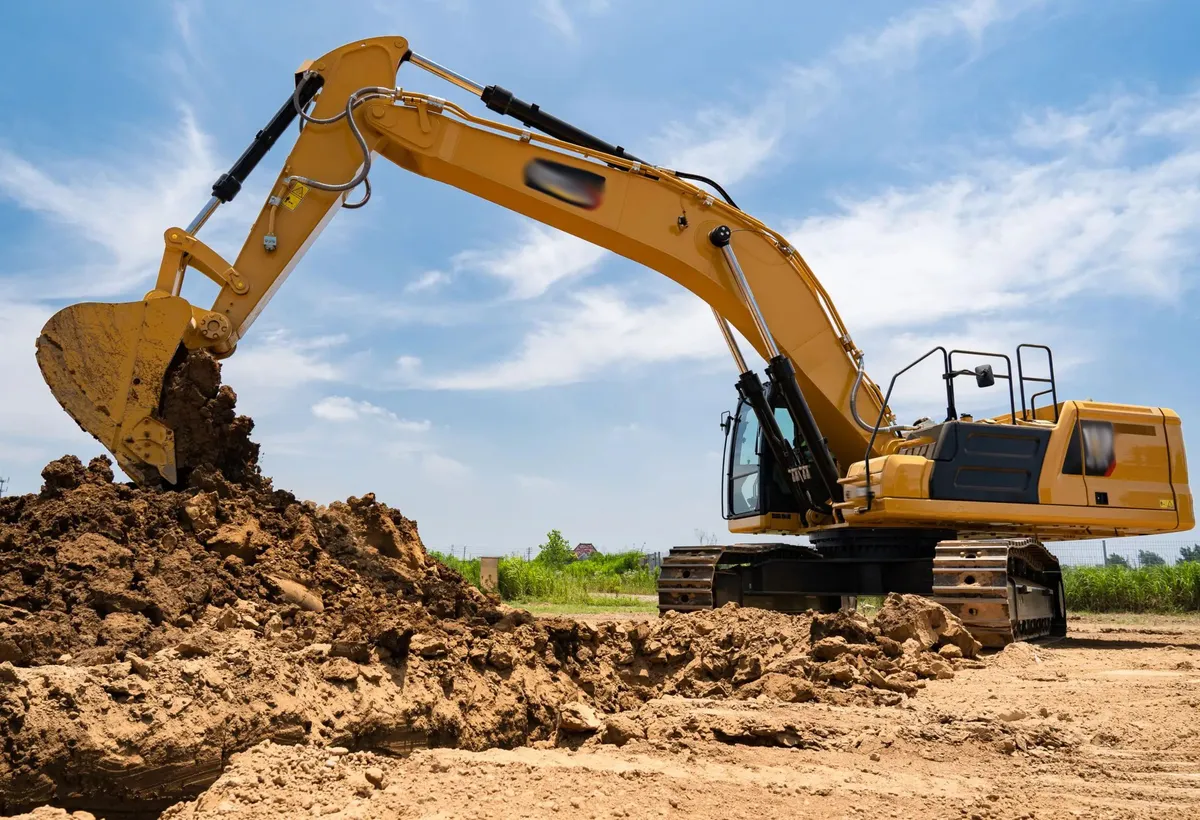
Selecting the correct hydraulic cylinder for medium excavator use involves more than matching bore size and stroke length. Here is a practical decision framework based on the factors that matter most in real-world performance.
Step 1: Identify the Cylinder Position. Determine whether you need a boom, stick, bucket, or tightening cylinder. Each position has different force, speed, and stroke requirements, and the mounting geometry varies significantly between positions.
Step 2: Confirm Machine Model and Year. Medium excavator designs evolve between model generations. A cylinder that fits a Komatsu PC200-8 may not fit a PC200-10 due to changes in pin spacing, port orientation, or overall length. Always verify against your machine serial number, not just the model name.
Step 3: Check Operating Pressure Rating. Your excavator hydraulic system has a defined maximum working pressure and a relief valve setting. The replacement cylinder must be rated at or above these values. Under-rated cylinders risk seal blowout and structural failure.
Step 4: Evaluate Environmental Conditions. Will the cylinder operate in extreme heat, cold, dust, or corrosive atmospheres? Specify seal materials, rod surface treatments, and paint systems that match your actual working environment, not just standard catalog options.
Step 5: Consider Attachment Compatibility. If you run hydraulic breakers, compactors, or other high-impact attachments, the boom and stick cylinders experience additional shock loading. Specify cylinders with enhanced cushioning and reinforced mounting points for these applications.
Step 6: Verify Supplier Quality Documentation. Request pressure test reports, material certificates, and dimensional inspection records. A supplier that cannot provide these is cutting corners somewhere in their manufacturing process, and you will pay for it in the field.
Frequently Asked Questions
What is the typical lead time for a custom medium excavator hydraulic cylinder order?
Standard configurations for popular medium excavator models such as the CAT 320, Komatsu PC200, or Hitachi ZX200 series typically ship within 15 to 25 business days from order confirmation. Fully custom designs with non-standard bore sizes, stroke lengths, or special surface treatments may require 30 to 40 business days depending on complexity. We recommend contacting our team early in your planning cycle to lock in delivery schedules for fleet-wide replacements.
Can I order individual hydraulic cylinder parts like seals, pistons, or rod assemblies?
Yes. We supply complete hydraulic cylinder parts including seal kits, piston assemblies, piston rods, glands, and cylinder tubes as individual components. This is ideal for customers who perform their own hydraulic cylinder repair in-house. Each part is manufactured to the same specifications and tolerances as our complete cylinder assemblies, and all components are covered by our standard warranty.
Do your hydraulic cylinders work with biodegradable hydraulic fluids?
Our standard seal package is compatible with mineral-based hydraulic oils in the ISO VG 32 to VG 68 range. For customers who require biodegradable or environmentally acceptable hydraulic fluids, such as HEES (synthetic ester) or HETG (vegetable oil) types, we offer a modified seal package using FKM and PTFE compounds specifically formulated for these fluid chemistries. Please specify your fluid type at the time of order so we can select the correct seals.
What warranty do you offer on medium excavator hydraulic cylinders?
All our medium excavator hydraulic cylinders carry an 18-month warranty from the date of shipment, covering defects in materials and workmanship under normal operating conditions. Extended warranty terms up to 24 months are available for volume orders. Warranty claims are processed promptly, and we maintain a dedicated technical support channel to help diagnose issues quickly so replacement parts or units can be dispatched without unnecessary delays.
How do I know if a single acting or double acting hydraulic cylinder is right for my excavator?
Virtually all medium excavator boom, stick, and bucket cylinders are double acting hydraulic cylinder designs, meaning hydraulic pressure is applied to both sides of the piston for powered extension and retraction. Single acting hydraulic cylinder designs, which use gravity or a spring for return, are generally used in simpler equipment like log splitters or certain agricultural implements. If you are replacing a cylinder on a standard medium excavator, you will almost certainly need a double-acting unit.
Can you manufacture hydraulic cylinders for excavator models not on your compatibility list?
Absolutely. Our engineering department can develop a hydraulic cylinder for excavator applications based on your provided drawings, sample unit, or OEM part numbers. We routinely manufacture cylinders for less common brands and regional models. Simply send us the original cylinder dimensions, port specifications, and mounting details, and our team will prepare a detailed quotation within 48 hours.
What is the minimum order quantity for medium excavator hydraulic cylinders?
We accept orders starting from a single piece for standard configurations. There is no minimum order requirement. However, volume pricing is available for orders of 5 units or more of the same specification, and significant cost advantages apply at quantities of 20 or above. Many of our B2B customers start with a trial order of 2 to 4 cylinders before committing to a full fleet conversion.
Do you provide technical support for hydraulic cylinder installation and troubleshooting?
Yes. Our technical support team is available to assist with installation guidance, torque specifications, bleeding procedures, and troubleshooting. We provide detailed installation manuals with every order, and our engineers are reachable by email, phone, and WhatsApp for real-time assistance. For large fleet orders, we can also arrange on-site technical training for your maintenance crew if required.
How do your prices compare with OEM excavator hydraulic cylinder prices?
Our cylinders are typically priced 30% to 50% below OEM dealer pricing for equivalent specifications. The cost savings come from our direct-to-customer model and vertically integrated manufacturing, not from lower material quality or reduced testing. Every unit uses the same grade of steel, the same brand-name seals, and undergoes the same 100% pressure testing as cylinders sold through OEM dealer channels. We invite you to compare our specifications line by line with any OEM datasheet.
What shipping options are available for orders to Mexico?
We ship to Mexico via sea freight (CIF to major ports including Manzanillo, Lazaro Cardenas, and Veracruz), air freight for urgent orders, and door-to-door DDP service through our logistics partners. Sea freight typically takes 20 to 30 days from factory to port. Air freight delivers within 5 to 7 business days. We handle all export documentation and can work with your customs broker to ensure smooth clearance at the Mexican border.
Ready to Get Started? Let Us Build Your Cylinders.
Custom Hydraulic Cylinder for Your Medium Excavator
Whether you need a single replacement cylinder or a full set for an entire fleet of medium excavators, our engineering and production teams are ready to deliver exactly what your machines require. Share your machine model, cylinder position, and any special requirements, and we will respond with a detailed technical proposal and competitive quotation within 48 hours.