The Core Role of Hydraulic Cylinders in Wind Turbines
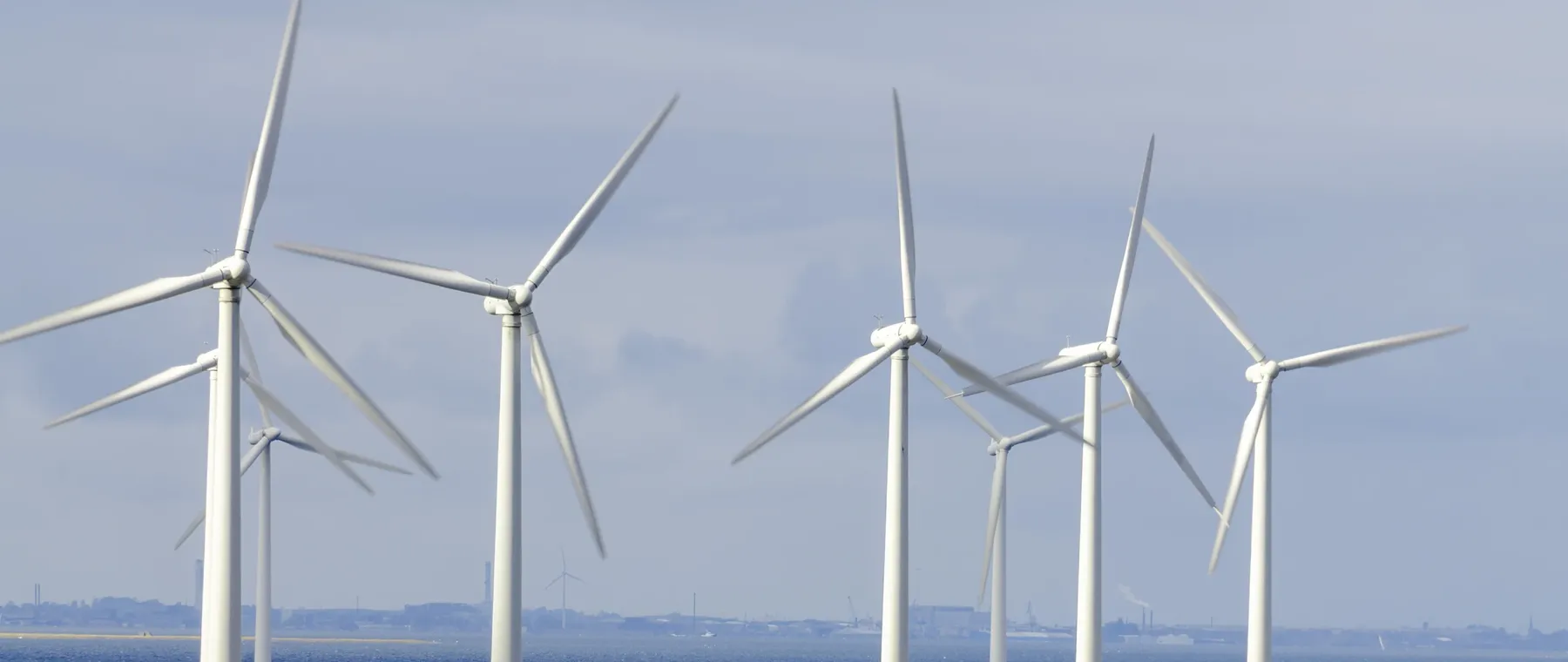
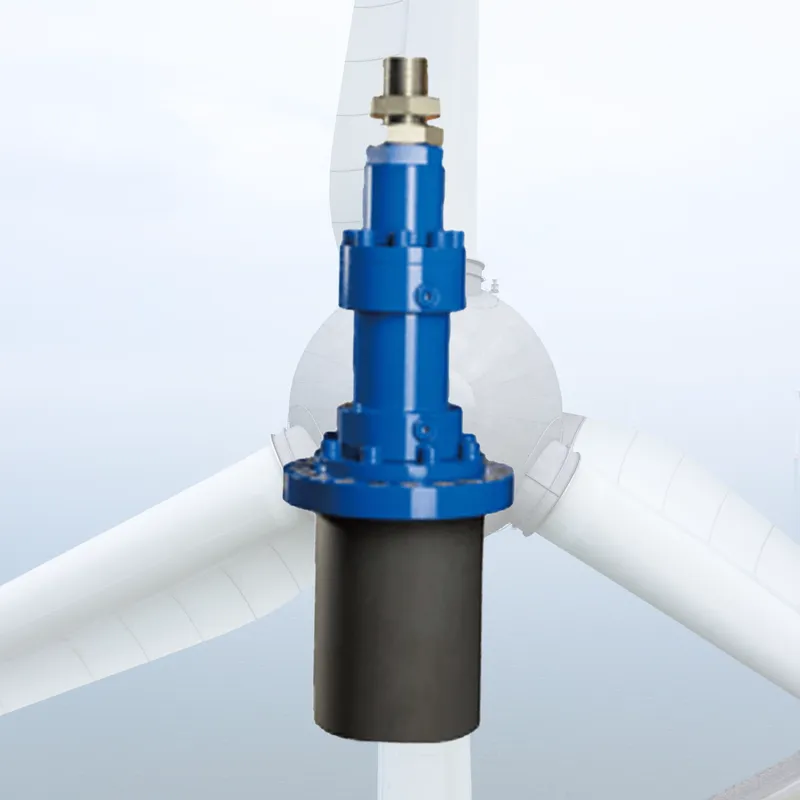
Wind turbines operate under conditions that push mechanical components to their absolute limits. Tower heights exceeding 100 meters, blade tip speeds surpassing 300 km/h, temperature swings from -40 degrees C to +60 degrees C, and non-stop vibration from turbulent wind loads all place enormous stress on every moving part. The hydraulic cylinder for wind turbine applications is not just another component; it is the backbone of pitch control, yaw positioning, rotor locking, and emergency braking systems that keep the turbine running safely and efficiently.
Without reliable wind turbine hydraulic cylinders, operators face unplanned downtime, blade damage from over-speed events, and costly nacelle repairs. A single cylinder failure in a 3 MW offshore turbine can result in losses exceeding $50,000 per day when you factor in crane mobilization, technician costs, and lost energy revenue. That is why selecting the right hydraulic cylinder manufacturer is one of the most consequential decisions a wind farm developer or OEM will make.
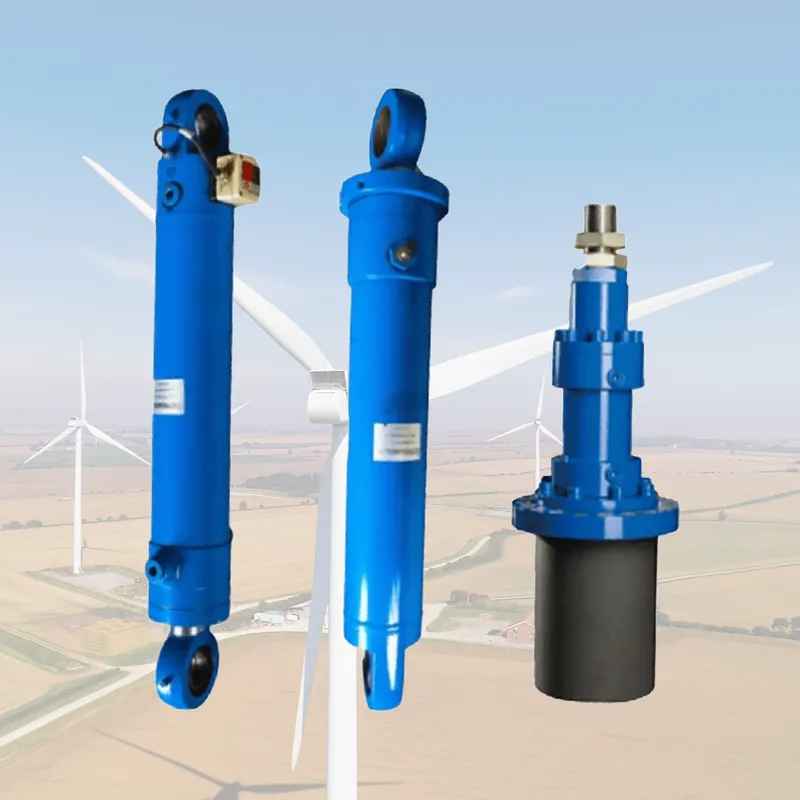
Over the past two decades, I have worked with turbine OEMs, independent power producers, and service companies across four continents. The pattern is always the same: projects that invest in purpose-built, high-quality hydraulic oil cylinders from day one spend far less on maintenance and enjoy significantly higher turbine availability rates over a 20-year service life. The cylinders we engineer are designed for exactly this kind of long-term, low-maintenance performance.
Technical Parameters and Customizable Specifications
Every wind turbine platform has unique requirements. Hub heights, rotor diameters, rated power, and control architectures vary widely between manufacturers and even between models from the same OEM. Our hydraulic cylinders for wind turbines are fully customizable across the following specification ranges. The table below summarizes the primary parameters and the typical customization window we offer.
Basic Specification Ranges
| Parameter | Customizable Range | Notes |
|---|---|---|
| Bore Diameter | 40 mm – 250 mm | Matched to load and pressure requirements |
| Rod Diameter | 25 mm – 180 mm | Chrome-plated or ceramic-coated options |
| Stroke Length | 50 mm – 2,000 mm | Per application geometry |
| Working Pressure | 16 MPa – 35 MPa | Proof tested to 1.5x rated pressure |
| Burst Pressure | Up to 70 MPa | Safety factor per EN/ISO standards |
| Action Type | Single acting / Double acting | Spring-return available for safety cylinders |
Mounting Options
| Mounting Style | Application |
|---|---|
| Flange Mount (Front / Rear) | Pitch systems, yaw brakes |
| Clevis Mount | Blade-tip adjusting, rotor lock |
| Trunnion Mount | Yaw drive, nacelle positioning |
| Custom Bracket / Foot Mount | Retrofit and OEM-specific installations |
Materials and Surface Treatment
| Component | Material Options | Surface Treatment |
|---|---|---|
| Cylinder Barrel | ST52, 27SiMn, AISI 1045 | Honed bore, hard chrome internal |
| Piston Rod | CK45, 42CrMo4, AISI 4140 | Hard chrome plating (20-30 micron), ceramic coating optional |
| Seals | FKM, NBR, PTFE compound | Low-friction profiles for extended cycle life |
| End Caps / Glands | Forged steel, ductile iron | Zinc-nickel plating, powder coat |
Environmental Adaptability
| Condition | Specification |
|---|---|
| Operating Temperature | -40 degrees C to +80 degrees C |
| Corrosion Protection | C5-M rated coating system (ISO 12944) for offshore and coastal sites |
| Salt Spray Resistance | 1,000+ hours (ASTM B117) |
| IP Rating | IP65 / IP67 as required |
| Vibration and Shock | Designed per IEC 61400 structural requirements |
| Design Life | 20+ years / 2 million cycles minimum |

Wind Turbine Hydraulic Cylinder Types
Wind turbines rely on multiple distinct wind turbine hydraulic cylinder types, each engineered for a specific subsystem. Understanding the differences is essential when specifying replacements or designing new turbine platforms. Here is a breakdown of the six primary categories.
1. Windwheel Lock Hydraulic Cylinder
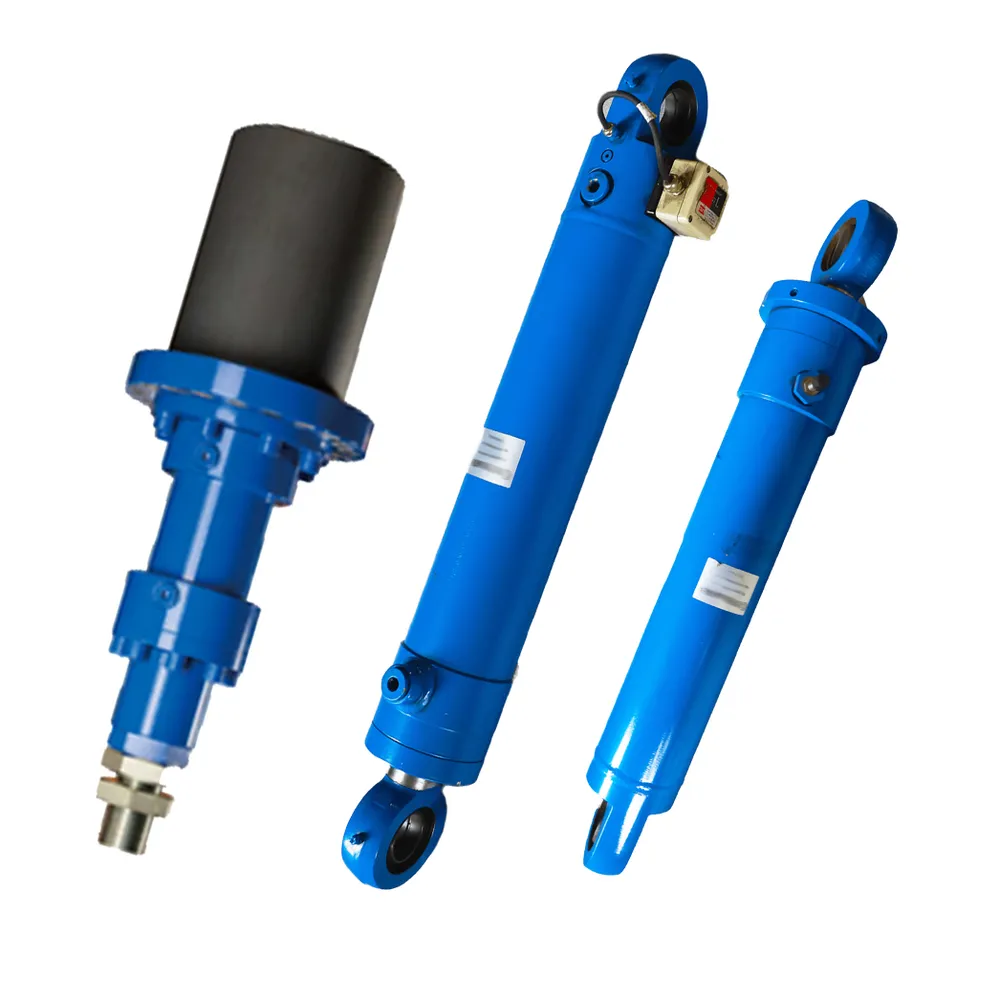
The hydraulic windwheel lock cylinder engages a mechanical pin or disc to lock the rotor during maintenance, extreme weather, or grid faults. These are typically single acting hydraulic cylinders with a spring-return mechanism, ensuring that the lock engages automatically if hydraulic pressure is lost. The piston rod must withstand enormous transverse loads while the rotor is restrained, so material selection and rod guidance are critical. Our windwheel lock cylinders use precision-ground 42CrMo4 rods and integrated position sensors for reliable lock-confirmation feedback.
2. Safety Hydraulic Cylinder
The safety hydraulic cylinder provides a fail-safe function in the pitch or brake system. In the event of a power supply interruption or control system failure, the safety cylinder deploys stored energy, usually from a nitrogen accumulator or a compression spring, to bring the blades to a feathered position or apply the rotor brake. Reliability is non-negotiable. These cylinders undergo 100% individual proof testing, and every seal and bearing element is selected for zero-leakage performance over millions of cycles.
3. Control Hydraulic Cylinder
The control hydraulic cylinder handles active pitch adjustment during normal operation. It responds to continuous commands from the turbine controller, regulating blade angle dozens of times per minute to maintain optimal power output and protect the drivetrain from overloads. These are precision double acting hydraulic cylinders with tight tolerances on internal leakage and low stick-slip characteristics. Position accuracy is often within 0.1 mm, achieved through integrated linear transducers and carefully matched hydraulic cylinder seals.
4. Yaw Hydraulic Cylinder
Yaw systems keep the nacelle pointed into the wind. Yaw hydraulic cylinders provide the clamping force for yaw brakes and, in some turbine architectures, the active drive force to rotate the nacelle on the yaw bearing. These cylinders must handle constant low-amplitude oscillation caused by turbulent wind direction changes, making fatigue resistance and seal durability top design priorities.
5. Blade-Tip Adjusting Hydraulic Cylinder
On certain turbine designs, particularly older stall-regulated models and some modern variable-speed platforms, blade-tip sections are independently adjustable to provide aerodynamic braking. The blade-tip adjusting hydraulic cylinder operates inside the blade root or hub, facing centrifugal forces, limited installation space, and lightning-strike risk. Compact envelope design, corrosion-proof materials, and integrated electrical grounding paths are standard features of our blade-tip cylinders.
6. Brake Hydraulic Cylinder
Mechanical disc brakes on the high-speed shaft or yaw ring depend on brake hydraulic cylinders to apply and release clamping force. These are often spring-applied, hydraulically released units, ensuring that the brake engages on loss of pressure. Consistent brake pad pressure across thousands of apply-release cycles requires tight control over piston seal friction and bore surface finish. Our brake cylinders are honed to Ra 0.2 micron or better and fitted with ultra-low-friction PTFE composite seals.

Compatible Replacement for Major Turbine Brands
Disclaimer: Brand names listed below are mentioned solely to help buyers identify compatible replacement parts. We are not affiliated with, endorsed by, or authorized dealers of any of these companies. All trademarks belong to their respective owners.
Our hydraulic cylinders for wind turbines are engineered as direct-fit replacements for hydraulic actuators used in turbines manufactured by:
- Vestas (V47, V80, V90, V110, V126, V150, V162 series)
- Siemens Gamesa (SG 2.x, SG 3.x, SG 5.x, SG 14-222 DD)
- GE Renewable Energy (GE 1.5, GE 2.x, Cypress platform)
- Nordex / Acciona (N100, N131, N163, Delta4000)
- Goldwind (GW 121, GW 155, GW 164)
- Enercon (E-82, E-92, E-126, E-138)
- Mingyang Smart Energy (MySE series)
- Suzlon (S111, S120, S144)
We match critical dimensions, port configurations, seal groove geometries, and pressure ratings to OEM specifications. In many cases, we improve upon the original design by upgrading materials, seal compounds, or surface finishes, giving our customers a replacement hydraulic cylinder that outperforms the factory-installed unit. If you have an OEM part number, send it to our engineering team and we will confirm cross-reference compatibility within 24 hours.
Core Technical Advantages
Ultra-Low Friction Sealing System
Friction is the enemy of precision and longevity. Our proprietary seal design combines step-cut PTFE guide rings with pre-loaded lip seals to reduce breakaway friction by up to 40% compared with conventional O-ring-energized seals. Lower friction translates to more responsive pitch control, reduced heat generation, and dramatically extended hydraulic cylinder seal service intervals. Many of our wind farm clients report seal replacement intervals exceeding 8 years on pitch control cylinders.
High-Rigidity Cylinder Barrel and Piston Rod Manufacturing
The cylinder barrel is deep-hole bored from a single forged billet, then honed to a mirror finish (Ra less than 0.3 micron). This eliminates welded seams that can become fatigue crack initiation points. The hydraulic cylinder piston rod is induction-hardened, precision-ground, and coated with a minimum 25-micron hard chrome layer that meets ISO 6020/6022 surface quality requirements. The result is a cylinder body and rod combination with superior bending resistance and resistance to scoring.
Thermal Stability and Fatigue Life Optimization
Wind turbines experience wide temperature excursions, sometimes 60 degrees C or more between dawn and midday, or between calm and high-wind periods. We optimize seal groove geometry and material pairing to maintain sealing integrity across the entire -40 to +80 degrees C operating window. Finite element analysis (FEA) driven wall thickness optimization ensures that stress concentrations remain well below the fatigue endurance limit for the specified 2 million cycle design life.
Integrated Sensing and Condition Monitoring
Modern turbine controllers demand real-time position, pressure, and temperature feedback from hydraulic actuators. Our cylinders can be supplied with integrated magnetostrictive linear position sensors, miniature pressure transducers, and temperature probes, all wired through sealed connectors that meet offshore IP67 requirements. This eliminates the need for external sensor brackets and reduces installation time during turbine assembly or field retrofit.
Corrosion Defense for Offshore and Coastal Environments
Offshore wind installations in the Gulf of Mexico, the North Sea, and coastal sites in regions like Oaxaca, Mexico face relentless salt spray exposure. We apply a multi-layer corrosion protection system: zinc-nickel base plating, epoxy primer, and a polyurethane topcoat rated to ISO 12944 C5-M. Piston rod options include ceramic thermal spray coatings (HVOF applied) for environments where hard chrome alone is not sufficient.
Compact Envelope Design with Maximum Force Output
Space inside a wind turbine nacelle or hub is extremely limited. We use high-strength alloy steels and advanced thread forms to maximize the force-to-envelope ratio. Our engineers routinely deliver cylinder designs that fit within the same installation footprint as the OEM original while providing 10-15% higher force capacity or longer stroke, giving turbine operators greater flexibility during upgrades or repowering projects.
Manufacturing Process and Quality Control
Fully In-House Manufacturing
From raw material receiving to final paint and packaging, every step is performed under one roof. We control the cutting, forging, heat treatment, machining, honing, chrome plating, welding, assembly, testing, and finishing of every hydraulic cylinder we ship. This vertical integration eliminates supplier-induced variability and gives us full traceability from material heat number to finished serial number.
100% Factory Testing
Every cylinder is pressure tested at 1.5 times rated working pressure before it leaves the factory. Functional stroke tests verify smooth operation, correct cushioning behavior, and zero external leakage. For safety-critical wind turbine applications, we also perform burst sample testing on production lots and record full test certificates with time-stamped pressure curves.
Certifications and Traceability
Our manufacturing facility holds ISO 9001:2015 certification and operates a quality management system aligned with ISO 14001 and OHSAS 18001 frameworks. Material certificates (EN 10204 3.1) accompany every order. Upon request, we provide full dimensional inspection reports, non-destructive testing (NDT) records, and weld procedure qualifications (WPQ). For offshore wind projects, we can supply cylinders with DNV, Bureau Veritas, or Lloyd’s Register type approval documentation.
Interested in our manufacturing capabilities? Learn more about our company and factory infrastructure.
Typical Applications in Wind Energy
While the primary home for these cylinders is inside and around the nacelle and hub of a wind turbine, the application scope is broader than many engineers realize. Here are the key use scenarios:
Blade Pitch Control
Pitch control is the most demanding hydraulic application on a wind turbine. The cylinder must execute fast, precise strokes hundreds of times per hour while resisting the bending loads transmitted through the blade root. Our control hydraulic cylinders for pitch systems use low-friction seals and hardened rod bearings to maintain accuracy throughout the service interval.
Yaw Brake Clamping
Yaw brake cylinders apply steady clamping force to friction pads on the yaw ring. Consistent pad pressure prevents nacelle slippage during gusty conditions and reduces wear on the yaw gear teeth. Our yaw brake cylinders feature accumulator-ready port configurations for pressure-holding applications.
Rotor Lock Engagement
During scheduled maintenance, technicians enter the hub and work on pitch bearings, blade bolts, and other components. The rotor lock must hold the rotor motionless under all wind conditions up to a defined threshold. Our windwheel lock hydraulic cylinders provide secure engagement with redundant locking confirmation via proximity sensors.
Emergency Braking and Fail-Safe Systems
In an emergency, stored energy in accumulators drives safety cylinders to feather the blades or apply mechanical brakes. Response time is measured in fractions of a second. Our safety hydraulic cylinders are tuned for rapid deployment with controlled deceleration to protect drivetrain components from shock loads.
Nacelle Auxiliary Systems
Beyond the primary pitch and yaw functions, hydraulic cylinders are also used in hatch opening mechanisms, service crane actuation, cooling louver control, and transformer tap changers housed inside the nacelle or tower base. These secondary applications benefit from the same durability and corrosion resistance as the primary systems.
Standard Hydraulic Cylinders vs. Our High-Performance Wind Turbine Cylinders
Not all hydraulic cylinders for sale are created equal. Here is a side-by-side comparison showing why generic industrial cylinders fall short in wind energy applications and how our purpose-built designs close the gap.
| Feature | Standard Industrial Cylinder | Our Wind Turbine Cylinder |
|---|---|---|
| Design Life | 500,000 cycles typical | 2,000,000+ cycles validated |
| Temperature Range | -20 to +60 degrees C | -40 to +80 degrees C |
| Corrosion Protection | Basic paint or zinc plate | ISO 12944 C5-M multi-layer system |
| Seal Material | Standard NBR | FKM / PTFE compound, low-friction profile |
| Rod Surface Finish | Ra 0.4 – 0.6 micron | Ra less than 0.2 micron |
| Position Sensing | External, add-on | Integrated magnetostrictive sensor |
| Testing | Batch sample test | 100% individual proof and function test |
| Certifications | ISO 9001 only | ISO 9001 + DNV/BV/LR available |
| Lead Time for Customs | 8-12 weeks | 4-6 weeks standard, expedite available |
Real-World Case Studies
Case 1: Oaxaca Wind Farm, Mexico
In March 2023, a wind farm operator running 48 units of 2.5 MW turbines in the Isthmus of Tehuantepec region contacted us after experiencing recurring pitch cylinder seal failures. The original OEM cylinders were failing at 14-month intervals due to the combination of high ambient temperatures, fine sand ingress, and salt-laden coastal air. Our engineering team reviewed the failure analysis reports over a video call and proposed a redesigned gland assembly with a triple-lip wiper seal and FKM primary seal upgrade. We shipped 144 replacement cylinders (three per turbine) within five weeks. After 18 months in service, zero seal failures have been reported, and the operator estimates annual maintenance savings of approximately $185,000 across the fleet.
“We had tried two other hydraulic cylinder suppliers before finding this team. The difference in seal quality and engineering support was immediately obvious. Our pitch system availability went from 94.2% to 99.6%.” – Operations Manager, Oaxaca
Case 2: North Sea Offshore Platform, United Kingdom
A major European offshore wind developer needed yaw brake cylinders for a 72-turbine project with 6 MW direct-drive machines. The specification called for DNV type approval, C5-M corrosion protection, and integrated pressure monitoring. We delivered prototypes within eight weeks and completed type testing in partnership with a DNV-accredited laboratory. Full production of 288 cylinders was completed on schedule in early 2024. The developer reported that our units matched or exceeded the performance benchmarks set by the original equipment supplier at a cost saving of approximately 22%.
“Procurement timeline was critical for our installation window. The factory delivered every cylinder ahead of schedule, fully documented, and ready for immediate installation.” – Project Director, UK
Case 3: Rajasthan Wind Corridor, India
An independent service provider managing over 200 legacy 1.5 MW turbines in Rajasthan reached out in June 2022 looking for affordable replacement hydraulic cylinder parts and complete assemblies. The original manufacturer had discontinued the model, and aftermarket options were inconsistent in quality. We reverse-engineered the cylinder from a sample unit provided by the client, matched all critical dimensions, and upgraded the piston seals from NBR to a PTFE compound for improved heat resistance. The first batch of 50 units arrived in India in September 2022. By mid-2023, the client had ordered an additional 320 units and reported a 35% reduction in unplanned turbine stops attributable to hydraulic failures.
“When our original supplier stopped making these cylinders, we thought we would have to retire turbines early. This team gave our fleet a second life.” – Service Manager, Rajasthan
Case 4: Patagonia Wind Project, Argentina
Patagonia is one of the windiest regions on earth, with average wind speeds exceeding 10 m/s and frequent gusts above 40 m/s. A developer installing 3.6 MW turbines needed rotor lock and safety cylinders capable of surviving extreme cyclic fatigue from constant high-wind braking events. We performed a custom fatigue analysis based on site-specific wind data and reinforced the rod end bearing areas. The cylinders were delivered in November 2023. After a full year of operation, the turbines have maintained 98.7% availability, and no cylinder-related maintenance has been required.
“The engineering team understood our extreme conditions from the first conversation. They adjusted the fatigue design based on our actual wind data rather than offering a one-size-fits-all solution.” – Chief Engineer, Argentina
Case 5: Brandenburg Repowering Project, Germany
A German utility was repowering an aging onshore wind farm, replacing 18 units of 1.3 MW turbines with 9 units of 4.5 MW machines. The new turbine OEM quoted a 14-week lead time for pitch cylinders, which threatened to delay commissioning. Our team offered an accelerated production schedule and delivered 27 pitch control cylinders in just 24 working days. Each cylinder passed full factory acceptance testing before shipment. The repowering project was completed on time, and the utility has since placed a framework order for spare cylinders covering the next five years.
“Fourteen weeks was unacceptable for our commissioning schedule. This supplier turned around 27 custom cylinders in under five weeks without cutting corners on quality. That is rare in this industry.” – Procurement Lead, Germany
Common Fault Troubleshooting for Wind Turbine Hydraulic Cylinders
Even well-designed hydraulic cylinders encounter operational issues over time. Here are the most common faults seen in wind turbine applications and practical guidance on diagnosis and resolution. Proactive hydraulic cylinder repair and inspection can prevent minor issues from becoming costly failures.
External Oil Leakage at the Rod Seal
Cause: Worn or damaged rod seal, rod surface scoring, or contamination between the wiper and primary seal. Resolution: Inspect the rod surface for scratches or corrosion pitting. Replace the seal kit with OEM-grade hydraulic cylinder seals. If the rod is scored beyond polish limits, the rod should be rechromed or replaced.
Slow or Sluggish Cylinder Response
Cause: Internal leakage past the piston seal, air trapped in the cylinder, or degraded hydraulic fluid viscosity. Resolution: Bleed the circuit thoroughly. Check piston seal condition. Analyze hydraulic fluid for viscosity, particulate count, and water content. Replace fluid and seals as needed.
Cylinder Drift Under Load
Cause: Internal bypass past worn piston seals or a leaking check valve in the holding circuit. Resolution: Perform a cylinder drift test to quantify internal leakage rate. If leakage exceeds specification, disassemble and replace the hydraulic cylinder components responsible, primarily the piston seal and any internal check valve.
Rod Pitting or Corrosion
Cause: Breakdown of the chrome plating from environmental exposure, chemical attack, or mechanical impact. Resolution: Minor pitting can sometimes be polished out in-situ. Severe pitting requires rod removal and replating or rod replacement. For coastal and offshore sites, consider upgrading to a ceramic-coated rod for improved resistance.
Abnormal Noise or Vibration
Cause: Cavitation from insufficient flow, misalignment between the cylinder and its mounting points, or worn bearing bushes. Resolution: Verify flow rates and system pressure settings. Check alignment using a laser alignment tool. Replace worn bronze or composite bearing bushes.
How to Order a Custom Hydraulic Cylinder for Your Wind Turbine
Ordering a custom hydraulic cylinder wind turbine solution from us is straightforward. Here is the process from initial inquiry to delivery:
Step 1: Submit Your Requirements. Send us your technical drawings, OEM part numbers, or a description of the application. If you do not have drawings, a sample cylinder or even clear photographs with key dimensions will work. Use our contact page or email our engineering team directly.
Step 2: Engineering Review. Our engineers review your specifications, confirm material selections, seal configurations, and mounting details. We provide a detailed quotation including a GA drawing within 2-3 business days for standard configurations.
Step 3: Design Approval. You review and approve the GA drawing. Any modifications are incorporated at no additional cost during this stage.
Step 4: Manufacturing. Production begins once the drawing is approved. Standard lead time is 4-6 weeks. Expedited schedules are available for urgent requirements.
Step 5: Testing and Inspection. Each cylinder undergoes 100% pressure testing, function testing, and dimensional verification. Test certificates and photos are sent to you before shipment.
Step 6: Delivery. We ship worldwide via sea, air, or rail. Packaging is designed for heavy industrial goods with anti-corrosion VCI wrapping for long transit times. We handle export documentation and coordinate with your freight forwarder if needed.
Frequently Asked Questions
What is the typical lead time for custom wind turbine hydraulic cylinders?
Can you supply hydraulic cylinder seal kits and spare parts separately?
Do you offer single acting and double acting hydraulic cylinders for wind turbines?
What certifications do your hydraulic cylinders carry?
How do your wind turbine cylinders compare in price to OEM replacements?
Can you reverse-engineer a hydraulic cylinder from a sample unit?
What is the minimum order quantity for wind turbine hydraulic cylinders?
Do you ship hydraulic cylinders to Mexico and Latin America?
What warranty do you provide on wind turbine hydraulic cylinders?
How do I know which hydraulic cylinder type I need for my turbine model?
Ready to Upgrade Your Wind Turbine Hydraulic System?
Whether you need a single replacement cylinder, a complete set for a new turbine platform, or a long-term supply agreement for an expanding wind farm, our engineering team is ready to help. Tell us what you need, and we will deliver a custom solution built for your exact operating conditions.
Visit our homepage to explore all hydraulic cylinder solutions we offer.