Hydraulic Cylinder for Forward Moving Forklift
Engineered for precision reach, reliable lift power, and extended service life in the most demanding material handling environments.
The Role of Hydraulic Cylinder in Forward Moving Forklift
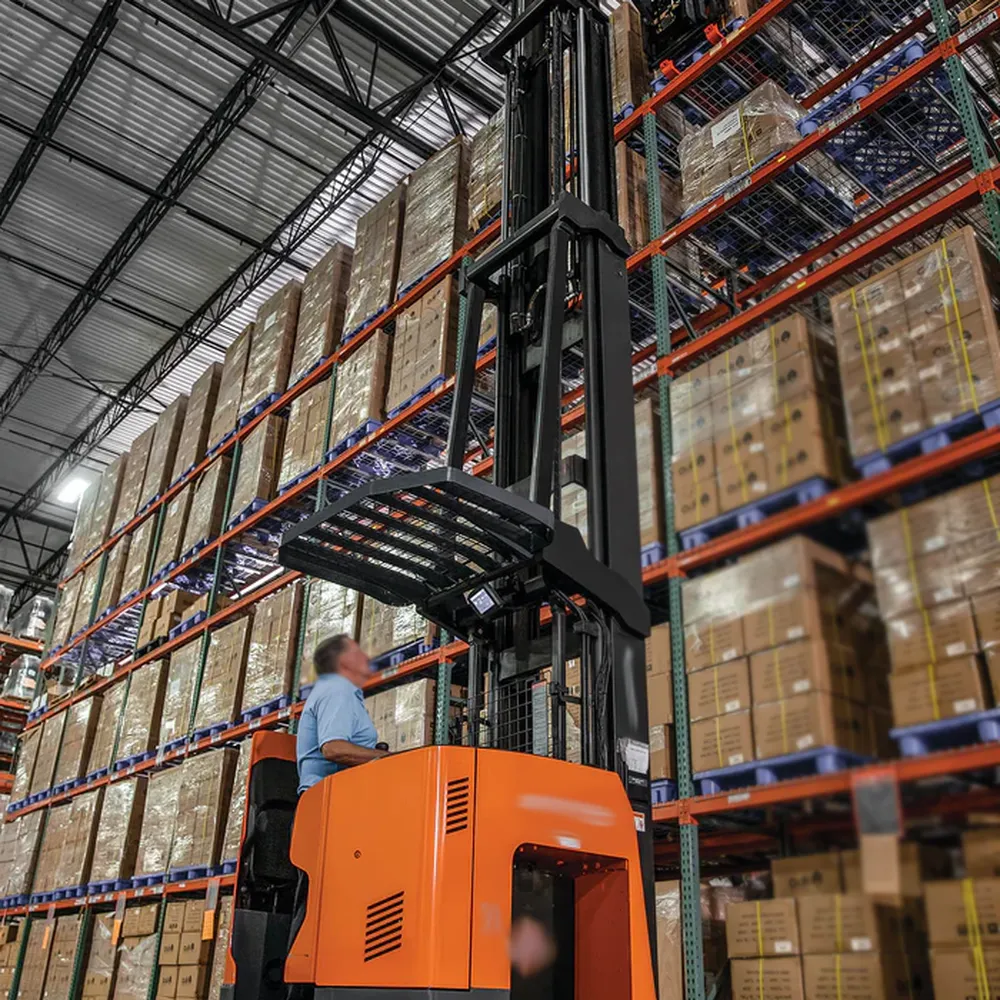
If you operate or maintain forward moving forklifts, the hydraulic cylinder is the single most critical component that determines your machine’s lifting capacity, reach stability, and overall uptime. A hydraulic cylinder for forward moving forklift converts pressurized hydraulic fluid into controlled linear motion, enabling the mast to extend forward, tilt, and shift loads with pinpoint accuracy. Without a properly functioning cylinder, even a well-maintained forklift becomes nothing more than an expensive paperweight.
Forward moving forklifts differ from standard counterbalance models in one essential way: the load center moves forward of the front axle, placing enormous stress on the hydraulic lift cylinder and its associated mounting hardware. This demands a cylinder built with tighter tolerances, superior seal materials, and a rod surface finish that resists scoring under high side-load conditions. Our cylinders are purpose-built for this exact scenario, delivering consistent performance whether you are handling palletized goods in a narrow-aisle warehouse or moving heavy steel plate in a fabrication shop.
As a specialized hydraulic cylinder manufacturer, we design each unit to integrate seamlessly with existing hydraulic systems. The bore diameter, stroke length, rod diameter, and mounting style are all customizable, which means you get a drop-in replacement that fits without expensive modifications. Every cylinder ships with matched hydraulic cylinder seals selected for the operating temperature and fluid type specified by the customer.
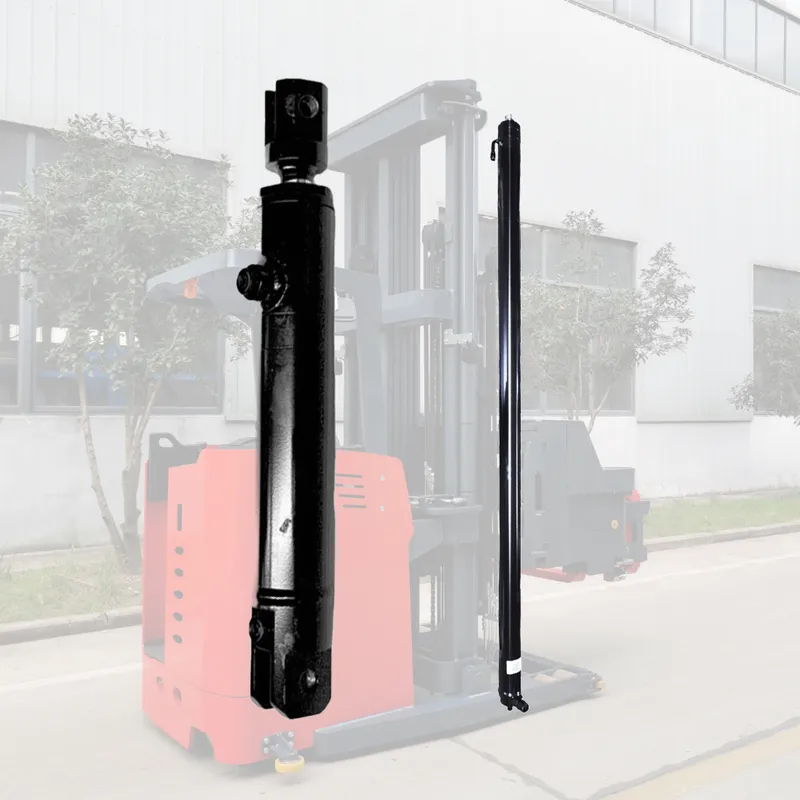
Whether you need a single acting hydraulic cylinder for a simple gravity-return tilt function or a double acting hydraulic cylinder for full bidirectional control of the forward reach mechanism, our product line covers the complete range. We also supply matched hydraulic tilt cylinders, hydraulic steering cylinders, and hydraulic side shift cylinders so you can source your entire forklift hydraulic package from a single vendor.
Technical Specifications
Below you will find the customizable parameter ranges for our hydraulic cylinder for forward moving forklift series. All values can be adjusted to match your equipment’s original specifications or to upgrade performance for heavier-duty applications.
Basic Specifications
| Parameter | Customizable Range |
|---|---|
| Bore Diameter | 40 mm – 200 mm |
| Rod Diameter | 25 mm – 140 mm |
| Stroke Length | 100 mm – 2500 mm |
| Working Pressure | 16 MPa – 25 MPa |
| Burst Pressure | Up to 63 MPa |
| Cylinder Action | Single Acting / Double Acting |
| Rod Surface Finish | Ra 0.2 um or better (hard chrome plated) |
| Retracted Length | Custom to application |
Mounting Options
| Mounting Style | Notes |
|---|---|
| Pin-Eye (Clevis) | Most common for tilt and reach cylinders |
| Flange Mount | Square or rectangular flange, front or rear |
| Trunnion Mount | Allows angular movement under load |
| Foot / Side Lug Mount | Bolted directly to frame structures |
| Custom / OEM Specific | Reverse-engineered to match original dimensions |
Materials and Surface Treatment
| Component | Material / Treatment |
|---|---|
| Cylinder Tube | SAE 1026 / ST52 honed seamless steel tube |
| Piston Rod | CK45 / SAE 1045 hard chrome plated (20-30 um) |
| Piston | Ductile cast iron or forged steel, precision machined |
| Seals | NOK / Hallite / Parker grade polyurethane and PTFE |
| End Caps | Forged steel, welded or threaded |
| External Coating | E-coat / powder coat / zinc plating (salt spray 500+ hrs) |
Environmental Adaptability
| Condition | Rating |
|---|---|
| Operating Temperature | -30 C to +100 C |
| Dust and Particle Protection | Heavy-duty wiper seals and rod boots available |
| Corrosion Resistance | 500+ hours salt spray (ASTM B117) |
| Hydraulic Fluid Compatibility | Mineral oil, synthetic, biodegradable fluids |
How a Hydraulic Cylinder for Forward Moving Forklift Works
The operating principle of a forklift hydraulic cylinder is straightforward, yet the engineering behind it is anything but simple. Pressurized hydraulic oil enters the cylinder through a port in the end cap. That fluid pushes against the hydraulic cylinder piston, which is fixed to the piston rod. As the piston moves, the rod extends or retracts, translating fluid pressure into linear mechanical force.
In a forward moving forklift, the lift cylinder raises the carriage along the mast rails. When the operator activates the forward reach function, a separate reach cylinder pushes the inner mast assembly forward, positioning the forks ahead of the front axle. This two-stage motion (lift plus reach) places unique demands on the cylinder because the rod must maintain perfect alignment while absorbing lateral loads generated by the cantilevered weight.
A double acting hydraulic cylinder uses pressurized fluid on both sides of the piston, giving the operator full control over both extension and retraction speed. This is essential for the reach function, where a gravity-only return would be dangerously uncontrolled. The tilt cylinder operates on the same principle, angling the mast backward for load security or forward for placement. Meanwhile, the hydraulic side shift cylinder provides lateral fine-positioning, moving the fork carriage left or right without repositioning the entire truck.
Internally, precision-honed bore surfaces reduce friction and ensure consistent seal contact. The hydraulic cylinder components work as an integrated system: piston seals prevent cross-port leakage, rod seals keep fluid inside the cylinder, wiper seals exclude contaminants, and wear rings center the piston inside the bore. When any one of these elements fails, the entire cylinder’s performance degrades, which is why we use premium-grade seal kits rated for a minimum of 1 million cycles.

Compatible Brand Replacements
Note: The brand names listed below are referenced solely to assist buyers in identifying compatible replacement cylinders. We are not affiliated with, endorsed by, or authorized dealers of these manufacturers. All trademarks belong to their respective owners.
Our hydraulic cylinder for forward moving forklift is designed as a direct-fit replacement for the reach, lift, tilt, and side shift cylinders used in the following brands and model families:
| Brand | Common Forward Reach Models |
|---|---|
| Toyota (BT / Raymond) | 7BPUE15, 7FBR series, RRS30 reach trucks |
| Crown | RR 5700 series, ESR 5000 series |
| Jungheinrich | ETR series, ETV Q20 / Q25 |
| Linde | R14 – R25 reach truck range |
| Hyster-Yale | R1.4 – R2.5 series, N35-50ZR |
| STILL | FM-X 14 / 17 / 20 / 25 |
| Mitsubishi (Caterpillar / Jungheinrich OEM) | RBN series, EDR series |
| Komatsu | FR series reach trucks |
If your specific model is not listed above, send us your current cylinder dimensions or OEM part number, and our engineering team will confirm compatibility within 24 hours.
Core Technical Advantages
Ultra-Low Friction Seal System
We use a proprietary multi-lip seal profile combined with PTFE-bronze wear bands that reduces breakaway pressure by up to 15% compared to standard configurations. Lower friction means less heat generation, reduced energy consumption, and longer seal life. For operators running two-shift or three-shift schedules, this translates directly into lower annual maintenance spend on forklift hydraulic cylinder seals.
High-Rigidity Cylinder Barrel and Rod Manufacturing
Every hydraulic oil cylinder barrel starts as a cold-drawn seamless steel tube, then goes through precision honing to achieve an internal surface roughness below Ra 0.2 um. The piston rod is induction-hardened to 55-60 HRC at the surface layer before receiving a hard chrome plating of 20-30 um. This combination resists scoring, pitting, and corrosion even when operating in abrasive environments like construction sites or lumber yards.
Thermal Stability and Fatigue Life Optimization
Forward moving forklifts in high-throughput operations can see hydraulic fluid temperatures exceed 80 C during sustained use. Our seal compounds maintain elasticity across a -30 C to +110 C window. Cylinder barrel wall thickness is calculated using finite element analysis to withstand a minimum of 500,000 full-load cycles without fatigue cracking at weld joints or port connections.
Precision Internal Cushioning
End-of-stroke impact is the leading cause of premature hydraulic cylinder repair in forklift applications. Our cylinders incorporate adjustable internal cushioning at both ends of travel, decelerating the piston progressively rather than slamming against the end cap. This reduces peak pressure spikes by 30-40% and protects downstream valves and hose fittings from shock damage.
Anti-Corrosion Multi-Layer Coating
The external cylinder surface receives a zinc phosphate pre-treatment followed by electrophoretic deposition (e-coat) or high-durability powder coating. This layered approach passes 500+ hours of salt spray testing per ASTM B117. For customers in coastal regions or operating in chemical environments, we offer a marine-grade stainless steel rod option as well.
Contamination-Exclusion Rod Sealing
Forklift cylinders operate at floor level where dust, metal shavings, and moisture are constant threats. Our gland assembly features a double-lip polyurethane wiper plus a secondary metal scraper ring that removes particles as small as 5 microns from the rod surface. Keeping contaminants out of the hydraulic system prevents accelerated wear on every hydraulic cylinder part inside the assembly.
Modular Port and Sensor Integration
Modern fleet management requires real-time monitoring. Our cylinders are available with integrated pressure sensor ports, position feedback mounting bosses, and optional magnetostrictive linear transducer compatibility. This allows operators to track cycle counts, detect early seal leakage, and schedule predictive maintenance before unplanned downtime occurs.
Drop-In OEM Dimensional Compliance
Every cylinder is manufactured to match original equipment dimensions within +/- 0.05 mm on critical features. Port thread type, mounting pin bore location, overall retracted length, and stroke measurement are all verified against OEM drawings or reverse-engineered samples. You receive a cylinder that bolts in without modification, saving installation time and reducing the risk of alignment errors.

Manufacturing Process and Quality Control
Full In-House Production
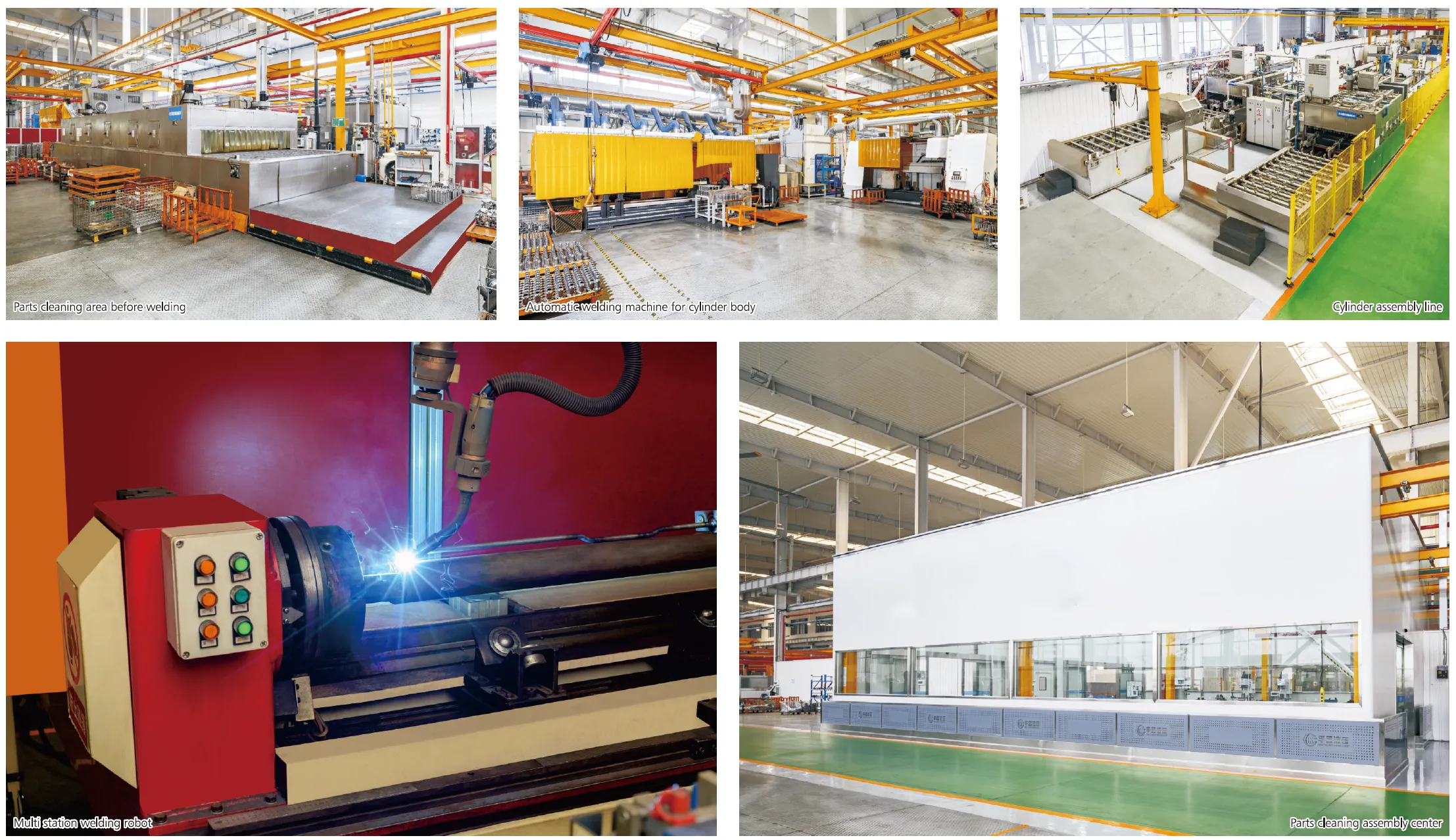
From raw steel tube cutting to final assembly, every manufacturing step happens under our roof. We operate CNC lathes, deep-hole boring machines, honing equipment, robotic welding cells, and chrome plating lines. This vertical integration eliminates the quality inconsistencies that come from outsourcing to third-party sub-suppliers, and it allows us to control lead times with precision.
100% Factory Testing
Every single hydraulic cylinder that leaves our facility undergoes a full functional test before packaging. This includes:
– Pressure holding test at 1.5x rated working pressure for a minimum of 2 minutes
– Full stroke extension and retraction under load simulation
– External leakage inspection at all weld seams, ports, and rod seal areas
– Internal leakage measurement (cross-port bypass) to verify seal integrity
– Dimensional verification of stroke, retracted length, and mounting geometry
No cylinder ships with a pass/fail stamp alone. Each unit receives a serialized test report that records actual measured values, which is archived digitally and available to customers for fleet records.
Certifications and Traceability
Our production facility holds ISO 9001:2015 certification, and we comply with CE marking requirements for the European market. Material certificates (EN 10204 3.1) are available for all steel components. Each cylinder is laser-engraved with a unique serial number linked to a full material and process traceability record, from heat lot numbers on the steel tube to the specific seal batch used during assembly.
Continuous Improvement Through Field Feedback
We maintain an active failure analysis program. When a warranty return or field report comes in, the cylinder is disassembled, photographed, measured, and root-cause analyzed. Findings feed directly into design revisions and supplier quality scorecards. This closed-loop process is why our field failure rate has dropped below 0.3% over the past three years.

Typical Industry Applications
Warehousing and Distribution
Forward moving forklifts are the backbone of narrow-aisle warehousing. In distribution centers handling thousands of SKUs, these machines run 16-20 hours daily. The hydraulic lift cylinder sees hundreds of full-stroke cycles per shift, making seal longevity and rod surface quality the top priorities. Our cylinders help fleet managers in Mexico and Latin America maintain uptime rates above 97% on their reach truck fleets.
Manufacturing
Production lines depend on forklifts to feed raw materials and remove finished goods. In stamping plants, foundries, and assembly facilities, hydraulic cylinders face contamination from metal dust and elevated ambient temperatures. Our high-filtration wiper seals and thermal-resistant seal compounds keep the hydraulic system clean and responsive.
Construction
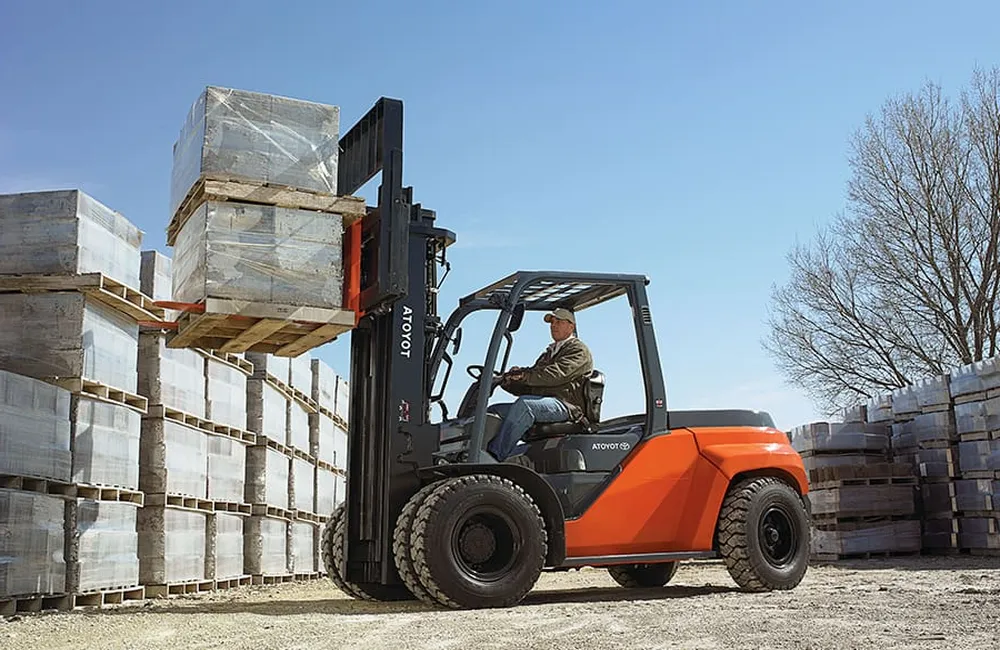
Construction-grade forward moving forklifts handle rough terrain, heavy masonry loads, and exposure to rain and mud. The anti-corrosion coating and heavy-duty rod boots on our cylinders protect against these conditions. Customers in the Mexican construction sector report significantly reduced cylinder changeout frequency after switching to our product.
Agriculture
Farming operations use forward reach forklifts for loading seed pallets, fertilizer bags, and harvested produce. Exposure to pesticide residues and high-humidity environments accelerates corrosion on standard cylinders. Our stainless steel rod option and biodegradable-fluid-compatible seals address both concerns.
Retail and Cold Storage
Big-box retailers and cold chain logistics providers use reach trucks in refrigerated environments as cold as -25 C. Standard seals harden and leak within months at these temperatures. Our cold-rated Viton and HNBR seal kits maintain flexibility and sealing integrity throughout the cold storage temperature range.
Automotive
Auto parts distribution centers and assembly line support operations rely on forward moving forklifts to handle sequenced component delivery. Precision cylinder control ensures gentle handling of painted body panels and fragile electronic assemblies.
Mining and Extractive Industries
Underground and surface mining operations subject forklifts to extreme vibration, abrasive dust, and shock loads. Our cylinders with reinforced piston rod bearings and heavy-wall barrel construction withstand these punishing conditions while maintaining dependable lifting performance.
Oil and Gas
Material handling in refineries and drilling supply yards demands cylinders built for hazardous environment compliance. We supply cylinders with explosion-proof material specifications and anti-static rod grounding provisions for ATEX zone applications.
Forestry Industry
Lumber mills and forestry staging yards use forward reach forklifts to stack heavy timber bundles. The combination of extreme load weight, outdoor exposure, and debris contamination makes this one of the toughest cylinder applications. Our units with reinforced welding, heavy-duty wipers, and maximum chrome thickness are the preferred choice for forestry operators across North America.
Performance Comparison: Standard vs. Our High-Performance Hydraulic Cylinder
| Feature | Standard Cylinder | Our High-Performance Cylinder |
|---|---|---|
| Bore Honing Finish | Ra 0.4 – 0.8 um | Ra 0.1 – 0.2 um |
| Chrome Plating Thickness | 10 – 15 um | 20 – 30 um |
| Seal Life (cycles) | 300,000 – 500,000 | 1,000,000+ |
| Salt Spray Resistance | 200 – 300 hours | 500+ hours |
| Internal Leakage Rate | Up to 5 ml/min at rated pressure | Less than 1 ml/min at rated pressure |
| End-of-Stroke Cushioning | Not standard | Adjustable, both ends |
| Testing | Batch sample testing | 100% individual unit testing with report |
| Lead Time (custom orders) | 6 – 10 weeks | 3 – 5 weeks |
| Warranty | 6 – 12 months | 18 months / 3,000 operating hours |
Real-World Customer Case Studies
Case 1: Major 3PL Warehouse Operator, Monterrey, Mexico
Customer: A third-party logistics company operating 14 reach trucks across three warehouse facilities in the Monterrey metropolitan area.
Challenge: Their fleet experienced an average of 2.4 cylinder failures per month, primarily rod seal leakage on the reach cylinders. Each failure resulted in 6-8 hours of downtime and emergency repair costs averaging $1,800 USD per incident.
How They Found Us: Their maintenance manager discovered our website while searching for forklift hydraulic cylinders for sale in late 2024. He submitted a technical inquiry through our contact form with photos and OEM part numbers.
Result: After replacing all 14 reach cylinders over a three-month period (January – March 2025), cylinder-related downtime dropped to zero for the first nine months. Annual maintenance cost savings exceeded $38,000 USD.
“We were skeptical about switching from OEM cylinders, but the numbers speak for themselves. Nine months of zero cylinder failures across 14 trucks is something we never achieved before.” – Roberto M., Maintenance Director
Case 2: Automotive Parts Distributor, Guadalajara, Mexico
Customer: A Tier-2 automotive parts distributor serving OEM assembly plants in the Bajio industrial corridor.
Challenge: Their Crown reach trucks required forklift hydraulic cylinder rebuild service every 8 months. The rebuild shop’s turnaround time was 10 business days, forcing them to rent replacement machines at significant cost.
How They Found Us: Referred by their hydraulic hose supplier in June 2024. They initially ordered two sample cylinders for bench testing before committing to a fleet-wide replacement.
Result: Twelve months after installing our cylinders, none have required rebuilding. The customer eliminated rental equipment costs entirely and reduced their spare cylinder inventory from six units to two.
“The chrome finish on these rods is visibly better than what we were getting from our previous supplier. Our techs noticed the difference the moment they unpacked the first unit.” – Carlos V., Fleet Operations Manager
Case 3: Cold Storage Facility, Queretaro, Mexico
Customer: A frozen food distribution center maintaining 8 reach trucks in -22 C cold storage zones.
Challenge: Standard hydraulic cylinder seals hardened and failed within 4-5 months of continuous cold environment operation. The company was spending over $12,000 USD annually on seal replacement labor and materials alone.
How They Found Us: Found our article on cold-rated hydraulic cylinder seals through a Google search in August 2024 and requested a technical consultation call.
Result: We supplied cylinders with HNBR seals and low-temperature hydraulic fluid compatibility. After 14 months in service, no seal replacements have been required. The plant manager extended our contract to cover their second cold storage facility opening in Q2 2026.
“Cold storage is brutal on hydraulic equipment. These cylinders are the first ones that have lasted more than a year in our freezer aisles without leaking.” – Ana L., Plant Manager
Case 4: Timber Company, Durango, Mexico
Customer: A sawmill and timber processing operation running 6 forward moving forklifts for lumber stacking.
Challenge: Sawdust and wood debris contaminated the cylinder rods, causing accelerated seal wear and visible rod scoring within 3-4 months. The company was purchasing replacement cylinders twice per year per machine.
How They Found Us: Their purchasing agent attended a material handling trade show in Mexico City (November 2024) where we had a booth display. He picked up our catalog and placed a trial order the following week.
Result: Our heavy-duty wiper seal and metal scraper combination kept contaminants out. After one full year, rod inspection showed no visible scoring. Cylinder replacement costs dropped by over 80%.
“We burn through hydraulic cylinders faster than anyone, and these are the first ones that have survived a full year in our sawmill yard.” – Jorge H., Operations Supervisor
Case 5: Beverage Bottling Plant, Puebla, Mexico
Customer: A large-scale beverage bottling and distribution facility running 22 reach trucks across production and warehouse zones.
Challenge: High cycle frequency (estimated 400+ full strokes per shift) was causing premature failure of the hydraulic cylinder piston wear rings, leading to metal-on-metal contact and bore scoring.
How They Found Us: Their engineering team found our technical specifications page while researching hydraulic cylinder parts suppliers online in March 2025. They requested a factory audit before placing orders.
Result: We provided cylinders with upgraded PTFE-bronze wear bands rated for 1.2 million cycles. After 10 months of three-shift operation, bore inspection showed zero scoring on all 22 units. The customer has since placed repeat orders for their tilt and side shift cylinders as well.
“We hosted their quality engineer at our plant for two days. The fact that they were willing to fly out and inspect our machines before recommending a solution gave us confidence. The results have backed it up.” – Miguel R., Engineering Manager
Case 6: Retail Distribution Center, Estado de Mexico
Customer: A national retail chain’s central distribution hub processing over 40,000 pallets per week with a fleet of 18 forward moving forklifts.
Challenge: Inconsistent cylinder quality from multiple aftermarket suppliers was causing unpredictable failures. The maintenance team was managing four different seal kit types and three different rod diameters for what should have been identical machines.
How They Found Us: The fleet manager contacted us through a LinkedIn connection in July 2025 after reading one of our technical case studies. He wanted a single-source supplier to standardize the entire fleet.
Result: We conducted a complete fleet survey, documented every cylinder specification, and delivered 36 cylinders (lift and reach) in two batches over six weeks. Spare parts inventory was consolidated to a single seal kit SKU. First-year savings on parts inventory management alone were estimated at $15,000 USD.
“Having one supplier, one seal kit, and one phone number to call when we need support has simplified everything. Our warehouse team can now swap a cylinder in under 90 minutes.” – Patricia G., Logistics Director

Common Fault Diagnosis and Troubleshooting
Even the best-built forklift hydraulic cylinder can develop issues over time. Here are the most frequent problems and the steps to diagnose them before committing to a full forklift hydraulic cylinder repair.
Slow or Uneven Lift Speed
If the mast rises slower than normal or moves unevenly, check the hydraulic fluid level first. Low fluid is the most common cause. If the level is correct, test the system pressure at the pump output. Pressure below specification indicates a worn pump or relief valve issue. If pump output is normal, internal leakage past the piston seals inside the lift cylinder is the likely culprit. An internal bypass test can confirm this: cap off the return line and pressurize the cylinder, then measure leakage at the opposite port.
External Oil Leakage at the Rod Seal Area
Visible oil weeping or dripping around the piston rod where it exits the gland is the most recognizable cylinder problem. Inspect the rod surface for scratches, pitting, or chrome damage. A damaged rod will destroy new seals within hours. If the rod surface is clean and smooth, the seals have simply reached end of life and need replacement.
Cylinder Drift Under Load
When the forks slowly descend while holding a load with the control valve in neutral, internal seal bypass is occurring. This is a safety concern and should be addressed immediately. Measure the drift rate (mm per minute) and compare to the manufacturer’s specification. Any drift exceeding 25 mm per 10 minutes under rated load typically warrants cylinder replacement or a forklift hydraulic cylinder rebuild.
Jerky or Spongy Cylinder Movement
Air trapped in the cylinder causes spongy feel during initial extension. Bleed the system by cycling the cylinder through its full stroke 10-15 times with no load. If the problem persists, check for a cracked suction line or low reservoir level that allows air ingestion at the pump inlet.
Excessive Noise During Operation
Banging or knocking at end of stroke indicates worn or missing internal cushioning components. Cavitation noise (a high-pitched whine) usually points to restricted suction lines or hydraulic fluid viscosity that is too high for the operating temperature. Verify that the correct fluid grade is being used and that all suction filters are clean.
How to Choose the Right Hydraulic Cylinder for Your Forward Moving Forklift
Selecting the correct replacement hydraulic cylinder for forward moving forklift applications requires more than matching a part number. Here is a practical selection checklist developed from two decades of field experience:
Step 1: Identify the Cylinder Function
Determine whether you need a lift cylinder, reach cylinder, tilt cylinder, or side shift cylinder. Each has different stroke lengths, bore sizes, and mounting configurations. The forklift hydraulic cylinder diagram in your service manual will show the location and orientation of each cylinder in the system.
Step 2: Record Critical Dimensions
Measure the bore diameter, rod diameter, stroke length, retracted (closed) length, and overall extended length. Note the port size, thread type, and port location (which end, which side). Record the mounting style and pin/bolt hole dimensions at both ends.
Step 3: Verify Operating Pressure
Check your forklift’s hydraulic system rated pressure. Most forward moving forklifts operate between 16 MPa and 21 MPa. Order a cylinder rated for at least the system’s maximum relief valve setting.
Step 4: Consider Environmental Factors
If the forklift operates in cold storage, outdoor weather, corrosive environments, or extremely dusty conditions, specify the appropriate seal material, coating, and rod protection options. A standard cylinder in a non-standard environment is a guaranteed early failure.
Step 5: Request a Technical Review
Send your measurements, operating conditions, and OEM part number (if available) to our engineering team. We will confirm compatibility, recommend any upgrades, and provide a detailed quotation within 24-48 hours.
Frequently Asked Questions
What is the typical lead time for a custom hydraulic cylinder for forward moving forklift?
Standard custom orders ship within 3 to 5 weeks from order confirmation. If you provide an OEM part number or sample cylinder, we can begin engineering review within 24 hours. For urgent requirements, we offer an expedited production option with a 2-week turnaround at an additional charge. Stock bore and stroke combinations from our catalog ship within 5-7 business days.
Can I order a single replacement forklift hydraulic cylinder, or is there a minimum order quantity?
We accept orders starting from a single piece. There is no minimum order quantity. That said, many fleet operators choose to order in sets (for example, both lift cylinders or all four tilt cylinders on a truck) to ensure uniform performance and simplify future maintenance scheduling. Volume pricing is available for orders of 10 or more units.
How do I know if my forklift hydraulic cylinder needs repair or full replacement?
If the rod surface shows visible scoring, pitting, or chrome peeling, a seal replacement alone will not solve the problem, and a full cylinder replacement is recommended. If the rod is in good condition but you are experiencing external leakage or internal drift, a forklift hydraulic cylinder rebuild with new seals, wear rings, and bushings may be sufficient. We offer both options and can advise based on photos or inspection of your current cylinder.
Do you ship hydraulic cylinders for sale to Mexico and other Latin American countries?
Yes. Mexico is one of our primary markets, and we have established shipping and customs clearance processes for deliveries to all major Mexican cities including Mexico City, Monterrey, Guadalajara, Puebla, Queretaro, and Tijuana. We also ship to Colombia, Brazil, Chile, Peru, and Argentina. Freight can be arranged CIF or FOB depending on your preference.
What seal brands do you use in your forklift hydraulic cylinder seals kits?
We use seals from NOK, Hallite, and Parker Pradifa as standard. These are globally recognized brands with proven performance records in mobile hydraulic applications. If your OEM specification calls for a specific seal brand or compound, we can accommodate that as a custom option. All seal kits are assembled in-house and individually packaged with part identification labels.
How to remove hydraulic cylinder from forklift safely?
Safety is the first priority. Lower the mast completely and place the forks on the ground. Relieve all hydraulic pressure by cycling the control lever several times with the engine off. Disconnect the hydraulic hoses and cap them immediately to prevent fluid loss and contamination. Support the mast or carriage with blocks or an overhead crane before removing mounting pins. The cylinder can weigh 15-50 kg depending on size, so use appropriate lifting equipment. Detailed removal procedures vary by forklift model; consult your service manual for torque specifications and safety precautions.
What warranty do you provide on forklift hydraulic cylinders?
All our cylinders carry an 18-month warranty or 3,000 operating hours, whichever comes first. The warranty covers defects in materials and workmanship, including seal failure under normal operating conditions. Damage caused by contaminated hydraulic fluid, exceeding rated pressure, or physical impact is excluded. Warranty claims are processed within 5 business days of receiving the returned cylinder and inspection report.
Can your hydraulic cylinders be used as direct replacements for OEM units without modification?
Yes. We manufacture every cylinder to match original equipment dimensions within a tolerance of +/- 0.05 mm on critical mounting and stroke dimensions. Port thread type, pin bore sizes, hose connection locations, and overall length are all verified against OEM specifications or customer-supplied samples. The result is a true drop-in replacement that requires no welding, drilling, or bracket modification.
What information do I need to provide to get an accurate quote for a replacement hydraulic cylinder?
To provide the most accurate quotation, we need: the forklift make, model, and year; the cylinder function (lift, reach, tilt, or side shift); the OEM part number if available; bore diameter, rod diameter, and stroke length; mounting style and pin dimensions; port size and thread type; operating pressure; and any special requirements such as cold-rated seals or enhanced corrosion protection. Photographs and a forklift hydraulic cylinder diagram from your service manual are also extremely helpful.
Do you supply hydraulic cylinder parts and seal kits separately for field repairs?
Yes. We supply complete seal kits, individual piston seals, rod seals, wiper seals, wear rings, O-rings, back-up rings, and bushings for all cylinder models we manufacture. Each kit is matched to the specific bore, rod, and gland dimensions of the cylinder it is intended for. We also stock replacement piston rods and gland assemblies for customers who prefer to rebuild in the field rather than replace the entire unit.
Ready to Upgrade Your Forklift Hydraulic Cylinders?
Whether you need a single replacement cylinder or a complete fleet conversion, our engineering team is ready to provide a custom solution backed by 20 years of hydraulic manufacturing expertise. Get your free technical consultation and quotation today.