Hydraulic Cylinder for Truss Arm Crawler Crane
Heavy-duty crane hydraulic cylinders engineered for maximum lifting force, precision control, and extended service life in the toughest jobsite conditions.
The Core Role and Value of Hydraulic Cylinders in Truss Arm Crawler Cranes
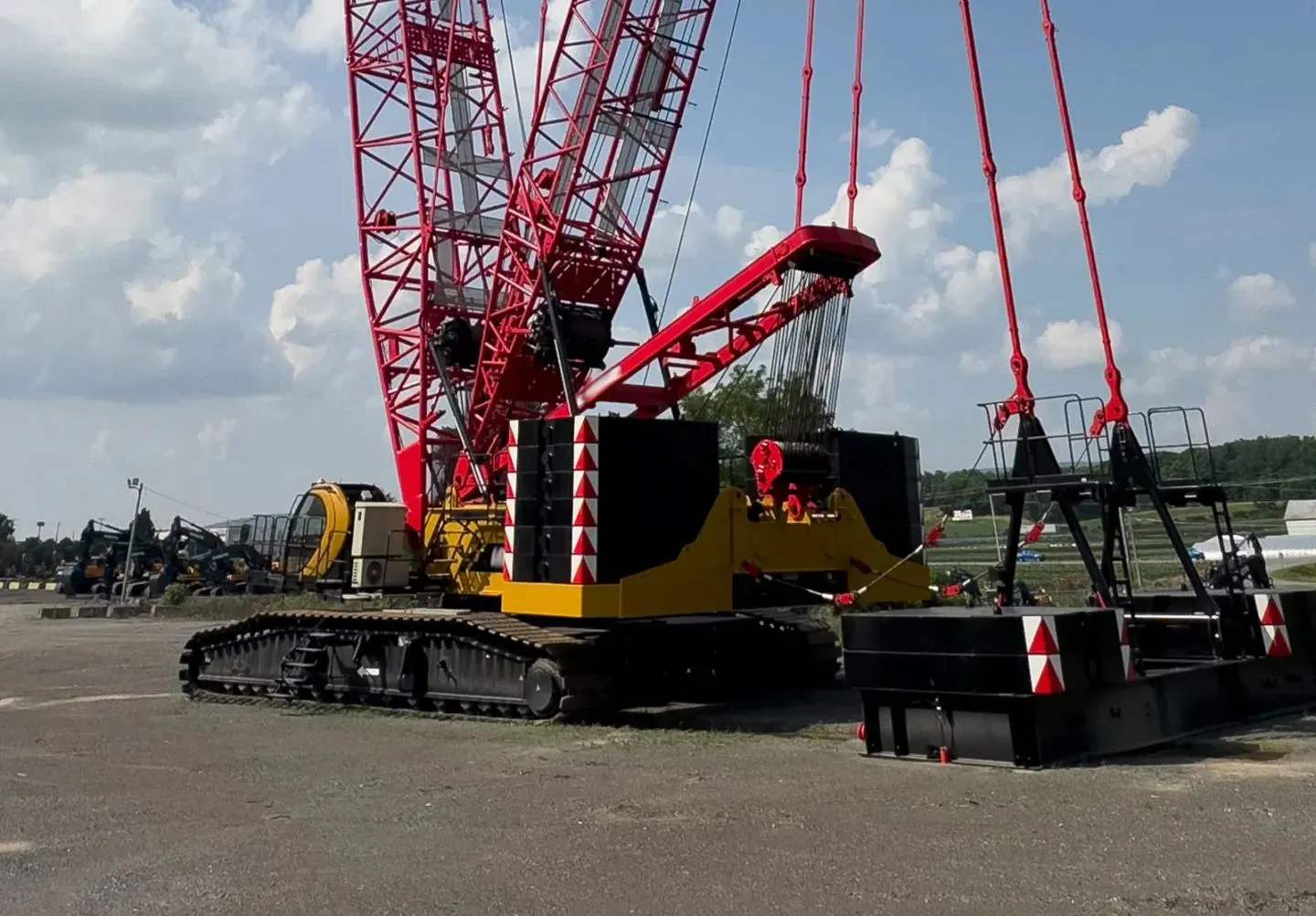
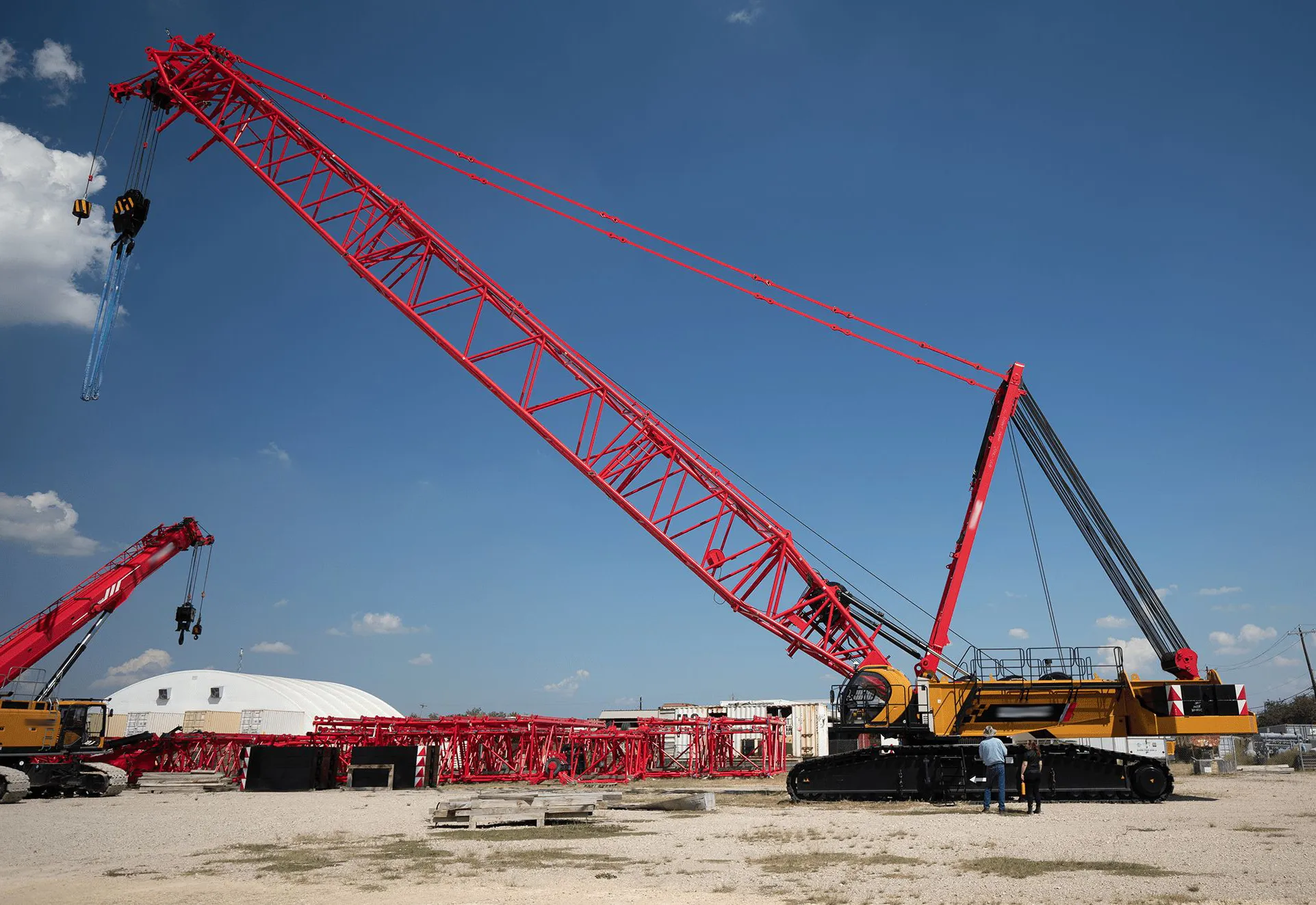
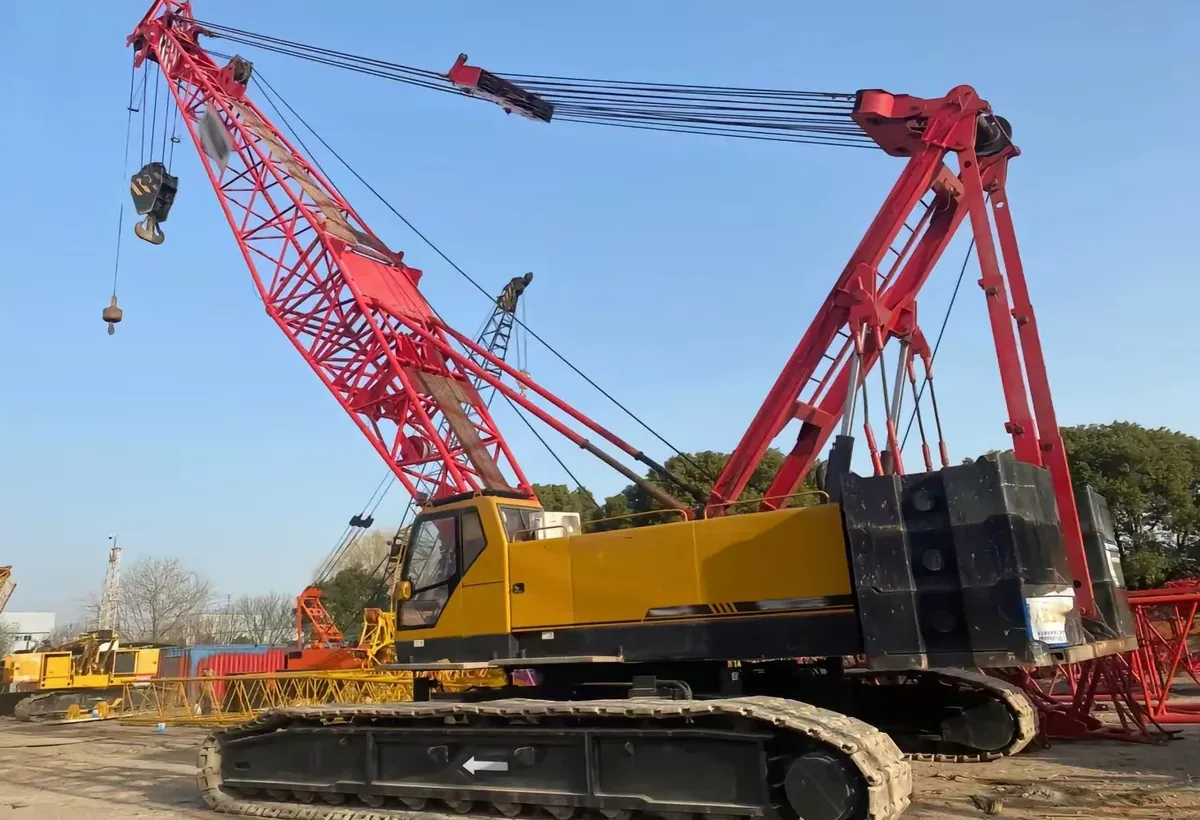
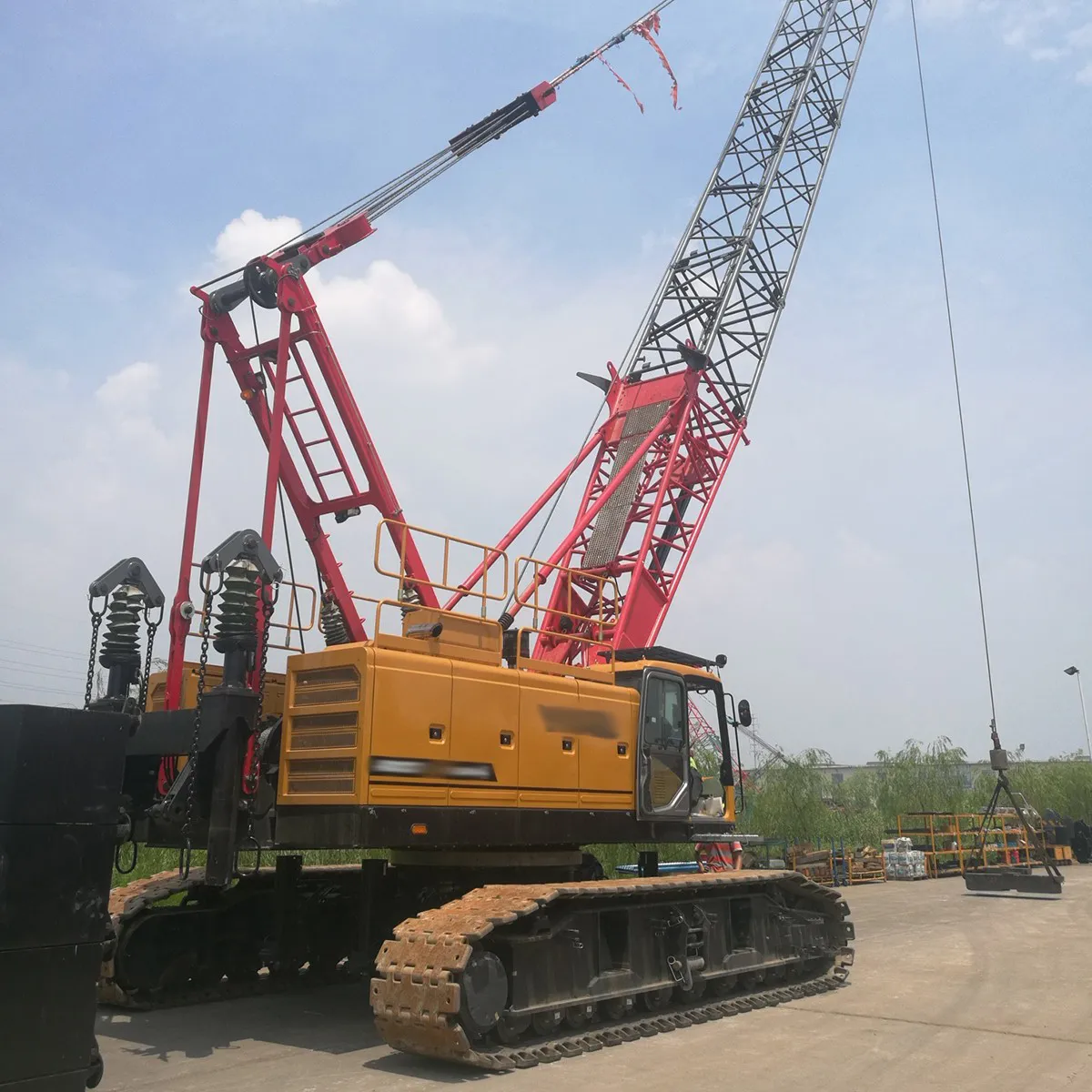
Truss arm crawler cranes are the workhorses of large-scale construction, mining, port logistics, and energy infrastructure projects. At the heart of every crawler crane lies a network of precisely engineered hydraulic cylinders that control boom extension, luffing, arm positioning, and load stability. Without reliable crane hydraulic cylinders, these machines simply cannot deliver the lifting capacity, reach, or operational safety that modern projects demand.
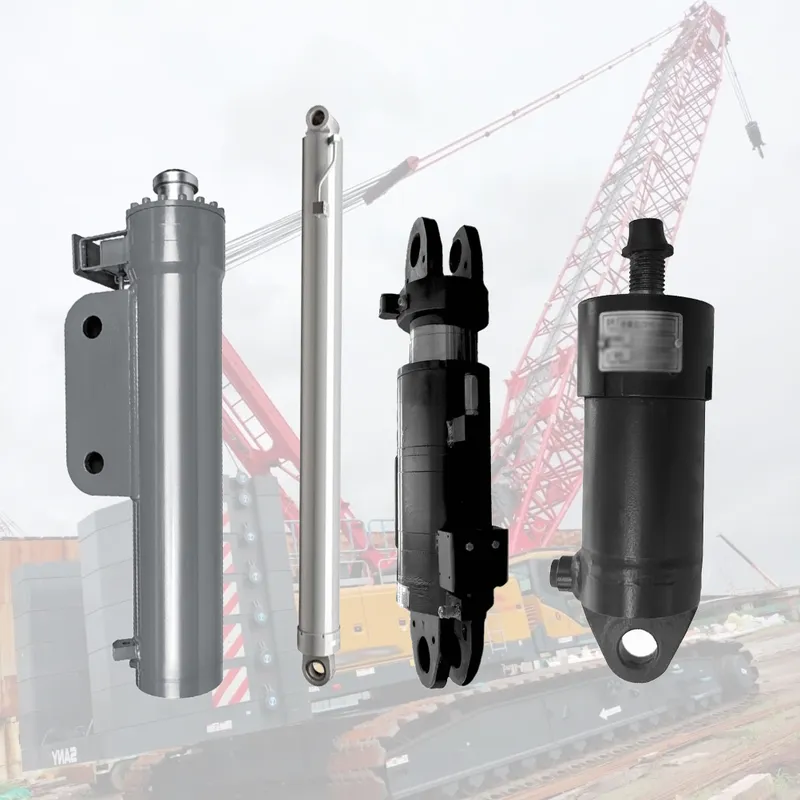
Each type of hydraulic cylinder for crane applications serves a distinct purpose. The hydraulic support cylinder stabilizes the truss arm under extreme loads. The hydraulic lift cylinder drives vertical boom movements for precise load placement. Hydraulic pin shaft cylinders and hydraulic power pin cylinders handle mechanical locking and rapid connection of structural sections. The hydraulic spring cylinder absorbs shock during sudden load shifts, while the hydraulic arm anti-backtilt cylinder prevents dangerous backward rotation of the boom during raising or lowering operations.
From the perspective of project economics, selecting the right hydraulic cylinder for truss arm crawler crane applications can reduce unplanned downtime by up to 40%, lower annual maintenance costs, and extend the operational lifespan of the entire crane. The value of a well-made double acting hydraulic cylinder goes far beyond its purchase price; it directly impacts safety, productivity, and total cost of ownership.
Whether you are operating in the blazing heat of a Mexican desert or the humid conditions of a coastal port, the hydraulic oil cylinder must maintain consistent performance across a wide range of temperatures and environmental conditions. That is why material selection, surface treatment, and sealing technology are so critical for every hydraulic cylinder installed on a crawler crane.
Technical Specifications – Customizable Range
All of our hydraulic cylinders for sale are fully customizable to match OEM drawings or specific project requirements. Below is a summary of the key parameter ranges available for truss arm crawler crane cylinders.
Basic Specification Range
| Parameter | Customizable Range |
|---|---|
| Bore Diameter | 80 mm – 500 mm |
| Rod Diameter | 50 mm – 350 mm |
| Stroke Length | 200 mm – 6000 mm |
| Working Pressure | 16 MPa – 35 MPa |
| Test Pressure | 1.5x rated pressure (24 MPa – 52.5 MPa) |
| Cylinder Type | Double acting hydraulic cylinder / Single acting hydraulic cylinder |
| Speed Range | Up to 0.5 m/s (adjustable via flow control) |
Mounting Options
| Mounting Style | Description |
|---|---|
| Clevis / Trunnion | Standard for luffing and boom support cylinders |
| Flange Mount | Head or cap flange for rigid structural connections |
| Pin-eye / Spherical Bearing | Ideal for articulated arm and anti-backtilt applications |
| Custom Bracket / Foot Mount | Designed to match OEM crane frame geometry |
Materials and Surface Treatment
| Component | Material / Treatment |
|---|---|
| Cylinder Barrel | Honed seamless steel tube (20#, 45#, 27SiMn), H8 inner tolerance |
| Piston Rod | 42CrMo / CK45 chrome-plated, 0.02–0.05 mm chrome layer, polished Ra 0.2 |
| Piston | Ductile iron or alloy steel, induction hardened |
| Seals | Parker, NOK, Hallite series (NBR / FKM / PU options) |
| External Surface | Sandblast + zinc primer + polyurethane topcoat, custom RAL colors |
Environmental Adaptability
| Factor | Specification |
|---|---|
| Operating Temperature | −40 °C to +80 °C |
| Corrosion Protection | Salt spray resistance up to 1000 hours (ISO 9227) |
| Dust & Particle Protection | Heavy-duty rod scraper + double-lip wiper seal |
| Hydraulic Fluid Compatibility | Mineral oil, biodegradable fluids, synthetic esters |
How Does a Hydraulic Cylinder Work in a Crawler Crane?
The operating principle of a hydraulic cylinder relies on Pascal’s Law: pressure applied to a confined fluid is transmitted equally in all directions. In a truss arm crawler crane, the hydraulic pump draws oil from the reservoir and pressurizes it through control valves into the cylinder bore. The pressurized oil pushes against the hydraulic cylinder piston, which is connected to a piston rod, generating linear force and motion.
For a double acting hydraulic cylinder, oil can be directed to either side of the piston, allowing powered movement in both extension and retraction strokes. This is essential for crane functions like raising and lowering the boom with full load control. A single acting hydraulic cylinder uses hydraulic pressure in one direction only, with gravity or a spring providing the return force – commonly seen in pin-locking and spring-cushion applications on crawler cranes.
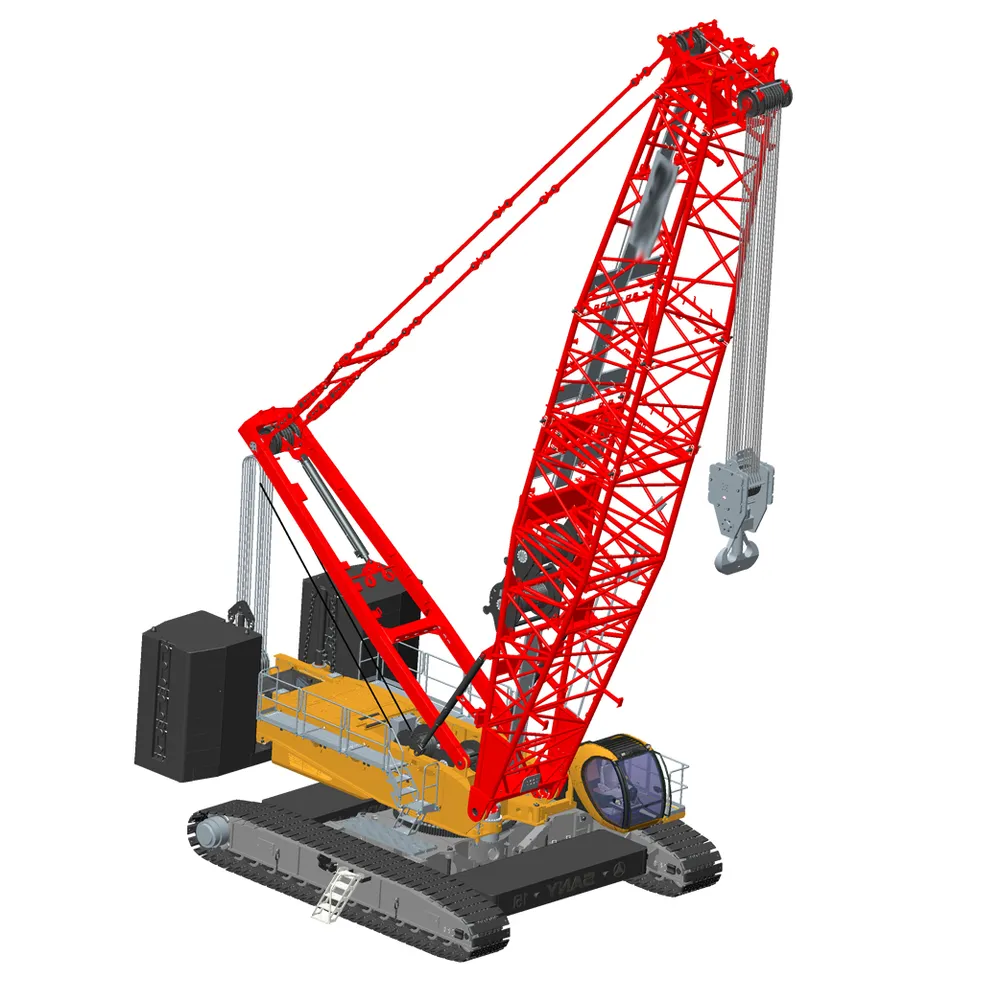
Inside the cylinder, high-quality hydraulic cylinder seals prevent internal leakage between the high-pressure and low-pressure chambers. External seals and wiper rings keep contaminants out. The hydraulic cylinder components – barrel, piston, rod, end caps, and seals – are all precision-machined to work together under pressures exceeding 30 MPa. In a crawler crane truss arm, multiple cylinders operate simultaneously, coordinated by proportional valves and electronic control systems, to achieve smooth, safe, and repeatable heavy-lift operations.
Compatible Brand Replacements
Note: All brand names mentioned below are the property of their respective owners. They are referenced here solely for the purpose of helping customers identify correct replacement cylinders. We are not affiliated with or endorsed by these brands.
Our hydraulic cylinder for truss arm crawler crane products are designed as direct-fit or performance-upgrade replacements for cylinders used in machines from the following manufacturers:
- Liebherr (LR series, HS series crawler cranes)
- Kobelco (CKE series, SL series)
- Manitowoc (Model 999, 2250, 18000 series)
- XCMG (QUY series, XGC series)
- Zoomlion (ZCC series)
- Sany (SCC series)
- Sumitomo (SCX series)
- Hitachi Sumitomo (SCX2800-2, SCX3500)
- Fuwa (QUY series)
- Link-Belt (TCC and LS series)
Each replacement cylinder is manufactured to match the original dimensional specifications, port locations, pressure ratings, and mounting configurations. We can work from your existing OEM part number, a drawing, or even a sample cylinder to produce an exact-match or upgraded alternative.
Core Technical Advantages
Ultra-Low Friction Sealing System
We use multi-stage composite hydraulic cylinder seals – combining PTFE guide rings, polyurethane U-cups, and FKM O-rings – to minimize breakaway pressure and running friction. The result: smoother piston movement, lower heat generation, and measurably less energy loss compared to conventional seal packages. This is particularly important for luffing and anti-backtilt cylinders that cycle continuously during crane operation.
High-Rigidity Barrel and Piston Rod Construction
The cylinder barrel is deep-hole bored, honed to H8 tolerance, and stress-relieved after welding. Piston rods are made from 42CrMo or equivalent high-strength alloy, induction hardened to HRC 55–60 on the surface, and finished with industrial hard chrome plating (minimum 20 microns). This combination delivers outstanding resistance to bending, scoring, and corrosion – critical for the high side-load conditions found in truss arm crane booms.
Thermal Stability and Fatigue Life Optimization
Our hydraulic oil cylinder designs account for repeated thermal cycling in harsh climates. Internal clearances, seal materials, and rod coatings are selected to maintain tight tolerances from −40 °C to +80 °C. Fatigue life is validated through finite element analysis (FEA) and accelerated cycle testing, targeting a minimum of 1,000,000 full-pressure cycles without seal failure or structural degradation.
Integrated Overload Protection
Optional built-in relief valves and cushioning devices protect the cylinder and the crane structure from pressure spikes caused by sudden load release or accidental overload. This feature is especially valuable for mobile crane hydraulic cylinder applications where dynamic forces can be unpredictable.
Contamination-Resistant Design
A heavy-duty wiper, double-lip buffer seal, and precision-ground rod finish work together to prevent the ingress of dust, sand, and water – common threats on construction and mining sites. The internal oil cleanliness is maintained at NAS 1638 Class 8 or better at assembly, reducing early wear of hydraulic cylinder parts and extending maintenance intervals.
Modular and Serviceable Architecture
Every cylinder hydraulic unit we produce is designed for easy field disassembly and hydraulic cylinder repair. Seal kits, wear rings, rod bushings, and other service parts are cataloged and kept in stock, so you can rebuild a cylinder on-site without needing to ship it back to the factory.
Manufacturing Process and Quality Control
Full In-House Production
From raw material inspection and CNC machining to welding, honing, chrome plating, painting, and final assembly, every step of the hydraulic cylinder manufacturer process takes place under one roof. This vertical integration eliminates the quality risks that come with outsourcing and gives us full control over tolerances, lead times, and cost.
100% Factory Testing
Every finished cylinder undergoes a comprehensive battery of tests before it leaves the plant. These include hydrostatic pressure testing at 1.5 times rated pressure, full-stroke functional cycling, internal and external leak detection, dimensional verification, and surface finish measurement. We do not sample-test – every single hydraulic cylinder is individually tested.
Certifications and Traceability
Our facility holds ISO 9001:2015 and CE certifications. Every cylinder ships with a complete quality dossier: material certificates (EN 10204 3.1), test reports, dimensional inspection records, and a unique serial number that links the unit to its full production history. Should you ever need to trace a component for hydraulic cylinder repair or warranty purposes, we can retrieve the complete record within hours.
Continuous Improvement
We invest in ongoing staff training, equipment upgrades, and process optimization. Our engineering team regularly reviews field feedback from crane operators and maintenance teams, using that data to refine seal configurations, material choices, and machining processes for the next generation of crane boom hydraulic cylinders.

Typical Industry Applications
The versatility of truss arm crawler cranes means our hydraulic cylinders serve an unusually broad range of industries. Here is where you will find them at work:
Construction Industry
Crawler cranes are indispensable on high-rise building sites, bridge construction, and infrastructure mega-projects. Our hydraulic lift cylinder and hydraulic support cylinder products handle the heavy steel beams, precast concrete panels, and structural modules that define modern construction.
Ports and Maritime Industry
Container handling, ship loading, and offshore platform installation all rely on crawler cranes equipped with dependable crane hydraulic cylinders. Salt air and humidity demand cylinders with superior corrosion resistance – exactly what our marine-spec surface treatments deliver.
Mining and Quarrying Industry
In open-pit mines and quarries, crawler cranes move dragline buckets, conveyors, and heavy equipment components. The high dust exposure and extreme vibration in these environments put enormous stress on hydraulic cylinder seals and rod surfaces – conditions our products are built to handle.
Oil and Gas Industry
Refinery turnarounds, pipeline construction, and drilling rig assembly all involve heavy lifts in confined or hazardous spaces. Our cylinders meet the strict safety standards required by the petrochemical sector, including ATEX-compatible options.
Manufacturing Industry
Heavy fabrication shops, steel mills, and equipment assembly plants use crawler cranes for moving large workpieces. Precision and repeatability are key in these settings, and our hydraulic cylinder piston assemblies deliver both.
Transportation and Logistics Industry
Intermodal yards, rail depots, and large warehousing operations use crawler cranes to position heavy containers and oversized cargo. Quick cycle times and smooth control depend on well-performing hydraulic cylinders for crane applications.
Energy and Utilities Industry
Wind turbine erection, transformer installation, and power plant construction all require crawler cranes with massive lifting capacity. The long boom configurations typical of these projects put extreme demands on hydraulic arm anti-backtilt cylinders and boom support cylinders.
Forestry and Logging Industry
Transporting felled timber and assembling logging equipment in remote locations calls for rugged cylinders that perform reliably despite limited maintenance infrastructure.
Agriculture Industry
Large-scale grain silo construction, irrigation infrastructure, and heavy agricultural machinery maintenance use crawler cranes and their associated hydraulic cylinders more often than many people realize.
Standard vs. High-Performance Hydraulic Cylinders – A Side-by-Side Comparison
| Feature | Standard Cylinder | Our High-Performance Cylinder |
|---|---|---|
| Barrel Material | Standard carbon steel | High-strength alloy steel (27SiMn / equivalent) |
| Rod Chrome Layer | 10–15 microns | 20–50 microns industrial hard chrome |
| Seal Package | Generic NBR seals | Multi-stage Parker / Hallite composite seals |
| Pressure Rating | Up to 25 MPa | Up to 35 MPa (tested at 52.5 MPa) |
| Cycle Life | 300,000–500,000 cycles | 1,000,000+ full-pressure cycles |
| Temperature Range | −20 °C to +60 °C | −40 °C to +80 °C |
| Corrosion Protection | Basic primer coat | Sandblast + zinc primer + PU topcoat (1000h salt spray) |
| Quality Testing | Batch sampling | 100% individual test with full documentation |
| Spare Parts Availability | Lead time 4–8 weeks | Seal kits and wear parts in stock, ships within days |
Real-World Case Studies
Case 1: Highway Bridge Project – Monterrey, Mexico
Client: A regional heavy construction contractor operating a fleet of Manitowoc 2250 and XCMG QUY350 crawler cranes.
Challenge: The original support cylinders on two of their cranes started showing external leakage after approximately 14 months of daily operation in the Nuevo Leon heat. OEM replacement lead time was quoted at 12 weeks.
How they found us: Their maintenance engineer searched for “crane hydraulic cylinder replacement supplier” online and submitted an inquiry through our website in March 2024.
Result: We delivered four custom hydraulic support cylinders within 25 days, matched to OEM drawings. After installation, the client reported zero leakage incidents over the following 10 months.
Client feedback: “We were honestly skeptical at first, but the quality matched or exceeded what we had from the original factory. Delivery was fast, and the price saved us close to 35% compared to the OEM channel.”
Case 2: Wind Farm Construction – Oaxaca, Mexico
Client: A European energy developer managing a 120 MW wind farm installation using Liebherr LR 1600/2 cranes.
Challenge: Two hydraulic lift cylinders needed replacement mid-project, and the site’s remote location made logistics difficult. The client needed cylinders rated for high ambient temperatures and fine-particle dust exposure.
How they found us: Referred by a crane rental company in Veracruz who had previously used our products. First contact was via WhatsApp in June 2024.
Result: Cylinders were shipped CIF to Salina Cruz port within 30 days. The custom wiper seal package we recommended eliminated the dust-related rod scoring their previous cylinders had suffered.
Client feedback: “The attention to the dust sealing detail told us this team knows crane applications. We have since ordered spring cylinders and pin shaft cylinders for the same fleet.”
Case 3: Port Expansion – Lazaro Cardenas, Mexico
Client: A port logistics company upgrading its container handling fleet with Sany SCC8000 and Kobelco CKE2500 crawler cranes.
Challenge: The humid, salt-laden coastal air was causing accelerated corrosion on standard-finish cylinders. The client needed marine-grade surface treatment for all boom and support cylinders.
How they found us: Found our crane hydraulic cylinders during a Google search for “hydraulic cylinders for sale crawler crane” in August 2024.
Result: We supplied 12 cylinders across three crane models, all with enhanced corrosion protection (zinc phosphate + marine-grade PU topcoat). After six months of exposure, the client confirmed no visible corrosion on any unit.
Client feedback: “The coating quality was noticeably better than what we had from the original equipment. We will standardize on this supplier for future orders.”
Case 4: Refinery Turnaround – Tabasco, Mexico
Client: An EPC contractor specializing in oil and gas plant maintenance using Manitowoc 999 cranes.
Challenge: Needed emergency replacement of a damaged hydraulic power pin cylinder within a tight turnaround window. Downtime cost was estimated at over USD 15,000 per day.
How they found us: Called our sales hotline after finding our contact page. Inquiry received on a Monday morning, October 2024.
Result: We air-shipped a replacement cylinder from our finished goods inventory within 5 business days. The crane was back in service the following Monday.
Client feedback: “Five days from phone call to installation. That is the kind of response time that makes a real difference when every day of downtime costs a fortune.”
Case 5: Mining Operations – Sonora, Mexico
Client: A copper mining company running XCMG QUY650 and Zoomlion ZCC3200NP cranes for pit operations.
Challenge: Frequent hydraulic arm anti-backtilt cylinder failures due to extreme vibration and high ambient dust levels. The OEM cylinders lasted an average of eight months before requiring rebuild or replacement.
How they found us: Their procurement manager contacted us through LinkedIn in January 2025 after reading a technical article on our website.
Result: We redesigned the wiper and buffer seal package and applied a thicker chrome layer on the rod. After 14 months of continuous operation, the first batch of cylinders is still performing without any seal failure.
Client feedback: “We went from replacing cylinders every 8 months to still running on the first set after more than a year. The ROI speaks for itself.”

Common Hydraulic Cylinder Faults and Troubleshooting
Even the best-made cylinders can run into problems if maintenance is neglected or operating conditions deteriorate. Here are the most common issues we see in the field, along with practical fixes.
External Oil Leakage at the Rod Seal
Causes: Worn or damaged rod seal, scored piston rod surface, or contaminated hydraulic fluid. Remedy: Replace the seal kit, inspect and re-polish or re-chrome the rod if scored, and flush the hydraulic system. Always verify fluid cleanliness meets NAS 1638 Class 9 or better.
Cylinder Drifting Under Load
Causes: Internal seal bypass (piston seal leakage), a faulty check valve, or a worn control valve spool. Remedy: Perform an internal leakage test. If the piston seals are bypassing, rebuild the piston assembly with new seals and wear rings. Check the holding valve externally.
Slow or Jerky Cylinder Movement
Causes: Air in the system, insufficient pump flow, or excessive friction from misalignment. Remedy: Bleed the circuit, confirm pump output, and check for side-loading caused by worn boom pins or improper mounting.
Excessive Heat Generation
Causes: Internal bypass, oversized relief valve settings, or running the cylinder beyond its rated duty cycle. Remedy: Rebuild internal seals, verify system pressure settings, and allow adequate cooling time between heavy lift cycles.
Unusual Noise or Vibration
Causes: Cavitation, loose mounting hardware, or air entrainment. Remedy: Inspect all mounting pins and bolts for wear or looseness. Check for suction-side restrictions in the hydraulic lines and verify oil reservoir level.
How to Select the Right Hydraulic Cylinder for Your Crane
Choosing the correct hydraulic cylinder for crane applications involves more than matching bore and stroke numbers. Here is a practical checklist:
- Identify the exact function: Is it a support cylinder, lift cylinder, pin shaft cylinder, spring cylinder, power pin cylinder, or anti-backtilt cylinder?
- Gather OEM specifications: Part number, bore, rod diameter, stroke, working pressure, and mounting style. A dimensional drawing is ideal.
- Evaluate operating conditions: Temperature range, exposure to dust, salt, or chemicals, and expected duty cycle.
- Determine whether you need a single acting hydraulic cylinder or double acting hydraulic cylinder based on the function.
- Decide on seal material: NBR for standard conditions, FKM for high temperatures, PU for heavy-duty abrasion resistance.
- Confirm mounting compatibility: Clevis, trunnion, flange, or custom bracket – must match the crane frame geometry exactly.
- Consider long-term service: Can you source hydraulic cylinder parts and seal kits locally or from the supplier quickly?
If you need guidance, our engineering team can review your existing cylinder or drawings and recommend the optimal configuration. Contact us with your details, and we will respond within 24 hours.
Frequently Asked Questions
What is the typical lead time for a custom crane hydraulic cylinder?
Can you manufacture hydraulic cylinders based on a sample or photo instead of a drawing?
Do you supply hydraulic cylinder seal kits and spare parts separately?
What is the minimum order quantity for crane hydraulic cylinders?
How do your hydraulic cylinders compare to OEM original parts in terms of quality?
Can you ship hydraulic cylinders to Mexico, and what are the usual shipping options?
What warranty do you offer on crane hydraulic cylinders?
How do I know which type of hydraulic cylinder my crawler crane needs?
Do you offer hydraulic cylinder repair and rebuild services?
Can your cylinders handle extreme cold or heat conditions in Mexico?
Ready to Get the Right Hydraulic Cylinder for Your Crane?
Whether you need a single replacement hydraulic cylinder for truss arm crawler crane or a complete set for a new build, our team is ready to help. Share your specifications, drawings, or even just a photograph – and we will deliver a detailed proposal within 24 hours.